Interview with Prof. Sara Bals, head of EMAT Antwerp

Interview with Prof. Sara Bals, head of EMAT Antwerp

We interviewed Sara Bals, head of the Electron Microscopy group at the University of Antwerp (EMAT). We talked about her passion for electron microscopy, her team and the importance of tomography when creating 3D images that reveal the real structures of nanoparticles and clusters. This technique can lead to the development of novel materials and improvements in application fields such as catalysts.

“The idea that we can see what nobody else can see, that today might be the day when we discover something novel, that is really what keeps me motivated and what keeps me going.”

Where does your passion for Electron Microscopy come from?

When I had to choose a topic for my master’s thesis, I decided to start working here at EMAT with Professor van Tendeloo and he introduced me to the basic principles of transmission electron microscopy. During my master’s thesis I used this technique to investigate superconducting thin films and tapes, and I continued this research during my PhD. After my PhD, I went to the National Center for Electron Microscopy in Berkeley and there, I discovered the possibility of investigating nanomaterials in three dimensions using electron tomography.

Fig. 1. DENSsolutions Wildfire Tomography holder

Tomography is based on the acquisition of a tilt series of two-dimensional projection images. You use those images as an input for a three-dimensional reconstruction. I became really passionate about this technique because without this every image that you acquire using a transmission electron microscope is only a two-dimensional projection of a three-dimensional object and that can be very misleading.

What I like about electron tomography is that it is a very visual technique. Once the reconstruction is obtained it is rather straightforward to interpret the results. And the idea that we can see what nobody else can see, that today might be the day when we discover something novel, that is really what keeps me motivated and what keeps me going.

Can you give an example of one of these discoveries?

In 2018 We received samples from the group led by Professor Sara Skrabalak at Indiana University. She sent us samples where, from two-dimensional projections, we could see that there was some sort of structure. However, when we performed the electron tomography you could see that these particles were extremely symmetrically shaped octapods1. So the idea that you can visualize that, and that you can give feedback to the growers of these materials showing them what they have made, that is really very nice.

Fig. 2. Nano dumbbells. Nano Lett. 2012 Aug 8;12(8):4380-4. doi: 10.1021/nl3021957. 

Also, something that we have been investigating quite a lot recently are assemblies of nanoparticles. These are groups of nanoparticles of which from a two-dimensional projection image you can not say how many particles you have in the assembly or how they are organized. So we did tomography on one of these assemblies from the group of Professor Luiz Liz-Marzán who is the director of the CIC biomaGUNE Institute in San Sebastian. And we could see that this assembly was almost a perfect three-dimensional puzzle of what is called gold nano dumbbells (Fig. 2.).

Developing electron tomography at high temperatures2was one of the aims within the EUSMI project where EMAT, Denssolutions and CIC BiomaGUNE are partners. It is great to see these groups joining forces.

What is the promise of this research into gold nanoparticles?

They can be used for several applications; they can be used as sensors or they can be used for medical applications or it can be used for catalysis. So there is a broad variety of applications but very often the properties of these nanomaterials; the catalytic properties, the optical properties, depend on the three-dimensional shape. That’s why it’s important to investigate the shape and the three-dimensional structure using electron tomography and we want to do that with atomic resolution because you can consider nanoparticles to be agglomerates of individual atoms.

So if we are able to determine the positions of the individual atoms, together with their chemical nature and the bonding between them, then we can provide the necessary input to predict their properties through simulations. In this manner we may even guide the synthesis of novel nanomaterials.

Fig. 3. The research team of Sara Bals at EMAT

What makes your research group, EMAT, unique in the world of Electron Microscopy?

EMAT is the electron microscopy group at the University of Antwerp. We are quite a large group. We have about 60 researchers. At the moment we have six transmission electron microscopes of which two are aberration-corrected. But I think it’s not the instruments that make us unique. It’s really the team and I often say to new people or people I’m talking with: ‘team’ has the same letters as EMAT because we work together as a team.

At EMAT we have different principal investigators. They all have their own expertise but we work together and the expertise is very complementary. That is what I enjoy most about my work; that we can share knowledge and combine knowledge and that we can create bigger results than what we would be able to do on our own. So the research that we are doing is a good mixture of fundamental, applied and industrial research. But in any case, our main goal is to solve relevant problems in materials science.

Can you give us some examples of these relevant problems that you want to solve?

For example to really understand the connection between the properties and the structure of materials. So we’re not just trying to improve the record of resolution in a well-known material. Let’s say silicon. We want to investigate real-life materials that are sometimes difficult to image because they’re electron beam sensitive or they have many different types of elements. Those are the kinds of materials that we want to investigate. I also think about metallic nanoparticles with the applications that I’ve already mentioned, or maybe some of the organic perovskites.

We’re developing novel techniques in collaboration with people making these samples and we try to understand very well what the questions are that they would like to answer. This work is more challenging but more meaningful and it really pushes the boundaries of technology. Projects that have this combination are my favourites.

How do the in situ stimuli provided by the DENSsolutions systems, like gas and heating, contribute to your research?

Recently I realized that all of the experiments we’ve done so far are done under the conventional conditions of an electron microscope meaning room temperature and ultra-high vacuum. And those conditions are no longer sufficient if you want to understand the behaviour of these nanoparticles and their applications. So that’s why we started thinking; can we visualize the three-dimensional changes that these nanomaterials undergo when they’re exposed to high temperatures or high pressures? So that is what our main goal is within my ERC consolidator grant REALNANO where we are trying to combine the principles of electron tomography with in situ electron microscopy.

So far we got some preliminary results using the Climate gas system, investigating platinum nanoparticles. These are of importance for catalytic applications. But we know that the surface structure might change in a gaseous environment. So this is what we wanted to investigate.

Again we want to perform these measurements in three dimensions and not just based on a two-dimensional projection of a three-dimensional object which can be very misleading. So by combining the expertise of several of the principal investigators here within the EMAT group and with the help of DENSsolutions, we were able to do some first experiments where we acquired high-resolution images of these platinum nanoparticles.

From these images, we’re going to quantify how many atoms we have in a given atomic column and these counting results serve as an input for molecular dynamic simulations that enable us to obtain a three-dimensional model.

Fig. 4. DENSsolutions Climate Gas supply system

Fig. 5. DENSsolutions Climate Gas analyzer

Now using this methodology we investigated a given nanoparticle. We looked at that nanoparticle in a vacuum, in hydrogen and in oxygen. Using the DENSsolutions Climate gas supply system we kept on switching between hydrogen and oxygen. What we saw is that in hydrogen clear facets are present whereas in oxygen a more round structure is observed. And so these surface dynamics are very important if later want to understand what happens to these particles during catalytic reactions. So we have been developing the methodology and we really look forward to investigating these systems under real catalytic conditions.

Thanks to a recent ERC consolidator grant we were able to acquire our own Climate system. Using this system, also in combination with the included Gas Analyzer, we are planning on expanding this type of research.

Can you elaborate on the future investigation under real catalytic conditions?

We want to start investigating different sorts of catalytic nanoparticles, not only model-like systems. For instance; supported nanoparticles or hetero nanostructures rather than one type of element. There are plenty of experiments and different catalytic reactions we can think of plenty of so we’re also collaborating with a lot of groups in Europe to figure out what would be the most important tests that we could perform in this with the Climate system. And of course, we’re also trying to continuously improve our methodologies to visualize the three-dimensional structure.

This is also why we’re really happy that there is currently a heating tomography holder available which tilts across a range of plus-minus 70 or 80 degrees. This is the holder that we have used to investigate the thermal stability of gold stars and octapods in the past.

EMAT also recently acquired a Stream, liquid and biasing, system from DENSsolutions. What are your plans with this?

My colleague Professor Joke Haderman is investigating battery materials under realistic, in situ, conditions.

We also would like to investigate assemblies of nanoparticles in a liquid state. Because these assemblies are formed in a liquid, creating a three-dimensional structure. Then if we would put this structure on a conventional TEM grid there is a possibility that the shape will deform. So far we have been investigating all of them in three dimensions but in a dried state and what we could try and figure out now is how different this dried state is from the native state in a liquid. So we have been doing some very preliminary testing on that and I have a postdoc who is going to apply for a project in order to obtain funding to really push this research.

Next to your current projects, is there any other research at the moment that excites you?

What I am really interested in is the fact that all of these nanoparticles, or at least the nanoparticles that I’ve been investigating most: colloidal nanoparticles, are covered by surface ligands and most of the time when using an electron microscope we completely ignore these. Surface ligands maintain the shape of the nanoparticle but they also form the interface with the environment so they are extremely important.

We do not visualise them because they contain very light elements such as carbon. This makes imaging more complicated because sometimes they form a carbon shell. But I started to understand that it is very important to visualize them because they will interact with the environment first. So we have been looking into how to visualize these surface ligands using more advanced electron microscopy techniques. Also by exploiting the single electron detectors that nowadays became available and also by looking into the support that we are using in the transmission electron microscope. So using graphene type supports rather than the conventional carbon supports. And so when I heard that also DENSsolutions is thinking in that direction I was also very excited about the idea of replacing the silicon nitride by the graphene and I think that again there will be a lot of new possibilities through such chips.

Fig. 6. Graphene – artist impression

I think the graphene support would make a lot of people happy and increasing the tilt capabilities of a Climate system would also open up a lot of possibilities for new experiments, especially in the field of catalysis. Think about supports loaded with catalytic nanoparticles where you really want to understand the three dimensional structure and understand for example degradation mechanisms in three dimensions.

How do you experience your collaboration with DENSsolutions?

Well, something that I really appreciate is that for example at the moment one of my students is performing an internship at DENSsolutions. This is in the framework of a Marie Curie training network called Mummering. So I think it’s really great that DENSsolutions is offering him the possibility to do a secondment there because I believe that once he understands how the chips are made and what the ideas behind the approach are that this will enable him to perform electron tomography experiments at high temperature in a much more efficient thought through manner. So this is really something that I appreciate that DENSsolutions also wants to put the effort into training students like that.

I also appreciate that when we are doing an experiment where we think: OK this is it, now everything is coming together, we have the right samples and we know what we want to aim for, that during the experiments that we did, which later ended up in the Nanoletters paper3, that people from DENSsolutions came over to help and we could do the experiments together. This really accelerated the experiment which is important because of microscopy time is valuable. So it was really nice that it was a group effort into getting those results.

Did you like this interview? Subscribe to our newsletter to receive more in situ related news like this.

Scientific references

1 “Thermal Stability of Gold/Palladium Octopods Studied in Situ in 3D: Understanding Design Rules for Thermally Stable Metal Nanoparticles” Albrecht W, Bladt E, Vanrompay H, Smith J.D,Skrabalak S.E, Bals, S, ACS Nano 13, (2019) 6522-6530

2 “3D characterization of heat-induced morphological changes of Au nanostars by fast in situ electron tomography”. Vanrompay H, Bladt E, Albrecht W, Béché A, Zakhozheva M, Sánchez-Iglesias A, Liz-Marzán LM, Bals S, Nanoscale 10, 22792 (2018)

3 “Three-Dimensional Quantification of the Facet Evolution of Pt Nanoparticles in a Variable Gaseous Environment”. Altantzis T, Lobato I, De Backer A, Béché A, Zhang Y, Basak S, Porcu M, Xu Q, Sánchez-Iglesias A, Liz-Marzán LM, Van Tendeloo G, Van Aert S, Bals S, Nano Letters 19, 477 (2019).
Behind the scenes of our MEMS production at EKL

Behind the scenes of our MEMS production at EKL

See how we produce consistent high quality MEMS devices for our customers.

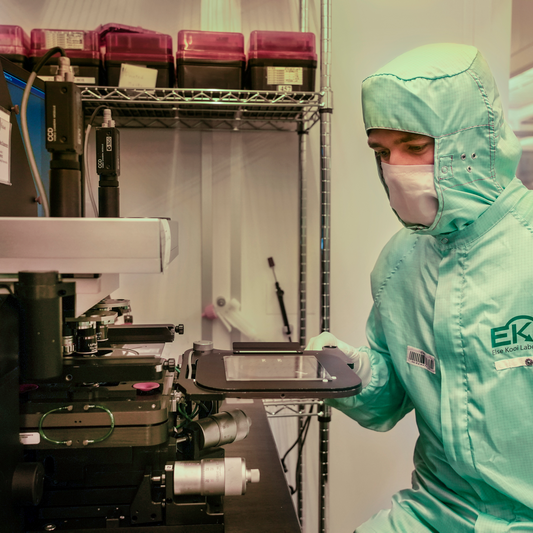
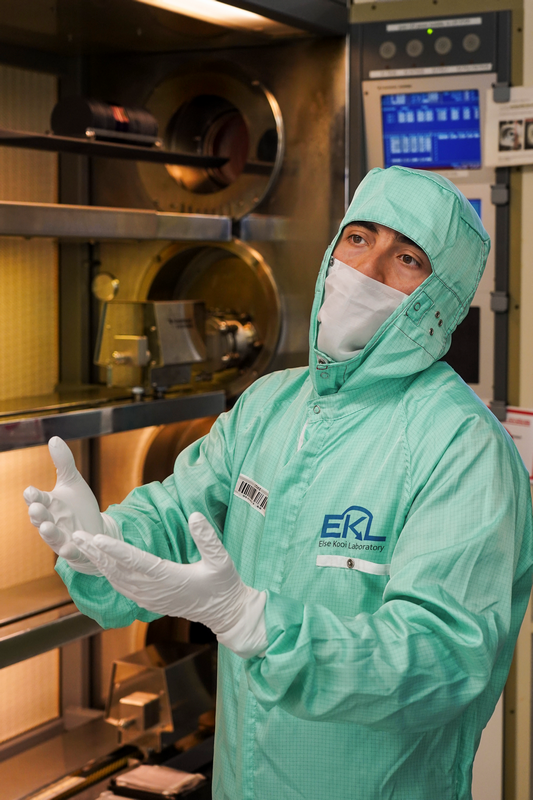
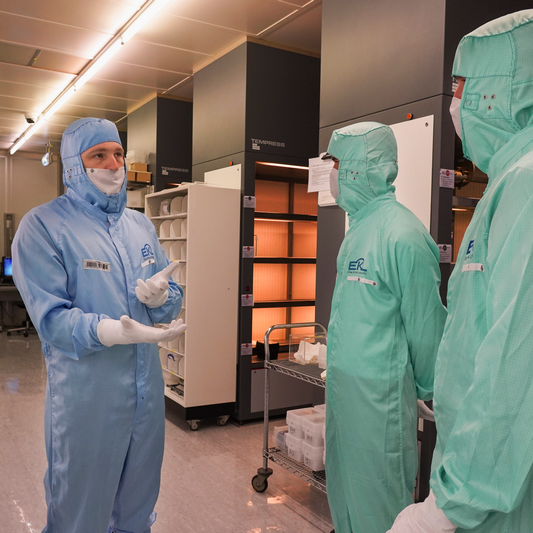
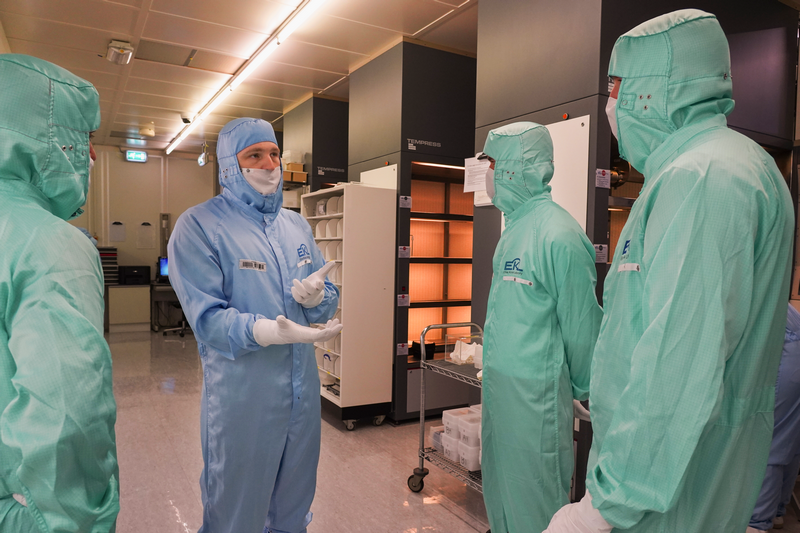
Process Engineer from EKL explaining the latest improvements to DENSsolutions quality control employees.

DENSsolutions and EKL (Else Kooi Laboratory) have been working together since the founding of our company in 2012. All our MEMS devices, from Wildfire chips to more intricate Stream Nano-Cells are developed in conjunction with this laboratory and produced here in Delft, the Netherlands. Being partly an academic laboratory, EKL is the perfect partner for us to develop innovative new ways to expose your sample to a variety of stimuli.

Bottom chips of our Stream Nano-Cell MEMS devices.

Rocket science

Chip production might not be as explosive as rocket science, but it is just as challenging. We produce numerous chips, and every single one is of consistent high quality which is especially challenging when you’re working on the sub micrometer scale. To ensure top production over so many chips, we need sophisticated processes. Luckily for us, we can count on a dedicated and enthusiastic team of experts at EKL that always strive to meet our demands.

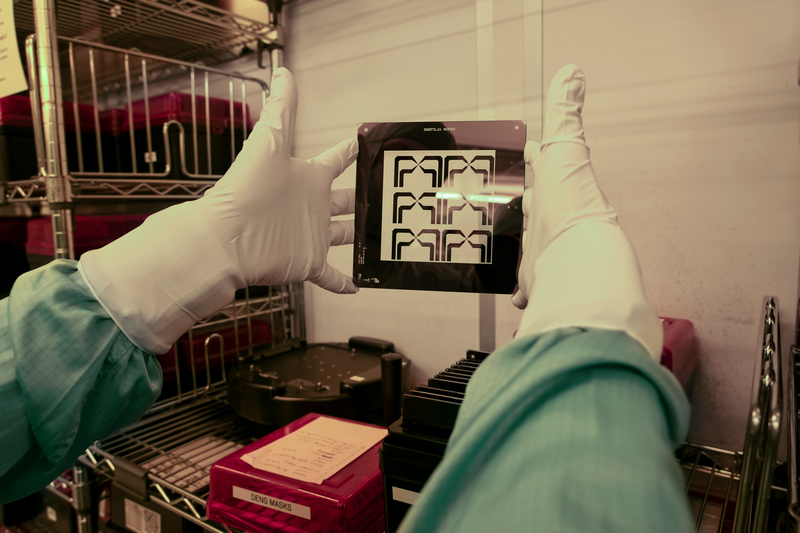
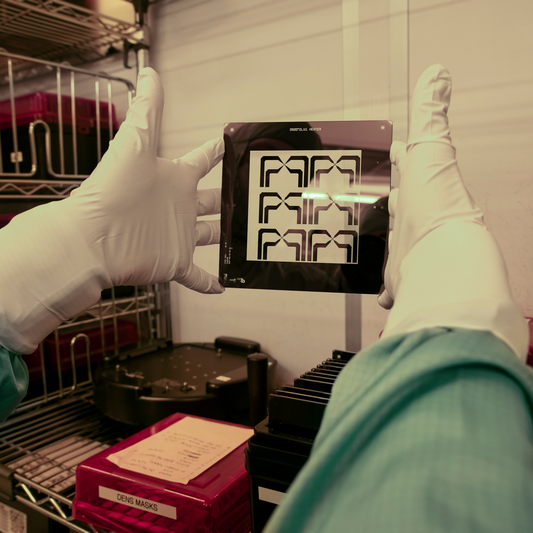
EKL employee showing the photomask for one of the layers required for the manufacturing of the Wildfire chips.

Overcoming challenges

So what does it actually take to produce these nanodevices? Since they are at the heart of our solutions, we take a lot of care in their manufacture.

We endeavour to make our MEMS devices precise and with tight tolerances, free of contamination, reproducible and affordable. It is precisely these values that drive our production process. Each step is carefully inspected for cleanliness, consistency and quality.

 What is a MEMS device?

MEMS stands for Micro-Electro-Mechanical Systems. All our ‘sample carriers’ are MEMS devices. We normally don’t use the description ‘sample carriers’ because they do way more than just carrying the sample. They expose the specimen to a wide variety of stimuli and provide quantitative measurements. We talk about “Nano-Chips” for Wildfire and Lightning, but when we stack chips to form closed channels for gas or liquid we refer to them as “Nano-Reactors”, for Climate, and “Nano-Cells”, for Stream and Ocean.

Historically, the earliest microfabrication processes were used for integrated circuit production, but in the last decades extended and re-adapted microfabrication methods have led to new processes for MEMS development.

A small piece of dust on a smartphone chip is usually unnoticeable. However, even the smallest amount of dust on our MEMS device can obstruct the nanoscale view of a sample. Our MEMS must be extremely clean and this is inspected between the many stages of its production. Overall, the development of these types of devices brings challenges in many areas of science and engineering: chemistry, physics, materials science, fabrication processes, but it is also giving rise to many kinds of interdisciplinary research.

Ellipsometry is an optical technique used to investigate the dielectric properties of thin films.

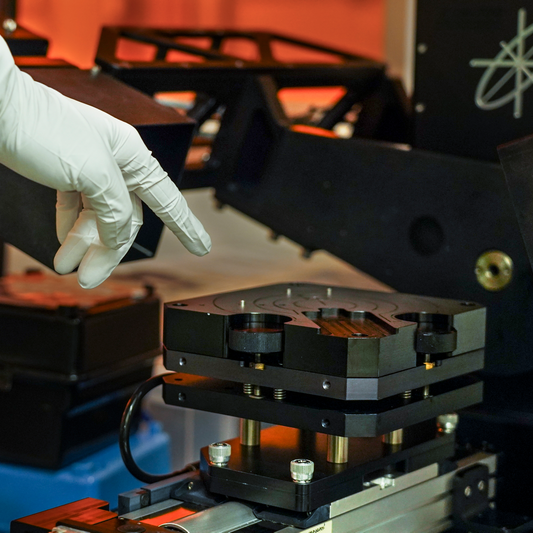
Photolithography step to expose the photomask within the wafer.

Nanometer precision

Next to cleanliness we also place high demands on our chips in terms of specific features that are required to do research with a high level of reliability. Our Stream Nano-Cells, for instance, need to be able to guarantee the right liquid thickness irrespective of the tolerances of the o-ring that seals them. Similarly, the windows need to ensure a reliable control of the bulging and a constant viewing area. We use different etching and deposition steps to create the spacers inside your Nano-Cell that are responsible for channeling the liquid. Similarly, during the window formation, we have to etch away exactly the right amount of material underneath, while keeping the layer intact with a precision of nanometers.

For some mainstream applications, over-etching of a few nanometers might not be important. In our case, keeping a specific thickness out of spec might result in the need to throw away the whole wafer and start all over again. If we have already accomplished 70-80% of the process, you can imagine how precious this can be. So we have to constantly push the machines to their limits to make sure we just etch exactly the right amount, over and over again.

 Did you know?

There are up to 25-30 machines involved in the production of our MEMS devices. Each of these machines has a set of unique variables that need to be just right. Think of pressure, power, chemistry of gases, temperature, frequency and time as some of the variables that have to be adjusted for the different machines in order to create the right recipe. Only by setting these in the right way, would the operator get the necessary chemical affinity and deposition/etching rates to successfully manufacture the chip that heats up your sample with super low drift.

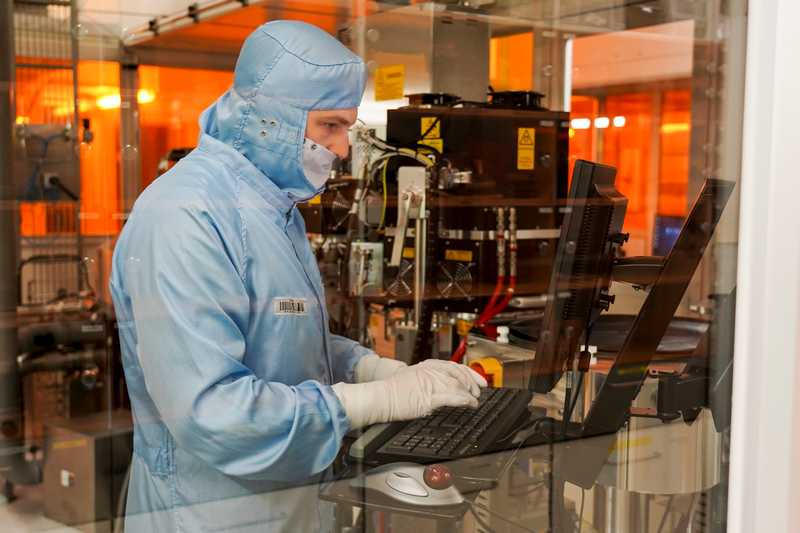
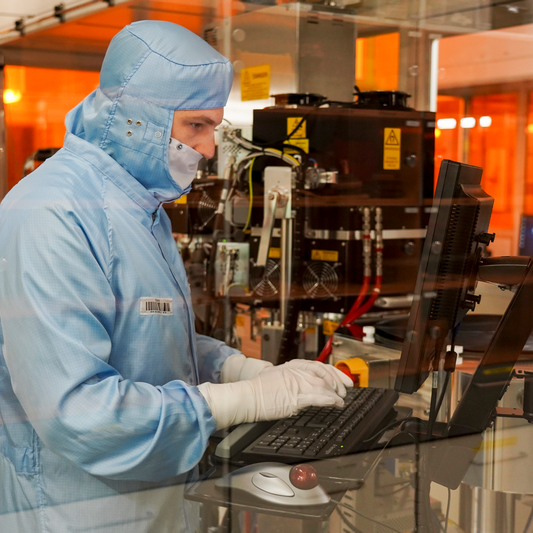
Process Engineer at EKL while adjusting the process recipe for one of the most crucial steps within the microfabrication.

Our MEMS are used in research as consumables. You might need to do many experiments using multiple chips to get the result that you want. So our MEMS have to be affordable to fit research budgets.

Each step of our workflow has been enhanced over the years to be as efficient as possible. This decreases lab time and cost, and ensures that each chip in a series has exactly the same specs. Your accuracy is our priority.

“We’re convinced that the MEMS devices are the core competence of our company. It is highly possible that high-impact advances will occur at the intersection of new process technologies and new architectures. Therefore, it’ll be our continuous job to push the limits in a well-planned, structured and innovative way”

Chief Technology Officer Dr. Hugo Perez Garza – DENSsolutions

See how we produce consistent high quality MEMS devices for our customers.

Process Engineer from EKL explaining the latest improvements to DENSsolutions quality control employees.

DENSsolutions and EKL (Else Kooi Laboratory) have been working together since the founding of our company in 2012. All our MEMS devices, from Wildfire chips to more intricate Stream Nano-Cells are developed in conjunction with this laboratory and produced here in Delft, the Netherlands. Being partly an academic laboratory, EKL is the perfect partner for us to develop innovative new ways to expose your sample to a variety of stimuli.

Bottom chips of our Stream Nano-Cell MEMS devices.

Rocket science

Chip production might not be as explosive as rocket science, but it is just as challenging. We produce numerous chips, and every single one is of consistent high quality which is especially challenging when you’re working on the sub micrometer scale. To ensure top production over so many chips, we need sophisticated processes. Luckily for us, we can count on a dedicated and enthusiastic team of experts at EKL that always strive to meet our demands.

EKL employee showing the photomask for one of the layers required for the manufacturing of the Wildfire chips.

Overcoming challenges

So what does it actually take to produce these nanodevices? Since they are at the heart of our solutions, we take a lot of care in their manufacture.

We endeavour to make our MEMS devices precise and with tight tolerances, free of contamination, reproducible and affordable. It is precisely these values that drive our production process. Each step is carefully inspected for cleanliness, consistency and quality.

 What is a MEMS device?

MEMS stands for Micro-Electro-Mechanical Systems. All our ‘sample carriers’ are MEMS devices. We normally don’t use the description ‘sample carriers’ because they do way more than just carrying the sample. They expose the specimen to a wide variety of stimuli and provide quantitative measurements. We talk about “Nano-Chips” for Wildfire and Lightning, but when we stack chips to form closed channels for gas or liquid we refer to them as “Nano-Reactors”, for Climate, and “Nano-Cells”, for Stream and Ocean.

Historically, the earliest microfabrication processes were used for integrated circuit production, but in the last decades extended and re-adapted microfabrication methods have led to new processes for MEMS development.

A small piece of dust on a smartphone chip is usually unnoticeable. However, even the smallest amount of dust on our MEMS device can obstruct the nanoscale view of a sample. Our MEMS must be extremely clean and this is inspected between the many stages of its production. Overall, the development of these types of devices brings challenges in many areas of science and engineering: chemistry, physics, materials science, fabrication processes, but it is also giving rise to many kinds of interdisciplinary research.

Ellipsometry is an optical technique used to investigate the dielectric properties of thin films.

Photolithography step to expose the photomask within the wafer.

Nanometer precision

Next to cleanliness we also place high demands on our chips in terms of specific features that are required to do research with a high level of reliability. Our Stream Nano-Cells, for instance, need to be able to guarantee the right liquid thickness irrespective of the tolerances of the o-ring that seals them. Similarly, the windows need to ensure a reliable control of the bulging and a constant viewing area. We use different etching and deposition steps to create the spacers inside your Nano-Cell that are responsible for channeling the liquid. Similarly, during the window formation, we have to etch away exactly the right amount of material underneath, while keeping the layer intact with a precision of nanometers.

For some mainstream applications, over-etching of a few nanometers might not be important. In our case, keeping a specific thickness out of spec might result in the need to throw away the whole wafer and start all over again. If we have already accomplished 70-80% of the process, you can imagine how precious this can be. So we have to constantly push the machines to their limits to make sure we just etch exactly the right amount, over and over again.

 Did you know?

There are up to 25-30 machines involved in the production of our MEMS devices. Each of these machines has a set of unique variables that need to be just right. Think of pressure, power, chemistry of gases, temperature, frequency and time as some of the variables that have to be adjusted for the different machines in order to create the right recipe. Only by setting these in the right way, would the operator get the necessary chemical affinity and deposition/etching rates to successfully manufacture the chip that heats up your sample with super low drift.

Process Engineer at EKL while adjusting the process recipe for one of the most crucial steps within the microfabrication.

Our MEMS are used in research as consumables. You might need to do many experiments using multiple chips to get the result that you want. So our MEMS have to be affordable to fit research budgets.

Each step of our workflow has been enhanced over the years to be as efficient as possible. This decreases lab time and cost, and ensures that each chip in a series has exactly the same specs. Your accuracy is our priority.

“We’re convinced that the MEMS devices are the core competence of our company. It is highly possible that high-impact advances will occur at the intersection of new process technologies and new architectures. Therefore, it’ll be our continuous job to push the limits in a well-planned, structured and innovative way”

Chief Technology Officer Dr. Hugo Perez Garza – DENSsolutions

Gas Analyzer supporting ex situ Catalyst experiments

Gas Analyzer supporting ex situ Catalyst experiments

Technical Research Engineer Marien Bremmer MSc with the gas analyzer (blue) in the background
Our solutions not only allow for highly controllable in situ experiments, they also allow for ex situ experiments that might save you valuable in situ time. With this ex situ experiment, we were able to prove the performance of the catalyst before moving in to the TEM.

The experiment

We used palladium nanoparticles for our catalyst These particles were dropcasted inside a Climate MEMS based Nano-Reactor. For the gas supply we used the Climate G+ system which allows for up to 3 gases to be mixed. We loaded the system with oxygen and methane as reactive gases and measured carbon monoxide and carbon dioxide as reaction products.

Figure 1. Sample temperature (top) and gas partial pressure (middle & bottom) measured as a function of time.

Catalyst performance

First we used the gas analyzer combined with our accurate temperature control to measure the catalyst performance. The supply of reactants was kept at a constant level (figure 1 – middle graph) while we used our Impulse software to automatically ramp up the temperature of the Nano-Reactor from 300 to 700 °C in 60 seconds (figure 1 – top graph). As a result we measured the level of reactant gases dropping and the level of reaction products rising (figure 1 – bottom graph). We see the levels stabilizing when the temperature is constant.


High activity phase shifting

Figure 2. Gas mixture composition into the Nano-Reactor (top), partial pressures of gases flowing out of the Nano-Reactor (middle) and dissipated power by the Nano-Reactor heater (bottom) as a function of time.
During the next experiment, we kept the palladium sample at a constant temperature while increasing the concentration of methane (CH4) from 5% to 10% (figure 2 – top graph). At around  t = 300 seconds you can clearly see fluctuations in the level of reaction products (figure 2 – middle graph). Here we observe the catalyst shifting in and out of a high activity phase that is reached at elevated temperatures. When passing a certain temperature range, this high activity phase can be demonstrated by oscillations in the partial pressure of the gas reaction products. Also oscillations in the power dissipated by the heater (figure 2 – bottom graph) indicates a change of activity at the sample.
At t = 500 seconds we use our Impulse software to drop the level of methane in steps of 0,5%. Measuring the COlevel with our gas analyzer we can clearly see the influence of the first drop in concentration. The COproduction rate starts to more unstable. By dropping the concentration with another 0,5%, the frequency of the fluctuations increases and, after the third drop of concentration, the catalyst starts to shift back to its normal activity phase, stabilizing the COproduction after the fourth drop.
 

High time resolution

Figure 3. Detailed results for partial pressure (top) and power dissipation (bottom) measurements.

We zoomed in at areas A and B and plotted the results from the gas analyzer as well as those from the power dissipated by our 4-point probe temperature control system (see figure 3). This allows us to correlate the two measurements. We see that the reaction gases are in counter phase of each other and that their extremes are in line with the tops of the measured power. This shows not only a very high stability in temperature control but also a very high time resolution.

Conclusions

Thanks to our high accuracy gas analyzer and heating control and measurement, you are able to do ex situ experiments that can give you valuable data. This data can lead to new discoveries or can be used to prepare your in situ experiment better.

Marien Bremmer who conducted the experiment commented:
“Using the Climate G+ in combination with the Gas Analyzer allows you to characterize your catalyst sample ex situ, finding the best gas and temperature conditions for your reaction, and with this data to go to the TEM to finalize your research with real in situ images and spectroscopy.”

Download the
Gas Analyzer Application Note

Technical Research Engineer Marien Bremmer MSc with the gas analyzer (blue) in the background
Our solutions not only allow for highly controllable in situ experiments, they also allow for ex situ experiments that might save you valuable in situ time. With this ex situ experiment, we were able to prove the performance of the catalyst before moving in to the TEM.

The experiment

We used palladium nanoparticles for our catalyst These particles were dropcasted inside a Climate MEMS based Nano-Reactor. For the gas supply we used the Climate G+ system which allows for up to 3 gases to be mixed. We loaded the system with oxygen and methane as reactive gases and measured carbon monoxide and carbon dioxide as reaction products.

Figure 1. Sample temperature (top) and gas partial pressure (middle & bottom) measured as a function of time.

Catalyst performance

First we used the gas analyzer combined with our accurate temperature control to measure the catalyst performance. The supply of reactants was kept at a constant level (figure 1 – middle graph) while we used our Impulse software to automatically ramp up the temperature of the Nano-Reactor from 300 to 700 °C in 60 seconds (figure 1 – top graph). As a result we measured the level of reactant gases dropping and the level of reaction products rising (figure 1 – bottom graph). We see the levels stabilizing when the temperature is constant.
 

High activity phase shifting

Figure 2. Gas mixture composition into the Nano-Reactor (top), partial pressures of gases flowing out of the Nano-Reactor (middle) and dissipated power by the Nano-Reactor heater (bottom) as a function of time.
During the next experiment, we kept the palladium sample at a constant temperature while increasing the concentration of methane (CH4) from 5% to 10% (figure 2 – top graph). At around  t = 300 seconds you can clearly see fluctuations in the level of reaction products (figure 2 – middle graph). Here we observe the catalyst shifting in and out of a high activity phase that is reached at elevated temperatures. When passing a certain temperature range, this high activity phase can be demonstrated by oscillations in the partial pressure of the gas reaction products. Also oscillations in the power dissipated by the heater (figure 2 – bottom graph) indicates a change of activity at the sample.
At t = 500 seconds we use our Impulse software to drop the level of methane in steps of 0,5%. Measuring the COlevel with our gas analyzer we can clearly see the influence of the first drop in concentration. The COproduction rate starts to more unstable. By dropping the concentration with another 0,5%, the frequency of the fluctuations increases and, after the third drop of concentration, the catalyst starts to shift back to its normal activity phase, stabilizing the COproduction after the fourth drop.
 

High time resolution

Figure 3. Detailed results for partial pressure (top) and power dissipation (bottom) measurements.

We zoomed in at areas A and B and plotted the results from the gas analyzer as well as those from the power dissipated by our 4-point probe temperature control system (see figure 3). This allows us to correlate the two measurements. We see that the reaction gases are in counter phase of each other and that their extremes are in line with the tops of the measured power. This shows not only a very high stability in temperature control but also a very high time resolution.

Conclusions

Thanks to our high accuracy gas analyzer and heating control and measurement, you are able to do ex situ experiments that can give you valuable data. This data can lead to new discoveries or can be used to prepare your in situ experiment better.

Marien Bremmer who conducted the experiment commented:
“Using the Climate G+ in combination with the Gas Analyzer allows you to characterize your catalyst sample ex situ, finding the best gas and temperature conditions for your reaction, and with this data to go to the TEM to finalize your research with real in situ images and spectroscopy.”

Download the
Gas Analyzer Application Note

1st European Climate User Meeting

1st European Climate User Meeting

Where we find out how our solutions accelerate research and how we can adapt to new challenges.

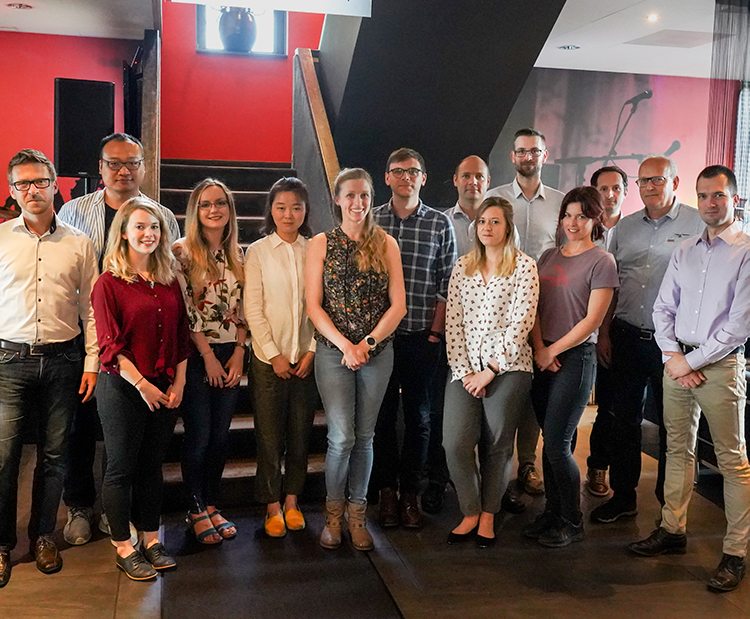
DENSsolutions team members together with customers from FHI Berlin, DTU Nanolab Kgs. Lyngby, ER-C Jülich, EMAT Antwerp, ETH Zürich, Johnson-Matthey Didcot, University of Limerick, Trinity College Dublin and Queen’s University Belfast.
A little over 3 years ago, the first Climate in situ gas & heating systems were installed by DENSsolutions at customer sites. Therefore, the time has come to evaluate the results obtained so far by all our European customers and to share experiences. A 2-day meeting was held in Delft, the Netherlands on 5th & 6th June 2019 to provide an open forum for both users and the DENSsolutions team to share their results and suggestions.
Dr. Michele Conroy and Dr. Jennifer Cookman from the University of Limerick sharing their future plans for Climate experiments.

Presentations and discussions

Each Climate user gave a presentation on: their in situ gas & heating research, other research using the Climate system in their departments, and plans for future research.The topics covered included catalyst research on nano-particles, carbon nano-tube growth, and materials science on lamella-type samples. Our team members also gave presentations on our latest product development and newest applications.

Dr. Armand Beche (center) from EMAT Antwerp
Dr. Xing Huang (right) from ETH Zurich
We value the experience and feedback that our users from different institutes and companies, as well as DENSsolutions team members, brought to the discussions. Our discussions were dynamic and covered not only in situ TEM but also experiments that used the Climate Nano-Reactor in other environments such as a Beamline or an X-ray microscope.
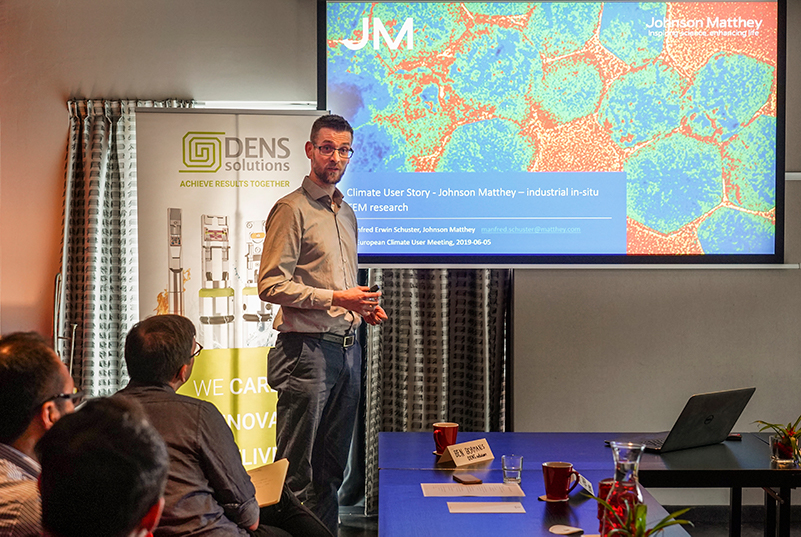
Dr. Manfred Schuster from Johnson Matthey sharing insights from their customized beamline experiment
During the conference, new ideas, theories and product feedback were shared so we left with a list of possible improvements for our solutions as needed by the people who use them. These included: ease-of-use items, improvements on MEMS chips, tools to improve sample drop casting, and ideas on how to improve gas & heating control.
Dr. Thomas Hansen DTU explaining on the importance of low dose imaging.

Continuing the conversation

All the participants agreed that we should continue these discussions to improve both in situ TEM research and the tools that facilitate it. DENSsolutions will enable these conversations as part of an online environment as well as by organizing new Climate user meetings. Furthermore we see possibilities to organize forums like this in the future for other products and for users from other regions.

Ronald Marx MSc, DENSsolutions
Our Climate Product Manager Ronald Marx commented at the end of the 2-day meeting:
“It was a great pleasure for me to host all these Climate users in Delft and engage in discussions that reveal both the current and the potential new benefits of doing in situ research with the system’.

Download the Climate Brochure

For more information on features and specifications.

<!--[if lte IE 8]><!-- [et_pb_line_break_holder] --><script charset="utf-8" type="text/javascript" src="//js.hsforms.net/forms/v2-legacy.js"></script><!-- [et_pb_line_break_holder] --><![endif]--><!-- [et_pb_line_break_holder] --><script charset="utf-8" type="text/javascript" src="//js.hsforms.net/forms/v2.js"></script><!-- [et_pb_line_break_holder] --><script><!-- [et_pb_line_break_holder] --> hbspt.forms.create({<!-- [et_pb_line_break_holder] --> portalId: "469089",<!-- [et_pb_line_break_holder] --> formId: "0d52a62f-f229-49fb-a2d3-9b8c66a5a526", submitButtonClass: 'et_pb_button'<!-- [et_pb_line_break_holder] -->});<!-- [et_pb_line_break_holder] --></script>

Where we find out how our solutions accelerate research and how we can adapt to new challenges.

DENSsolutions team members together with customers from FHI Berlin, DTU Nanolab Kgs. Lyngby, ER-C Jülich, EMAT Antwerp, ETH Zürich, Johnson-Matthey Didcot, University of Limerick, Trinity College Dublin and Queen’s University Belfast.
A little over 3 years ago, the first Climate in situ gas & heating systems were installed by DENSsolutions at customer sites. Therefore, the time has come to evaluate the results obtained so far by all our European customers and to share experiences. A 2-day meeting was held in Delft, the Netherlands on 5th & 6th June 2019 to provide an open forum for both users and the DENSsolutions team to share their results and suggestions.
Dr. Michele Conroy and Dr. Jennifer Cookman from the University of Limerick sharing their future plans for Climate experiments.

Presentations and discussions

Each Climate user gave a presentation on: their in situ gas & heating research, other research using the Climate system in their departments, and plans for future research.The topics covered included catalyst research on nano-particles, carbon nano-tube growth, and materials science on lamella-type samples. Our team members also gave presentations on our latest product development and newest applications.

Dr. Armand Beche (center) from EMAT Antwerp
Dr. Xing Huang (right) from ETH Zurich
We value the experience and feedback that our users from different institutes and companies, as well as DENSsolutions team members, brought to the discussions. Our discussions were dynamic and covered not only in situ TEM but also experiments that used the Climate Nano-Reactor in other environments such as a Beamline or an X-ray microscope.
Dr. Manfred Schuster from Johnson Matthey sharing insights from their customized beamline experiment
During the conference, new ideas, theories and product feedback were shared so we left with a list of possible improvements for our solutions as needed by the people who use them. These included: ease-of-use items, improvements on MEMS chips, tools to improve sample drop casting, and ideas on how to improve gas & heating control.
Dr. Thomas Hansen DTU explaining on the importance of low dose imaging.

Continuing the conversation

All the participants agreed that we should continue these discussions to improve both in situ TEM research and the tools that facilitate it. DENSsolutions will enable these conversations as part of an online environment as well as by organizing new Climate user meetings. Furthermore we see possibilities to organize forums like this in the future for other products and for users from other regions.

Ronald Marx MSc, DENSsolutions
Our Climate Product Manager Ronald Marx commented at the end of the 2-day meeting:
“It was a great pleasure for me to host all these Climate users in Delft and engage in discussions that reveal both the current and the potential new benefits of doing in situ research with the system’.

Interested in the Climate system?

Download the Climate Brochure

For more information on features and specifications.

<!--[if lte IE 8]><!-- [et_pb_line_break_holder] --><script charset="utf-8" type="text/javascript" src="//js.hsforms.net/forms/v2-legacy.js"></script><!-- [et_pb_line_break_holder] --><![endif]--><!-- [et_pb_line_break_holder] --><script charset="utf-8" type="text/javascript" src="//js.hsforms.net/forms/v2.js"></script><!-- [et_pb_line_break_holder] --><script><!-- [et_pb_line_break_holder] --> hbspt.forms.create({<!-- [et_pb_line_break_holder] --> portalId: "469089",<!-- [et_pb_line_break_holder] --> formId: "0d52a62f-f229-49fb-a2d3-9b8c66a5a526", submitButtonClass: 'et_pb_button'<!-- [et_pb_line_break_holder] -->});<!-- [et_pb_line_break_holder] --></script>

The newest addition to our logistics team

The newest addition to our logistics team

At DENSsolutions, we cover every aspect of our solutions, from concept to creation to delivery. Our In Situ solutions can only get to your microscopes with the best minds in our logistics team.

We interview Magda Wierzba, our newest addition to the logistics team. As part of her duties, she oversees our warehouse stock and deliveries of our solutions. She tells us how her mathematics degree helps with the pressures of her role, and how a dream and a warehouse in Holland led her to logistics.

Can you tell me how you ended up in logistics?

Eight years ago, I worked in customer service in the company Sloan LED, an American company that builds lighting systems with headquarters in California.

I worked for a year and a half in customer service when the company expanded and opened a warehouse in the Netherlands that delivered to Europe and the rest of the world. A colleague and I were asked to run the warehouse. We started to build up our stock and we opened for more customers. We slowly built up the logistics team and I completed courses in supply chains and in export documents.

I built a database about the customers and, this way, I built up the logistics group with my colleague.

We focused on helping my manager in the United States coordinate between the sales team in Europe and the purchasing team in the United States. Each week we checked in with the forecast; where we are, how we are doing, whether we have delivered the goods on time, and what are the reasons if we haven’t.

So that was your first time in logistics?

It was my first time in logistics and I liked it very much. It is always a challenge and it is never boring.

If there is a problem we always try to find a solution, especially one that is best for the customer. If we have issues with the delivery time, we find the quickest options to satisfy the customer.

Before you came to DENSsolutions, you got a masters degree in mathematics and computer sciences. How does that help with logistics?

Focusing on the numbers; I’m really good at that. My background helps with logistics as logical thinking is very important. Sometimes you have to make a critical decision in five minutes. You have to sometimes think really quickly and, when it’s made, the decision has to be good

Do you feel pressure here because systems are connected to research – how do you deal with the expectations from the customers?

I’ve had that before; the expectations and deadlines, so I don’t feel the pressure now. I’m used to working like that. The customer is the most important for me and logistics, and my responsibility is that we have the products there on time.

How do we at DENSsolutions make sure that our customers receive their goods on time?

We have a set of procedures we use to always stay on top of every order. We are all very hands on, with daily meetings with a board and, above all, we just do it.

It is a challenge sometimes, all these rules, but everybody in the logistics team knows that we have to value them in order to deliver on our promises.

Sometimes we have to make decisions like closing the warehouse for a whole day because we have to do stock counting. It’s very important to know exactly, up till that last chip, what we have in-house.

You see a bright future for yourself at DENSsolutions?

Of course! I see it.

My opinion is that if I have a passion for something then I’ll like what I’m doing. If I don’t like it, I will not do it. I’m really happy to be here and we have a good team.

I’m feeling very positive about this company. We have good people with passion. Together, we are going to achieve a lot.

At DENSsolutions, we cover every aspect of our solutions, from concept to creation to delivery. Our In Situ solutions can only get to your microscopes with the best minds in our logistics team.

We interview Magda Wierzba, our newest addition to the logistics team. As part of her duties, she oversees our warehouse stock and deliveries of our solutions. She tells us how her mathematics degree helps with the pressures of her role, and how a dream and a warehouse in Holland led her to logistics.

Can you tell me how you ended up in logistics?

Eight years ago, I worked in customer service in the company Sloan LED, an American company that builds lighting systems with headquarters in California.

I worked for a year and a half in customer service when the company expanded and opened a warehouse in the Netherlands that delivered to Europe and the rest of the world. A colleague and I were asked to run the warehouse. We started to build up our stock and we opened for more customers. We slowly built up the logistics team and I completed courses in supply chains and in export documents.

I built a database about the customers and, this way, I built up the logistics group with my colleague.

We focused on helping my manager in the United States coordinate between the sales team in Europe and the purchasing team in the United States. Each week we checked in with the forecast; where we are, how we are doing, whether we have delivered the goods on time, and what are the reasons if we haven’t.

So that was your first time in logistics?

It was my first time in logistics and I liked it very much. It is always a challenge and it is never boring.

If there is a problem we always try to find a solution, especially one that is best for the customer. If we have issues with the delivery time, we find the quickest options to satisfy the customer.

Before you came to DENSsolutions, you got a masters degree in mathematics and computer sciences. How does that help with logistics?

Focusing on the numbers; I’m really good at that. My background helps with logistics as logical thinking is very important. Sometimes you have to make a critical decision in five minutes. You have to sometimes think really quickly and, when it’s made, the decision has to be good

Do you feel pressure here because systems are connected to research – how do you deal with the expectations from the customers?

I’ve had that before; the expectations and deadlines, so I don’t feel the pressure now. I’m used to working like that. The customer is the most important for me and logistics, and my responsibility is that we have the products there on time.

How do we at DENSsolutions make sure that our customers receive their goods on time?

We have a set of procedures we use to always stay on top of every order. We are all very hands on, with daily meetings with a board and, above all, we just do it.

It is a challenge sometimes, all these rules, but everybody in the logistics team knows that we have to value them in order to deliver on our promises.

Sometimes we have to make decisions like closing the warehouse for a whole day because we have to do stock counting. It’s very important to know exactly, up till that last chip, what we have in-house.

You see a bright future for yourself at DENSsolutions?

Of course! I see it.

My opinion is that if I have a passion for something then I’ll like what I’m doing. If I don’t like it, I will not do it. I’m really happy to be here and we have a good team.

I’m feeling very positive about this company. We have good people with passion. Together, we are going to achieve a lot.

UConn Opening a New Center for In Situ & Operando TEM in Collaboration With DENSsolutions

UConn Opening a New Center for In Situ & Operando TEM in Collaboration With DENSsolutions

UConn Tech Park (Magda Biernat)

At DENSsolutions, we believe that together we can achieve more. So, we are proud to announce our partnership with the University of Connecticut (UConn).

A new center commemorating this exciting collaboration will be opened. The UConn DENSsolutions Center for IN-siTu/Operando Electron Microscopy (InToEM) will be the home of scientists and engineers with complementary expertise working at the frontier of understanding materials dynamics. The InToEM center is situated in UConn Tech Park, the University of Connecticut’s premier center for cutting-edge research, industry collaboration, and innovation.

Our contribution

The DENSsolutions Climate MEMS-based Nano-Reactor TEM system will be at the heart of this research center. The system has a unique capacity to probe high-temperature gas-solid reactions with high spatial resolution under ambient pressure, in gaseous environment controlled by sophisticated dynamic gas mixing. Dynamic changes in local site-specific structural information of nanomaterials can be monitored in real-time under realistic reaction conditions.

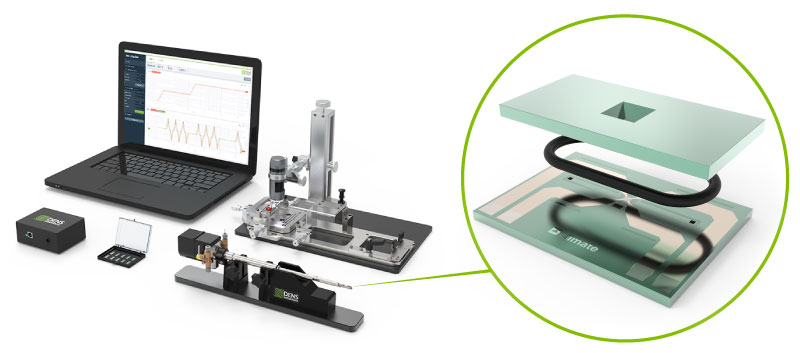
Climate In Situ Gas & heating system with featured MEMS-based Nano-Reactor (gas supply not on the picture)
Climate In Situ Gas & heating system (gas supply not on the picture)
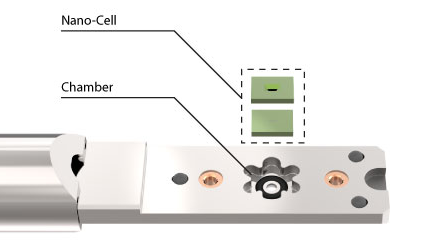
MEMS-based Nano-Reactor

New Opportunities

As the demands of research need more complex solutions, we want to move towards Operando environmental electron microscopy. Our solutions will allow concurrent mass-spectrometry, calorimetry and chemical analysis during reactions.
These new capabilities will provide unprecedented insight into the correlation between materials dynamics and temporal performance at the fundamental atomic-scale, and will open up a world of research opportunities in heterogeneous catalysis, fuel cells, corrosion, and materials growth and transformation.

Dr. Zhu with the Climate system (UConn Photo)
Yuanyuan Zhu, the Director of the InToEM, Assistant Professor in the Department of Materials Science and Engineering, Institute of Materials Science, UConn commented:
“Being able to study the behavior of materials in their native environment has been microscopist’s dream since the birth of TEM. I’m very excited about the InToEM center, which will provide an optimal scientific “sandbox” to explore microscopy as it should be.”
Ben Bormans, CEO of DENSsolutions, is very pleased to have UConn and the InToEM center led by Dr. Zhu, as a customer:
“DENSsolutions’ vision is that in situ and operando TEM can contribute to solving societal challenges like climate change and green/clean technologies.
These new techniques connect microscopy more meaningfully with chemistry, materials research and nanotechnology. Therefore, here at DENSsolutions, we all are very, very excited about being a partner in the InToEM center.
Here, a lot of good things come together: the Materials Science and Engineering Department and Institute of Materials Science of UConn with world-class performance in Materials research, the fantastic facilities of the Business Innovation Center, and the focus and passion of the scientists of INToEM.”

Download the Climate Brochure

For more information on features and specifications.

<!--[if lte IE 8]><!-- [et_pb_line_break_holder] --><script charset="utf-8" type="text/javascript" src="//js.hsforms.net/forms/v2-legacy.js"></script><!-- [et_pb_line_break_holder] --><![endif]--><!-- [et_pb_line_break_holder] --><script charset="utf-8" type="text/javascript" src="//js.hsforms.net/forms/v2.js"></script><!-- [et_pb_line_break_holder] --><script><!-- [et_pb_line_break_holder] --> hbspt.forms.create({<!-- [et_pb_line_break_holder] --> portalId: "469089",<!-- [et_pb_line_break_holder] --> formId: "0d52a62f-f229-49fb-a2d3-9b8c66a5a526", submitButtonClass: 'et_pb_button'<!-- [et_pb_line_break_holder] -->});<!-- [et_pb_line_break_holder] --></script>
UConn Tech Park (Magda Biernat)

At DENSsolutions, we believe that together we can achieve more. So, we are proud to announce our partnership with the University of Connecticut (UConn).

A new center commemorating this exciting collaboration will be opened. The UConn DENSsolutions Center for IN-siTu/Operando Electron Microscopy (InToEM) will be the home of scientists and engineers with complementary expertise working at the frontier of understanding materials dynamics. The InToEM center is situated in UConn Tech Park, the University of Connecticut’s premier center for cutting-edge research, industry collaboration, and innovation.

Our contribution

The DENSsolutions Climate MEMS-based Nano-Reactor TEM system will be at the heart of this research center. The system has a unique capacity to probe high-temperature gas-solid reactions with high spatial resolution under ambient pressure, in gaseous environment controlled by sophisticated dynamic gas mixing. Dynamic changes in local site-specific structural information of nanomaterials can be monitored in real-time under realistic reaction conditions.

Climate In Situ Gas & heating system with featured MEMS-based Nano-Reactor (gas supply not on the picture)
Climate In Situ Gas & heating system (gas supply not on the picture)
MEMS-based Nano-Reactor

New Opportunities

As the demands of research need more complex solutions, we want to move towards Operando environmental electron microscopy. Our solutions will allow concurrent mass-spectrometry, calorimetry and chemical analysis during reactions.
These new capabilities will provide unprecedented insight into the correlation between materials dynamics and temporal performance at the fundamental atomic-scale, and will open up a world of research opportunities in heterogeneous catalysis, fuel cells, corrosion, and materials growth and transformation.

Dr. Zhu with the Climate system (UConn Photo)
Yuanyuan Zhu, the Director of the InToEM, Assistant Professor in the Department of Materials Science and Engineering, Institute of Materials Science, UConn commented:
“Being able to study the behavior of materials in their native environment has been microscopist’s dream since the birth of TEM. I’m very excited about the InToEM center, which will provide an optimal scientific “sandbox” to explore microscopy as it should be.”
Ben Bormans, CEO of DENSsolutions, is very pleased to have UConn and the InToEM center led by Dr. Zhu, as a customer:
“DENSsolutions’ Vision is that in situ and operando TEM can contribute to solving societal challenges like climate change and green/clean technologies.
These new techniques connect microscopy more meaningfully with chemistry, materials research and nanotechnology. Therefore, here at DENSsolutions, we all are very, very excited about being a partner in the InToEM center.
Here, a lot of good things come together: the Materials Science and Engineering Department and Institute of Materials Science of UConn with world-class performance in Materials research, the fantastic facilities of the Business Innovation Center, and the focus and passion of the scientists of INToEM.”

Download the Climate Brochure

For more information on features and specifications.

<!--[if lte IE 8]><!-- [et_pb_line_break_holder] --><script charset="utf-8" type="text/javascript" src="//js.hsforms.net/forms/v2-legacy.js"></script><!-- [et_pb_line_break_holder] --><![endif]--><!-- [et_pb_line_break_holder] --><script charset="utf-8" type="text/javascript" src="//js.hsforms.net/forms/v2.js"></script><!-- [et_pb_line_break_holder] --><script><!-- [et_pb_line_break_holder] --> hbspt.forms.create({<!-- [et_pb_line_break_holder] --> portalId: "469089",<!-- [et_pb_line_break_holder] --> formId: "0d52a62f-f229-49fb-a2d3-9b8c66a5a526", submitButtonClass: 'et_pb_button'<!-- [et_pb_line_break_holder] -->});<!-- [et_pb_line_break_holder] --></script>

MPM4 conference, Zhejiang University

MPM4 conference, Zhejiang University

DENSsolutions presence at the 4th International Conference on Materials Microstructure and Performance (MPM4).

Zhejiang University and DENSsolutions have a long standing relationship. In 2013 already, the prestige Zhejiang University became one of our first clients. Choosing the wildfire system for its high stability at elevated temperatures. Later they also acquired the Lightning Biasing system and the Climate combined Gas and Heating system. Using the Climate system they published several high impact publications like the ones, among others, on Nanoparticles and Pd Nanocrystals.  
2015 Presentation by by DENSsolutions at Zhejiang University Conference
MPM4 conference, Zhejiang University May 15-19
This conference, organized by School of Materials Science and Engineering, will focus on the latest developments in In situ Electron Microscopy, Biological materials, Semiconductor optoelectronic materials and Energy storage materials and battery technology.
Zhejiang University in collaboration with our distributor DENS ALTA technologies will give a demonstration of the Climate In Situ Gas and Heating system on the 16th of May in their Center of Electron Microscopy.
Click here for more information about Climate

Dr. Qiang Xu

Presentation: Stream – New generation of In Situ liquid system
Also on the 16th of may, our Vp of Business Development, Dr. Qiang Xu,  will give a presentation on our Stream In Situ liquid and biasing system. Explaining how we at DENSsolutions achieve to create a reliable and user friendly solution taking in to account the complexity of hardware, software and methodology.
Click here for more information about Stream

DENSsolutions presence at the 4th International Conference on Materials Microstructure and Performance (MPM4).

Zhejiang University and DENSsolutions have a long standing relationship. In 2013 already, the prestige Zhejiang University became one of our first clients. Choosing the wildfire system for its high stability at elevated temperatures. Later they also acquired the Lightning Biasing system and the Climate combined Gas and Heating system. Using the Climate system they published several high impact publications like the ones, among others, on Nanoparticles and Pd Nanocrystals.  
2015 Presentation by by DENSsolutions at Zhejiang University Conference
MPM4 conference, Zhejiang University May 15-19
This conference, organized by School of Materials Science and Engineering, will focus on the latest developments in In situ Electron Microscopy, Biological materials, Semiconductor optoelectronic materials and Energy storage materials and battery technology.
Zhejiang University in collaboration with our distributor DENS ALTA technologies will give a demonstration of the Climate In Situ Gas and Heating system on the 16th of May in their Center of Electron Microscopy.
Click here for more information about Climate

Dr. Qiang Xu

Presentation: Stream – New generation of In Situ liquid system
Also on the 16th of may, our Vp of Business Development, Dr. Qiang Xu,  will give a presentation on our Stream In Situ liquid and biasing system. Explaining how we at DENSsolutions achieve to create a reliable and user friendly solution taking in to account the complexity of hardware, software and methodology.
Click here for more information about Stream

STEM Meeting, Tianjin University of Technology

STEM Meeting, Tianjin University of Technology

DENSsolutions presence at STEM meeting, Tianjin University of Technology

We are proud to be among one of the leading high tech companies invited for this meeting. In 2016, the prestige Tianjin University of Technology became the first client in China to use a Stream In Situ Liquid and Biasing system. At the same time they became a DECEM (DENSsolutions essence center of electron microscopy) and just recently they created a big impact with their new discoveries on single atom catalyst, with a significant contribution of Prof. Jun Luo, using our Climate In Situ Gas and Heating system.
Tianjin city
STEM Meeting, Tianjin University of Technology May 16-18
This meeting, organized by our dear customer Prof. Jun Luo, will host 40 well-known experts and scholars in electron microscopy and materials science to discuss the latest developments in the fields of materials science, applied physics, chemistry, and chemical engineering.
Dr. Hongyu Sun
Stream Demo: In Situ TEM Liquid + Heating or Biasing
On the 18th of may, our Application Specialist Dr. Hongy Sun wil give a demonstration of our latest system which allows for high resolution liquid phase TEM. With a unique level of control over a.o. the membrane bulging and liquid flow rate. Dr. Hongyu will demonstrate the sytem showing controllable electro deposition of copper layers in liquid.
Click here for more information about Stream

Dr. Qiang Xu

Presentation: Stream – New generation of In Situ liquid system
Also on the 18th of may, our Vp of Business Development, Dr. Qiang Xu will give a presentation on the Stream system. Explaining how we at DENSsolutions achieve to create a reliable and user friendly solution taking in to account the complexity of hardware, software and methodology.
Click here for more information about Stream

DENSsolutions presence at STEM meeting, Tianjin University of Technology

We are proud to be among one of the leading high tech companies invited for this meeting. In 2016, the prestige Tianjin University of Technology became the first client in China to use a Stream In Situ Liquid and Biasing system. At the same time they became a DECEM (DENSsolutions essence center of electron microscopy) and just recently they created a big impact with their new discoveries on single atom catalyst, with a significant contribution of Prof. Jun Luo, using our Climate In Situ Gas and Heating system.
Tianjin city
STEM Meeting, Tianjin University of Technology May 16-18
This meeting, organized by our dear customer Prof. Jun Luo, will host 40 well-known experts and scholars in electron microscopy and materials science to discuss the latest developments in the fields of materials science, applied physics, chemistry, and chemical engineering.
Dr. Hongyu Sun
Stream Demo: In Situ TEM Liquid + Heating or Biasing
On the 18th of may, our Application Specialist Dr. Hongy Sun wil give a demonstration of our latest system which allows for high resolution liquid phase TEM. With a unique level of control over a.o. the membrane bulging and liquid flow rate. Dr. Hongyu will demonstrate the sytem showing controllable electro deposition of copper layers in liquid.
Click here for more information about Stream

Dr. Qiang Xu

Presentation: Stream – New generation of In Situ liquid system
Also on the 18th of may, our Vp of Business Development, Dr. Qiang Xu will give a presentation on the Stream system. Explaining how we at DENSsolutions achieve to create a reliable and user friendly solution taking in to account the complexity of hardware, software and methodology.
Click here for more information about Stream

Membranes made from Nano-droplets have potential in Medical Research

Membranes made from Nano-droplets have potential in Medical Research

Membranes formed in-lab from nano-droplets could have future use in medicines

For the first time, researchers from the Laboratory of Materials and Interface Chemistry, Eindhoven University of Technology (TUE), with a significant contribution of assistant professor Joe Patterson, have made a comprehensive video of liquid membrane formation using a transmission electron microscope (TEM). They used soap-like nanodroplets submerged in water to create the membrane. Their results are published in Nature, Chemistry and have been highlighted in the Nature, Chemistry News & Views article ‘The molecular Lego movie’.

LPEM Movie of the in-situ self-assembly experiment. Stabilized and cropped. Ianiro, A. et al. Nat. Chem. (2019)

This experiment has continuously recorded the whole process of how the membrane is formed under a microscope. Before this, scientists had to freeze the final membrane and get a snapshot of one or several moments of the membrane forming. This advance is achieved due to a well controlled liquid environment and can be now set in the microscope thanks to the DENSsolutions Ocean system.

Screenshots from the video of the membrane forming on the silicon chip. These were taken using a transmission electron microscope. You can watch the full video here. Ianiro, A. et al. Nat. Chem. (2019)
Membranes are of great interest in research as their selective barriers have potential uses in many fields: drug delivery, water treatment and chemical processes all rely on membrane technology. They are of particular interest in pharmaceutical research as they are the ideal shape to transport a drug through the body and release it only when the membrane finds a specific type of cell, for example, a cancer cell.

The Experiment

The researchers from the Materials and Interface Chemistry group led by Prof. Nico Sommerdijk formed a membrane from soap-like molecules called amphiphilic molecules, which simply means that they interact with both fats and water. Amphiphilic molecules are good building blocks for membranes as they can be lined up with the water-interacting side facing one way and the lipid-interacting parts facing the other way to form larger structures.

The DENSsolutions Ocean In Situ TEM liquid system was essential in this research. The core of the system consists of a dual chip Nano-Cell that sandwiches two chips together to form a microfluidic compartment.

First, the chambers within the tip surrounding the Nano-Cell were flooded with an amphiphilic solvent in order for it to fill the compartment. Then, the solvent was expelled with air, leaving the compartment saturated. Finally, the tip was flooded with water which gradually diffused into the compartment. It was during this stage that the water particles encouraged the solvent particles to organise themselves into a membrane structure.

Step 1. Polymer solvent

Step 2. Air

Step 3. Water

The membrane itself formed in stages. First, the solvent molecules arranged themselves into nanodroplets with a hydrophobic core and a protective hydrophilic shell. The DENSsolutions Nano-Cell created a hotspot of these nanodroplets and they gradually arranged themselves into a hollow membrane.
Diagram of the amphiphilic membrane forming in water. Arash Nikoubashman and Friederike Schmid.

Future Research

Watching how the nanoparticles form and arrange themselves with an electron microscope is a huge step in learning how to manipulate these membranes. The techniques covered in this research will be of interest to scientists working in food science, synthesis chemistry and separation science.

Hanglong Wu, who made a significant contribution to this paper during his PhD period, commented in an interview with DENSsolutions, that the technique “has been extensively used in studying the dynamics and structures of hard materials (for example, metallic nanoparticles) in the aqueous solution in the last decade, but it has been barely employed into soft matter field, mainly due to the inherent high beam sensitivity and low contrast.

“In this Nat. Chem. paper, we actually demonstrate we can probe the soft matter formation with such high contrast. People for sure will start to use the technique in the soft matter field.” – Hanglong Wu

The next stage will be fine-tuning how to manipulate the size and shape of the membrane. This research from Eindhoven is an important step in an exciting field.

If you are interested in the equipment we provided for this research, then contact us to see how we can streamline your experiments.

Membranes formed in-lab from nano-droplets could have future use in medicines

For the first time, researchers from the Laboratory of Materials and Interface Chemistry, Eindhoven University of Technology (TUE), with a significant contribution of assistant professor Joe Patterson, have made a comprehensive video of liquid membrane formation using a transmission electron microscope (TEM). They used soap-like nanodroplets submerged in water to create the membrane. Their results are published in Nature, Chemistry and have been highlighted in the Nature, Chemistry News & Views article ‘The molecular Lego movie’.

LPEM Movie of the in-situ self-assembly experiment. Stabilized and cropped. Ianiro, A. et al. Nat. Chem. (2019)

This experiment has continuously recorded the whole process of how the membrane is formed under a microscope. Before this, scientists had to freeze the final membrane and get a snapshot of one or several moments of the membrane forming. This advance is achieved due to a well controlled liquid environment and can be now set in the microscope thanks to the DENSsolutions Ocean system.

Screenshots from the video of the membrane forming on the silicon chip. These were taken using a transmission electron microscope. You can watch the full video here. Ianiro, A. et al. Nat. Chem. (2019)
Membranes are of great interest in research as their selective barriers have potential uses in many fields: drug delivery, water treatment and chemical processes all rely on membrane technology. They are of particular interest in pharmaceutical research as they are the ideal shape to transport a drug through the body and release it only when the membrane finds a specific type of cell, for example, a cancer cell.

The Experiment

The researchers from the Materials and Interface Chemistry group led by Prof. Nico Sommerdijk formed a membrane from soap-like molecules called amphiphilic molecules, which simply means that they interact with both fats and water. Amphiphilic molecules are good building blocks for membranes as they can be lined up with the water-interacting side facing one way and the lipid-interacting parts facing the other way to form larger structures.

The DENSsolutions Ocean In Situ TEM liquid system was essential in this research. The core of the system consists of a dual chip Nano-Cell that sandwiches two chips together to form a microfluidic compartment.

First, the chambers within the tip surrounding the Nano-Cell were flooded with an amphiphilic solvent in order for it to fill the compartment. The solvent was then expelled with air, leaving the compartment saturated. Then, the solvent was expelled with air, leaving the compartment saturated. Finally, the tip was flooded with water which gradually diffused into the compartment. It was during this stage that the water particles encouraged the solvent particles to organise themselves into a membrane structure.

Step 1. Polymer solvent

Step 2. Air

Step 3. Water

The membrane itself formed in stages. First, the solvent molecules arranged themselves into nanodroplets with a hydrophobic core and a protective hydrophilic shell. The DENSsolutions Nano-Cell created a hotspot of these nanodroplets and they gradually arranged themselves into a hollow membrane.
Diagram of the amphiphilic membrane forming in water. Arash Nikoubashman and Friederike Schmid.

Future Research

Watching how the nanoparticles form and arrange themselves with an electron microscope is a huge step in learning how to manipulate these membranes. The techniques covered in this research will be of interest to scientists working in food science, synthesis chemistry and separation science.

Hanglong Wu, who made a significant contribution to this paper during his PhD period, commented in an interview with DENSsolutions, that the technique “has been extensively used in studying the dynamics and structures of hard materials (for example, metallic nanoparticles) in the aqueous solution in the last decade, but it has been barely employed into soft matter field, mainly due to the inherent high beam sensitivity and low contrast.

“In this Nat. Chem. paper, we actually demonstrate we can probe the soft matter formation with such high contrast. People for sure will start to use the technique in the soft matter field.” – Hanglong Wu

The next stage will be fine-tuning how to manipulate the size and shape of the membrane. This research from Eindhoven is an important step in an exciting field.

If you are interested in the equipment we provided for this research, then contact us to see how we can streamline your experiments.

Introducing our newest team member

Introducing our newest team member

You can only be innovative and successful in a high tech field like in-situ TEM if you have a great team. At DENSsolutions we constantly look out for new talent to increase our application expertise. That is why we are very happy that Dr. Dan Zhou, who did her PhD study and second postdoctoral research at the Stuttgart Center for Electron Microscopy (StEM) in Max-Planck Institute for Solid State Research in Stuttgart, Germany, decided to join us.
We interviewed her to learn more about her history, her drive and passion for electron microscopy, and her choice of DENSsolutions.
When did you fall in love with TEM (transmission electron microscopy)?
It started from the last year of my undergraduate study when I was working with SEM (scanning electron microscopy). At that time, the more profound information with much higher spatial resolution from TEM gradually attracted more and more of my interest.
How did you get to know more about TEM?
I started my graduate studies with the basics of electron optics and general TEM techniques at Trinity College Dublin in Ireland. I did some research on different nanomaterials with the basic TEM techniques I had learned, and there I realized I wanted to pursue more in-depth TEM techniques with a specific target/direction.
So, my next decision was to go to the Stuttgart Center for Electron Microscopy (StEM) in Germany to work on quantitative TEM imaging and spectroscopy. And there, my passion in quantification with better accuracy, precision and efficiency drove me to join Prof. Paul Voyles’ group at the University of Wisconsin-Madison to work on a project that had collaborations with researchers from different professional backgrounds. And so on.
What exactly do you mean when you say that you wanted quantitative and profound knowledge?
We say quantitative in comparison to qualitative. For example, in a HAADF STEM image, if we see a higher intensity at one atom column position than the others, we know qualitatively that there are more atoms or heavier elements there. But quantitatively, how many more? Which heavier elements? We need to learn and develop techniques to answer with ultimate accuracy and precision.
Besides, modern TEM instruments have enabled the integration of various TEM techniques, and synchronized material processes. They provide the possibility of providing profound information, including structure, chemical bonding, chemical or physical processes, properties and so on, which is far beyond former possibilities.
What drives you to achieve accuracy and precision?
Well, accuracy and precision are very important in scientific research. They directly determine the reliability of our scientific data. Meanwhile, personally, I’m a person with strong curiosity and am easily self-motivated by challenges. The target of knowing quantitative information from TEM data is not as easy as it might seem. It has a lot of challenges. To complete it, I need to learn from, and collaborate with, a lot of scientists from different backgrounds, such as data scientists, material scientists etc, and, of course, professional microscopists.
Why do you think collaboration between scientists from different fields is so important?
I think it brings us opportunities now and then. We can’t be experts in all areas. Technology advances so fast. If we work together, then other experts could solve the problem you stumbled upon without striking a blow. Beyond that, you can also see more possibilities through the collaborations. Such collaborative research challenges, helps and inspires me from time to time.
When did you first come into contact with DENSsolutions?
It was during an in-situ workshop in Hamburg in 2014 where I met the VP of Business Development, Dr. Qiang Xu. He introduced me to the Wildfire heating system and DENSsolutions’ visions and ambitions in the in-situ world. I read a lot of literature about in-situ TEM starting from my master time and had done some heating/cooling experiments using the old traditional copper grids before I met Qiang. So, the low drift and precise control of  DENSsolutions’ Wildfire system really blew me away at that time. It was a very impressive and inspiring discussion.
How did you decide to switch from academia to a company and why did you choose DENSsolutions?
I actually wanted to step further into in-situ for some years. This feeling grows as my expertise in quantitative TEM improves. This might sound weird because a lot of people will tell you it is difficult/impossible to be precise/quantitative in in-situ worlds. But I really got depressed when coming to collaborators with quantitative TEM data and being told it was difficult to correlate it with their interests. I know it is not easy for the lab world to replicate the real world, which makes direct correlation between these two worlds less convincing or just impossible.
So I believe any effort in narrowing these two worlds makes sense for lab work to really contribute to real-world science and, eventually, applications. I want to see how these points improve as technology advances. In short, I want to bridge the lab world and real world with the pursuit of accuracy, precision and, ideally, also quantifications to make my devotion to scientific research more meaningful to human society.
For me, the visions and expectations of DENSsolutions’ vacant position in in-situ science attracted me to DENSsolutions, and then the switch from academia to industry happened as it came.  DENSsolutions has impressed me a lot in the past few years. It’s not only because of the overall capability of their products, but more importantly, the detailed features, parameters, and high level of scientific support to customers they keep pursuing. From my talks with people inside and outside the company, I got the idea that DENSsolutions has an excellent grasp of its area. The solutions they provide really touch the key concerns of scientific researchers. In short, the consensus in in-situ science with DENSsolutions and the belief in my own scientific curiosities and pursuits led me to join DENSsolutions.
I believe that by working at DENSsolutions I can benefit in seeing more possibilities of my former expertise and extend my scientific vision and possibilities. I would also be happy to communicate with the wider community to share each other’s knowledge, experiences and expertise.
You can only be innovative and successful in a high tech field like in-situ TEM if you have a great team. At DENSsolutions we constantly look out for new talent to increase our application expertise. That is why we are very happy that Dr. Dan Zhou, who did her PhD study and second postdoctoral research at the Stuttgart Center for Electron Microscopy (StEM) in Max-Planck Institute for Solid State Research in Stuttgart, Germany, decided to join us.
We interviewed her to learn more about her history, her drive and passion for electron microscopy, and her choice of DENSsolutions.
When did you fall in love with TEM (transmission electron microscopy)?
It started from the last year of my undergraduate study when I was working with SEM (scanning electron microscopy). At that time, the more profound information with much higher spatial resolution from TEM gradually attracted more and more of my interest.
How did you get to know more about TEM?
I started my graduate studies with the basics of electron optics and general TEM techniques at Trinity College Dublin in Ireland. I did some research on different nanomaterials with the basic TEM techniques I had learned, and there I realized I wanted to pursue more in-depth TEM techniques with a specific target/direction.
So, my next decision was to go to the Stuttgart Center for Electron Microscopy (StEM) in Germany to work on quantitative TEM imaging and spectroscopy. And there, my passion in quantification with better accuracy, precision and efficiency drove me to join Prof. Paul Voyles’ group at the University of Wisconsin-Madison to work on a project that had collaborations with researchers from different professional backgrounds. And so on.
What exactly do you mean when you say that you wanted quantitative and profound knowledge?
We say quantitative in comparison to qualitative. For example, in a HAADF STEM image, if we see a higher intensity at one atom column position than the others, we know qualitatively that there are more atoms or heavier elements there. But quantitatively, how many more? Which heavier elements? We need to learn and develop techniques to answer with ultimate accuracy and precision.
Besides, modern TEM instruments have enabled the integration of various TEM techniques, and synchronized material processes. They provide the possibility of providing profound information, including structure, chemical bonding, chemical or physical processes, properties and so on, which is far beyond former possibilities.
What drives you to achieve accuracy and precision?
Well, accuracy and precision are very important in scientific research. They directly determine the reliability of our scientific data. Meanwhile, personally, I’m a person with strong curiosity and am easily self-motivated by challenges. The target of knowing quantitative information from TEM data is not as easy as it might seem. It has a lot of challenges. To complete it, I need to learn from, and collaborate with, a lot of scientists from different backgrounds, such as data scientists, material scientists etc, and, of course, professional microscopists.
Why do you think collaboration between scientists from different fields is so important?
I think it brings us opportunities now and then. We can’t be experts in all areas. Technology advances so fast. If we work together, then other experts could solve the problem you stumbled upon without striking a blow. Beyond that, you can also see more possibilities through the collaborations. Such collaborative research challenges, helps and inspires me from time to time.
When did you first come into contact with DENSsolutions?
It was during an in-situ workshop in Hamburg in 2014 where I met the VP of Business Development, Dr. Qiang Xu. He introduced me to the Wildfire heating system and DENSsolutions’ visions and ambitions in the in-situ world. I read a lot of literature about in-situ TEM starting from my master time and had done some heating/cooling experiments using the old traditional copper grids before I met Qiang. So, the low drift and precise control of  DENSsolutions’ Wildfire system really blew me away at that time. It was a very impressive and inspiring discussion.
How did you decide to switch from academia to a company and why did you choose DENSsolutions?
I actually wanted to step further into in-situ for some years. This feeling grows as my expertise in quantitative TEM improves. This might sound weird because a lot of people will tell you it is difficult/impossible to be precise/quantitative in in-situ worlds. But I really got depressed when coming to collaborators with quantitative TEM data and being told it was difficult to correlate it with their interests. I know it is not easy for the lab world to replicate the real world, which makes direct correlation between these two worlds less convincing or just impossible.
So I believe any effort in narrowing these two worlds makes sense for lab work to really contribute to real-world science and, eventually, applications. I want to see how these points improve as technology advances. In short, I want to bridge the lab world and real world with the pursuit of accuracy, precision and, ideally, also quantifications to make my devotion to scientific research more meaningful to human society.
For me, the visions and expectations of DENSsolutions’ vacant position in in-situ science attracted me to DENSsolutions, and then the switch from academia to industry happened as it came.  DENSsolutions has impressed me a lot in the past few years. It’s not only because of the overall capability of their products, but more importantly, the detailed features, parameters, and high level of scientific support to customers they keep pursuing. From my talks with people inside and outside the company, I got the idea that DENSsolutions has an excellent grasp of its area. The solutions they provide really touch the key concerns of scientific researchers. In short, the consensus in in-situ science with DENSsolutions and the belief in my own scientific curiosities and pursuits led me to join DENSsolutions.
I believe that by working at DENSsolutions I can benefit in seeing more possibilities of my former expertise and extend my scientific vision and possibilities. I would also be happy to communicate with the wider community to share each other’s knowledge, experiences and expertise.