Unraveling the dynamic behavior of zinc electrodes in aqueous electrolytes using our Stream system

Unraveling the dynamic behavior of zinc electrodes in aqueous electrolytes using our Stream system

Scientists are able to observe for the first time using in situ TEM the morphology and phase evolution of zinc anodes during zinc dissolution and deposition in aqueous electrolytes.

Original article by Yongfeng Huang, Qingqing Gu, Zhanglong Guo, Wenbao Liu, Ziwen Chang, Yuefeng Liu, Feiyu Kang, Liubing Dong, Chengjun Xu
Marc Willinger TOC 1200x628

Metallic zinc is a widely used electrode material for aqueous rechargeable zinc-ion batteries (ZIBs) due to its high theoretical capacity, low redox potential, natural abundance and low cost. Despite these valuable benefits, zinc electrodes suffer from short cycling stability due to many factors such as the growth of zinc dendrites as well as corrosion. Little is known about the underlying reasons for the failure of zinc anodes on a deeper level. Indeed, the use of in situ transmission electron microscopy can serve as a means to bridge this gap in knowledge, unraveling the morphological evolution of zinc anodes during zinc dissolution and deposition in aqueous electrolytes. 

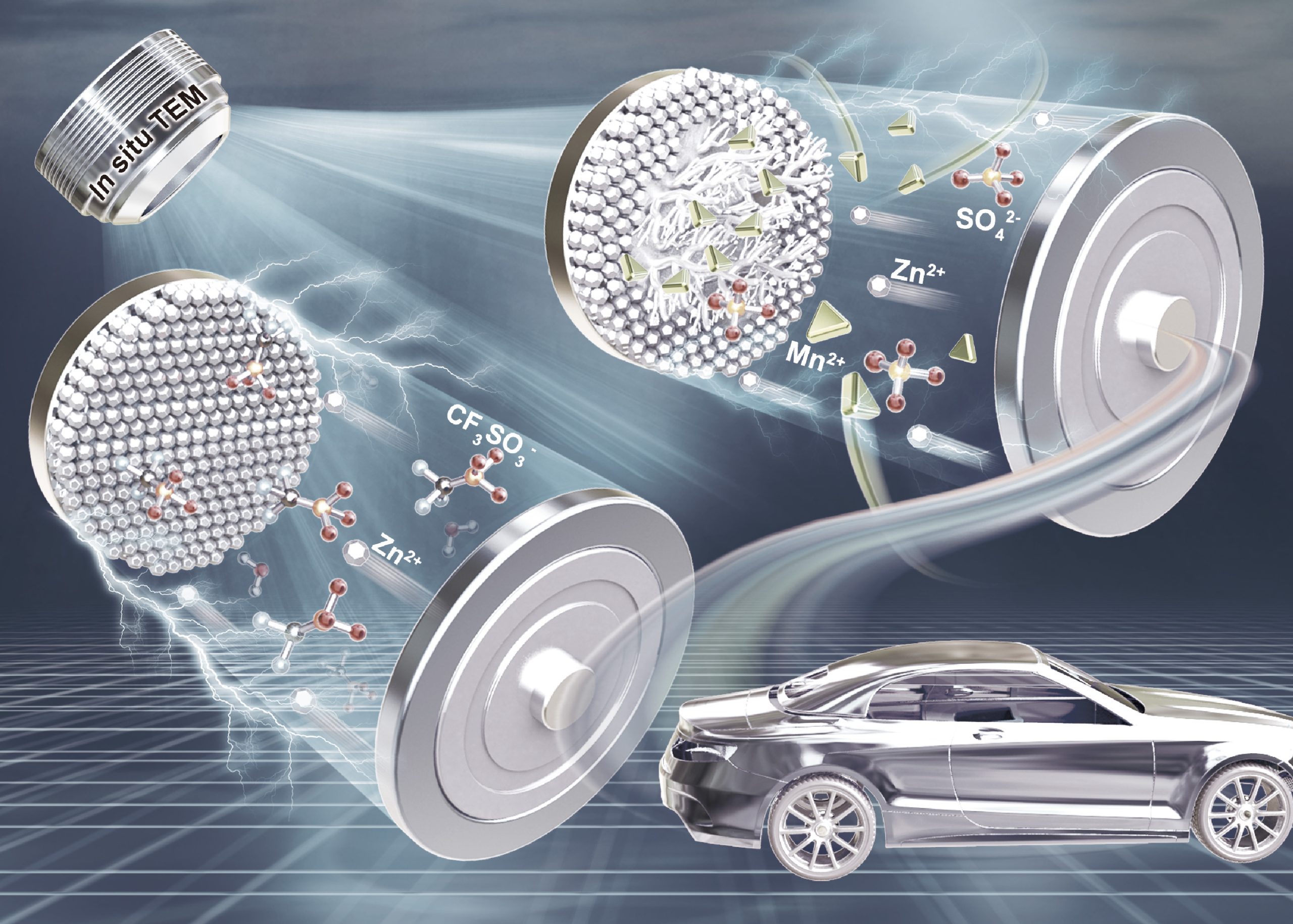
In recent research performed at the DICP-DENS Microscopy Centre by Dr. Yuefeng Liu from the Dalian Institute of Chemical Physics, Yongfeng Huang from Tsinghua University, and many more collaborators, they were able to obtain a deep understanding of the stripping/plating behaviors of zinc in various aqueous electrolytes using the DENSsolutions Stream system. Specifically, the researchers investigated the effects of adding Mn²⁺ and CF₃SO₃⁻ in zinc-salt aqueous electrolytes on the zinc plating/stripping behavior. This work not only sheds light on the mechanism of zinc anodes during zinc dissolution/deposition processes in aqueous electrolytes, but also provides effective strategies to achieve long-term stable rechargeable zinc-ion batteries (ZIBs). 

Three aqueous electrolytes

As the high reversibility of zinc anodes is a prerequisite for large- scale applications of ZIBs and ZHSs, many efforts have been dedicated to achieve long-term stable zinc anodes. One effective way to stabilize and acquire dendrite-free zinc anodes is by introducing additives in aqueous electrolytes. In previous studies, it was found that the addition of Mn²⁺ in the form of MnSO₄ to a ZnSO₄ aqueous electrolyte can actually suppress the dissolution of the MnO₂ cathode. Similarly, in comparison to a ZnSO₄ electrolyte, a Zn(CF₃SO₃)₂ electrolyte is far more effective in achieving better electrochemical performance of many ZIB systems.

For these reasons, aside from a pure ZnSO₄ electrolyte, ZnSO₄/MnSO₄ and Zn(CF₃SO₃)₂ are commonly used aqueous electrolytes for ZIBs. Despite this, zinc plating/stripping behaviors in ZnSO₄/MnSO₄ and Zn(CF₃SO₃)₂ and their effects on electrochemical stability of metallic zinc anodes are unknown. In this study, the researchers combine operando TEM and electrochemical analysis to unravel the zinc stripping/plating behaviors in the three aqueous electrolytes detailed above (ZnSO₄, ZnSO₄/MnSO₄ and Zn(CF₃SO₃)₂). In the following sections, in situ TEM images and videos of the zinc stripping/plating process in the three different electrolytes are shown.

1) Zinc plating/stripping process in a ZnSO₄ electrolyte

The researchers first constructed a micro zinc-ion battery inside the Stream holder, allowing them to monitor the zinc plating/stripping processes using the system’s on-chip flow channel. After assembling the Stream Nano-Cell and leak-testing it, the researchers were then able to flow the electrolytes into the liquid cell, using the pressure-based liquid pump to fully control the rate of the flow. 

Next, the researchers set out to observe the zinc stripping/plating behavior in a pure ZnSO₄ aqueous solution. In Figure 1 below, the in situ TEM images detailing the zinc plating and stripping process at different times in 2 M ZnSO₄ are shown. During the zinc plating process exhibited in Figure 1a–d, the thickness of zinc deposited on the platinum substrate increases. Simultaneously, dendrite-like structures form and develop gradually. This confirms the dendrite issue of metallic zinc electrodes in the 2 M ZnSO₄ electrolyte, which leads to a short-circuit occurrence. After this, the zinc stripping process occurs, which is demonstrated in Figure 1d–f. During this process, it is observed that the deposited zinc is unable to fully strip away from the platinum substrate and dissolve into the electrolyte under the same charge and discharge time conditions. As a result, dead zinc is generated (see Figure 1f).
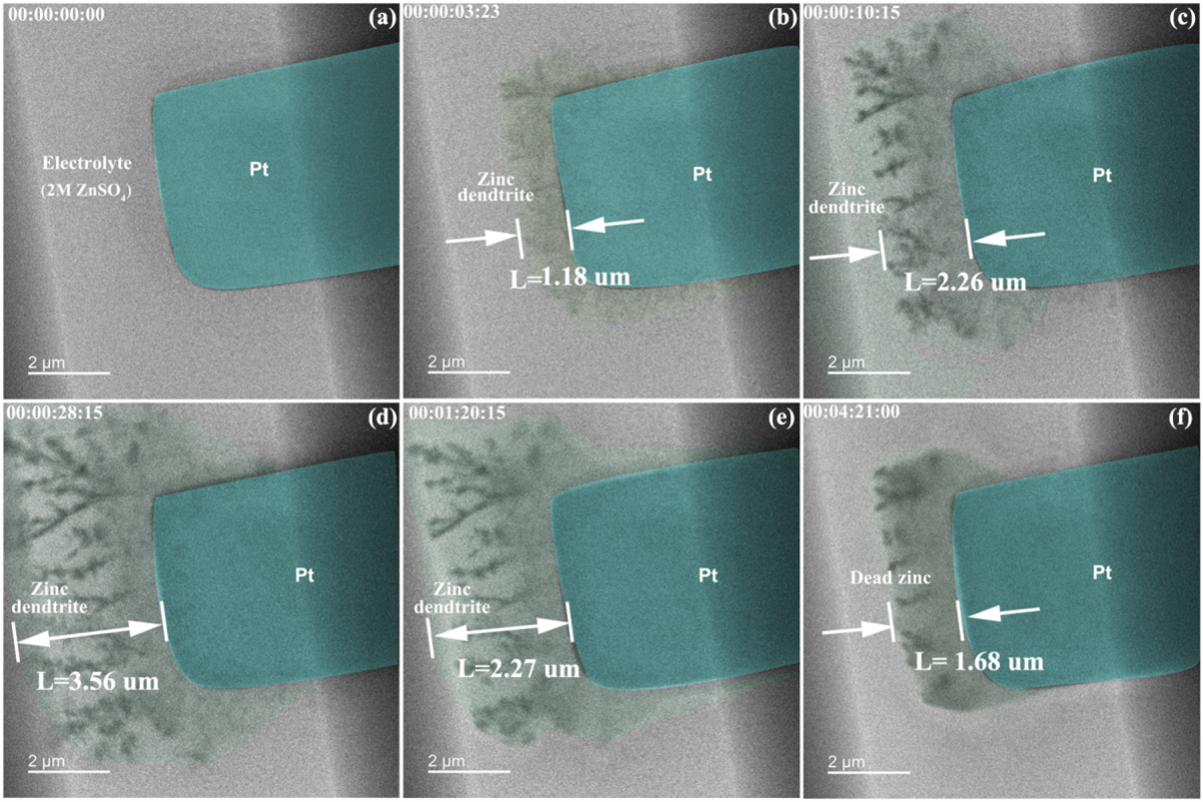
Figure 2: Marc Willinger

Figure 1: In-situ TEM images of zinc plating/stripping on the surface of Pt working electrode in 2 M ZnSO₄ electrolyte at different times: (a) 0 s, (b) 3 s, (c) 10 s, (d) 28 s, (e) 80 s and (f) 261 s.

Electrolytes of high concentrations are generally not conducive for monitoring zinc stripping/plating behaviors using in situ TEM, as they can block out the liquid inlet hole of the holder. Due to this, along with the valuable insights that further investigating the effect of concentration on dendrite growth can provide, the ZnSO₄ electrolyte was diluted from 2 M to 20 mM. The researchers then observed the zinc stripping/plating process in the 20 mM ZnSO₄ aqueous electrolyte. The in situ TEM images and corresponding movie detailing this process can be seen below in Figure 2 and Video 1, respectively. 

The zinc stripping/plating process was controlled using the cyclic voltammetry (CV) technique at 20 mV/s. Figure 2g shows the corresponding CV curve, where the red dots marked as a–f correspond to the states in Figure 2a–f. At 71s (see Figure 2b), the researchers observed that the visible zinc particles in the electrolyte, as well as the dense dispositioned zinc and the zinc dendrites (marked in green) on the surface of the Pt substrate occur at the same. Between 76s–95s (Figure 2c-d), they noticed that more zinc was plating on the platinum surface, with the potential ranging from − 1.41 V to − 1.1 V. Next, the process of zinc dissolution occurs, where the zinc frontier line is observed to shrink back to area II at 114s (Figure 2e) and to the edge of the Pt substrate at 144s (Figure 2f). It is observed that the dendrite is still not completely removed when the potential returns to 0 V. Conclusively, although reducing the concentration can slow down dendrite formation, it does not fully suppress it.
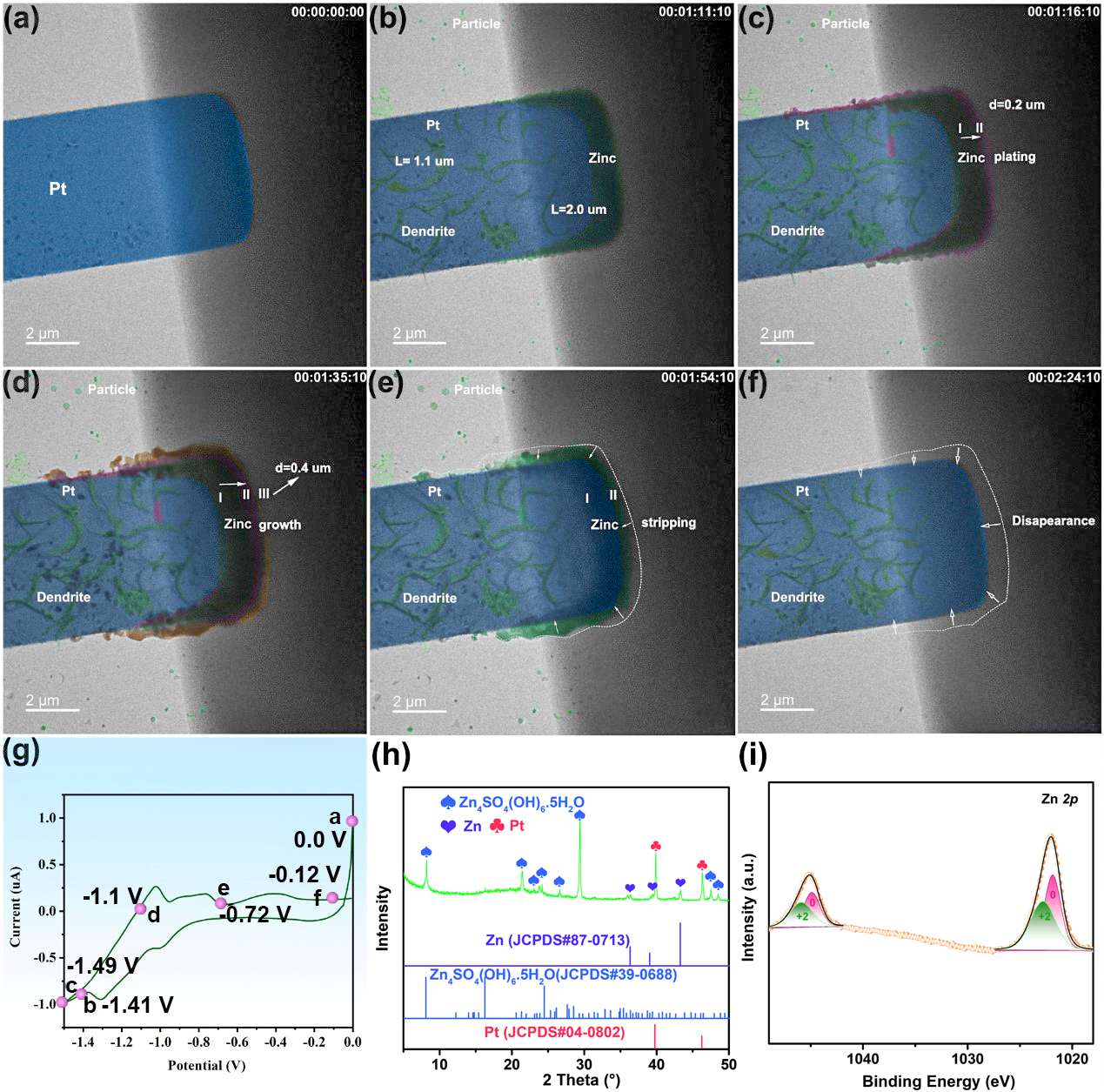
Figure 2: In-situ TEM images of zinc plating/stripping on the surface of Pt working electrode in 20 mM ZnSO₄ electrolyte at different times: (a) 0 s (b) 71 s, (c) 76 s, (d) 95 s, (e) 114 s and (f) 144 s. (g) CV curve of zinc stripping/plating process on the surface of Pt working electrode in 20 mM ZnSO4 electrolyte at a scan rate of 20 mV/s. (h) XRD pattern after zinc plating/stripping at Pt. (i) XPS result after zinc plating/stripping at Pt.

Video 1: Video of zinc plating/striping at the interface of Pt working electrode in 20 mM ZnSO₄ electrolyte.

2) Zinc plating/stripping process in a ZnSO₄/MnSO₄ electrolyte mixture

The next step for the researchers was to observe the zinc stripping/plating process in a ZnSO₄/MnSO₄ electrolyte mixture, as MnSO₄ additives in ZnSO₄ electrolytes can actually optimize the electro-chemical stability of metallic zinc electrodes. They first added 5 mM MnSO₄ to the 20 mM ZnSO₄ aqueous electrolyte. The in situ TEM images and corresponding movie detailing the resulting zinc plating/stripping process can be seen below in Figure 3 and Video 2, respectively. 

Figure 3a–d depicts the zinc plating process, in which Mn spherical particles appear and gradually increase in size. At 124s (see Figure 3e), the zinc stripping process starts to occur, and these spherical particles in the electrolyte begin to disintegrate and finally disappear at 259s (see Figure 3i). Aside from the spherical particles in the electrolyte, a visible amount of deposited zinc (marked in green in Figure 3e) appears on the Pt working electrode. Notably, the sphere species, both in the electrolyte and also on the surface of the Pt substrate, disintegrate. This results in the further precipitation of zinc and leads to the increased thickness of zinc. Interestingly, zinc dendrites were not observed to form in the ZnSO₄/MnSO₄ electrolyte mixture, unlike in the pure ZnSO₄ electrolyte. This directly suggests that the Mn²⁺ additive is indeed beneficial for suppressing the formation of zinc dendrites.
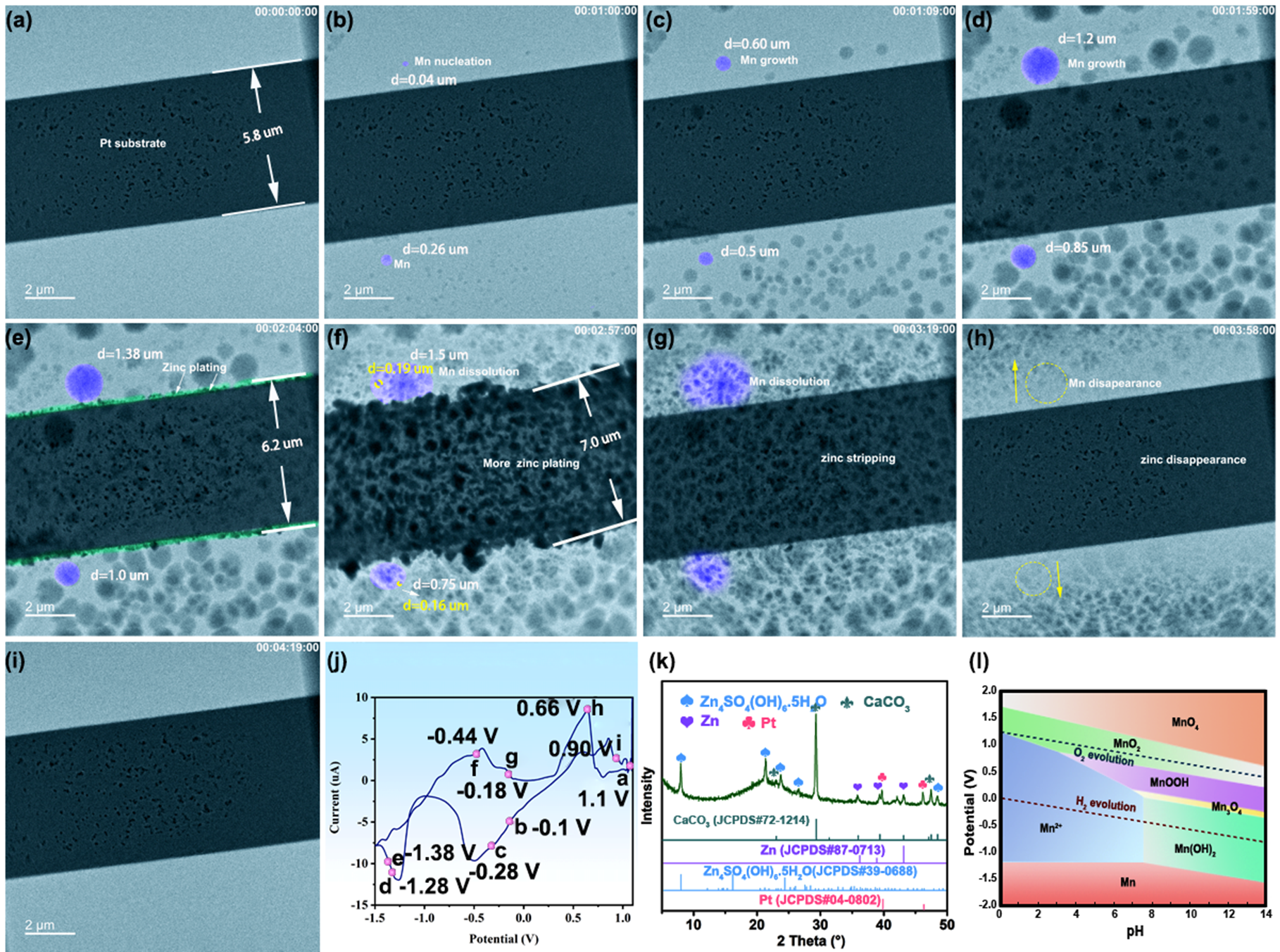
Figure 3: Zinc stripping/plating behaviors in 20 mM ZnSO₄ + 5 mM MnSO₄ electrolyte at different times: (a) 0 s (initial state), (b) 60 s (c) 69 s, (d) 119 s, (e) 124 s, (f) 177 s, (g) 199 s, (h) 238 s and (i) 259 s. (j) Cyclic voltammogram curve of Zn plating and striping at the interface of Pt working electrode at a scan rate of 20 mV/s, the red dots are assigned to Figure a-i, (k) XRD pattern after zinc plating/stripping at Pt (CaCO₃ is from the XRD bonding adhesives), and (l) E-pH diagram of Mn.

Video 2: Video of zinc plating/striping at the interface of Pt working electrode in the 20 mM ZnSO₄ + 5 mM MnSO₄ electrolyte.

3) Zinc plating/stripping process in a Zn(CF₃SO₃)₂ electrolyte

Finally, the researchers set out to explore the zinc plating/stripping process in a 20 mM Zn(CF₃SO₃)₂ electrolyte. The in situ TEM images and corresponding movie detailing the resulting zinc plating/stripping process in this electrolyte is shown in Figure 4 and Video 3, respectively. The zinc plating process is depicted in Figure 4a–d, where particle-like zinc uniformly deposits on the surface of the Pt substrate, and the thickness of the deposited zinc layer increases. Here, no zinc dendrites form during the plating process. At 175s (see Figure 4e), the zinc stripping process starts, and the deposited zinc particles on the Pt substrate gradually dissolve into electrolyte. Finally, at 240s (see Figure 4f), all zinc particles disappear, demonstrating the high reversibility of zinc deposition/dissolution in the Zn(CF₃SO₃)₂ electrolyte. Importantly, the deposition of zinc on the Pt substrate in the Zn(CF₃SO₃)₂ electrolyte is more uniform and homogeneous than that in the ZnSO₄ electrolyte and ZnSO₄/MnSO₄ electrolyte mixture.
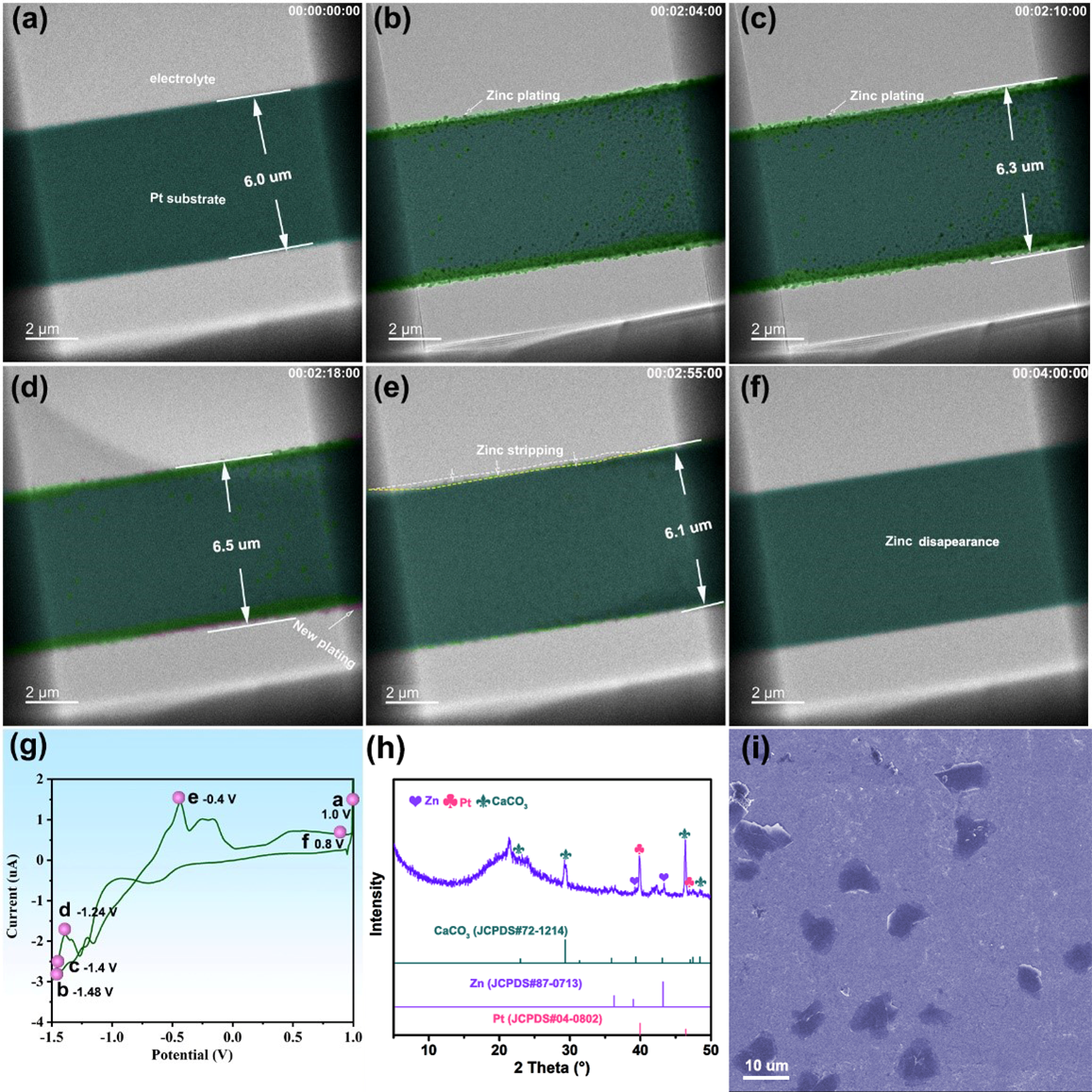
Figure 4: Zinc stripping/plating behaviors in 20 mM Zn(CF₃SO₃)₂ electrolyte at different times: (a) initial, 1.0 V (b) 124 s, -1.48 V, (c) 130 s, -1.40 V, (d) 138 s, -1.24 V, (e) 175 s, -0.40 V, (f) 240 s, 0.80 V, (g) Cyclic voltammogram curve at the scan rate of 20mV/s about Zn plating and striping at the interface of Pt working electrode in 20 mM Zn(CF₃SO₃)₂ electrolyte, the red dots are assigned to Figure a-f (h) XRD pattern after zinc plating/stripping at Pt (CaCO3 is from the XRD bonding adhesives). (i) SEM image after Zn plating on Pt.

Video 3: Video of zinc plating/striping at the interface of Pt working electrode in the 20 mM Zn(CF₃SO₃)₂ electrolyte.

Conclusion

This paper provides a novel understanding of the failure process of metallic zinc electrodes in a ZnSO₄ electrolyte, as well as the effects and acting mechanism of Mn²⁺ in the ZnSO₄/MnSO₄ electrolyte mixture and CF₃SO₃⁻ in the Zn(CF₃SO₃)₂ electrolyte on the zinc plating/stripping behavior. These deep-level insights serve to close the gap in our understanding of how we can create long-term stable ZIBs with metallic zinc anodes and optimal aqueous electrolytes, beneficial for several critical applications, including large-scale energy storage and portable electronic applications. The discovery of such findings could not be possible without the application of in situ characterization techniques, for which our Stream system has proved to be remarkably effective.

Original article:

Discover our Stream solution:

Discover more publications made possible by Stream:
Thomas article feature image

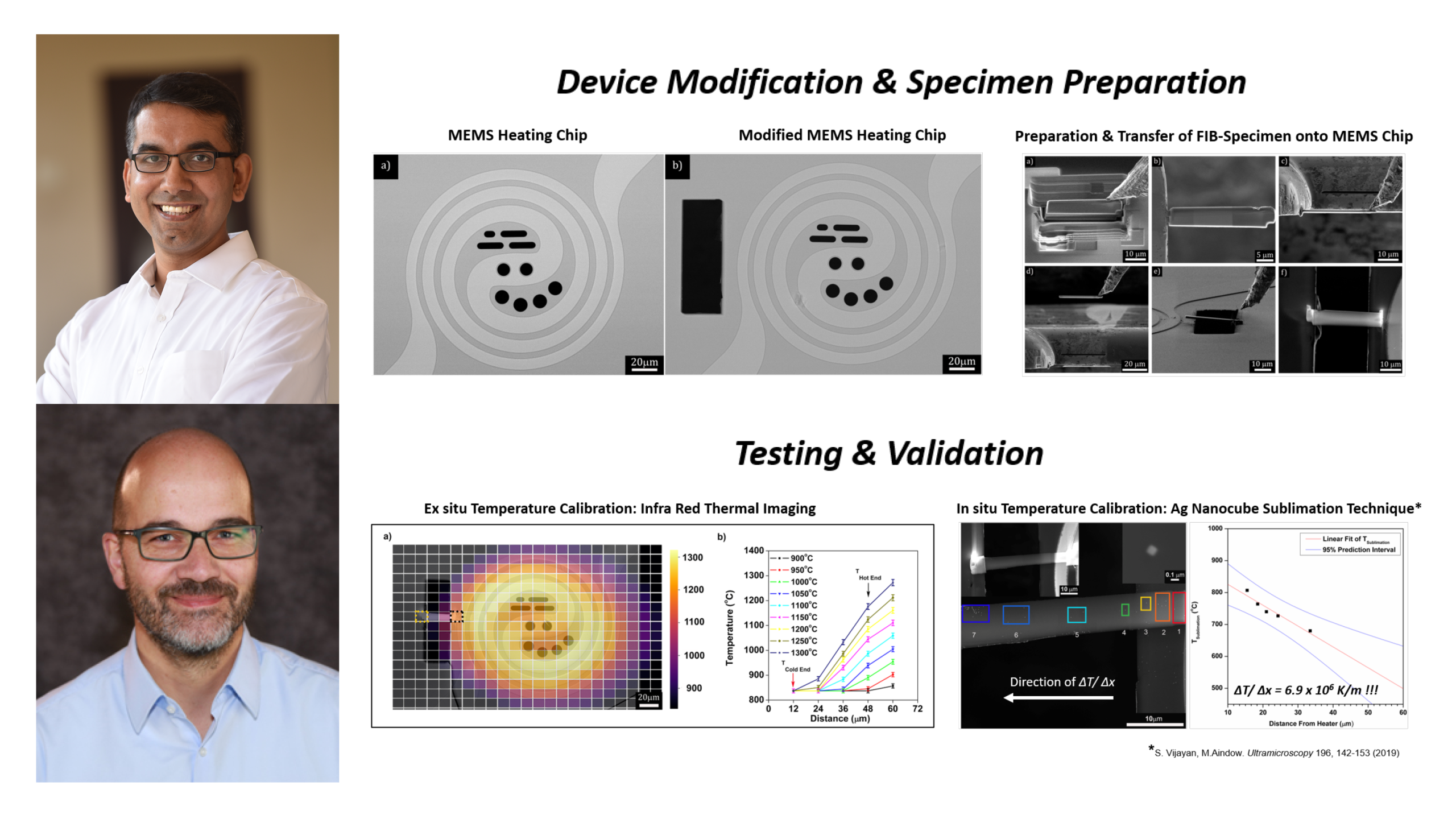
Scientists develop a novel approach to generate extreme thermal gradients using our Wildfire Nano-Chip

Via a simple modification to our Wildfire Nano-Chip, scientists show that extreme thermal gradients across a TEM specimen can be generated.
Subscribe to our newsletter to stay up-to-date with the latest in situ microscopy news.

DENSsolutions has installed yet another Stream system in Germany at Forschungszentrum Jülich

DENSsolutions has installed yet another Stream system in Germany at Forschungszentrum Jülich

DENSsolutions Installing South Korea's second Stream system at Seoul National University

From left to right: Andreas Körner and Dr. Andreas Hutzler

We are proud to announce that DENSsolutions has installed yet another Stream system in Germany at the esteemed Forschungszentrum Jülich, one of the largest interdisciplinary research centres in Europe. In this article, we interview Dr. Andreas Hutzler, the new head of the TEM lab in the Helmholtz Institute Erlangen-Nürnberg for Renewable Energy (HI ERN) at Forschungszentrum Jülich, to learn more about their advanced microscopy facility, its research direction, as well as how our Stream system is advancing their research.

Can you tell me more about the microscopy facility at HI ERN?

“The Helmholtz Institute Erlangen-Nürnberg for Renewable Energy (HI ERN) is part of the Forschungszentrum Jülich. It specializes in providing crucial research on technologies needed to utilize renewable energies in the decades to come. Our research is centered around fuel cells, electrolyzers and hydrogen storage. The institute was founded in 2013 and has been growing ever since. In 2021, its new research building was inaugurated, hosting the space for a new transmission electron microscope, the Talos F200i from Thermo Fisher Scientific. This tool provides in-house structural analysis on the nanoscale for catalysts, support systems and membranes.”

What type of applications are the users at HI ERN using the Stream system for?

“Our goal is to study electrochemical processes taking place on electrode and catalyst surfaces within electrolyzers and fuel cells down to the atomic scale. We aim to understand which reactions take place, and which conditions enhance the performance of the cells or disintegrate the structures involved.

In order to understand this, we consider beam-induced effects onto the solution chemistry we investigate. For this, we utilize a comprehensive radiolysis model for unraveling the influence of electron irradiation onto the sample and compare the results to non-biased experimental observations. Once this is understood, we continue with analyzing dynamic processes at the nanoscale to gain insights into reaction pathways and degradation mechanisms in P2X and X2P applications.”

What particular features of the DENSsolutions Stream solution attracted you to the system?

“In order to understand observable processes and their correlated chemistry, it is necessary to accurately tune experimental conditions while operating the system. The ability of the Stream system to flexibly adjust pressure, flux, temperature and potential allows to run a manifold of experiments in a wide parameter space. This is needed in order to verify the stability of our reaction kinetic models and for testing electrolysis at borderline conditions. Before, the structures could only be studied after the reaction has taken place. But the ability to directly observe dynamic processes on-site in real time gives valuable insights in the chemistry at hand.”

Can you tell me about the grant that was won to acquire the system?

“One of our key research interests is the development of new methods for characterizing fundamental and applied processes in electrocatalysis relevant to electrochemical energy conversion. After establishing identical-location TEM (IL-TEM) for energy applications and with the start of my team, a new transmission electron microscope as well as equipment needed for in situ liquid-phase TEM was funded by and installed at HI ERN. This particular toolbox will be a great asset for the nanoanalysis of electrochemical processes in my team which will enable unique insights in energy research.”

In your experience so far, how have you found the Stream system?

“The modular architecture of the Stream system enables a very versatile applicability without risking leakage or cross-contaminations. The performance of LP-TEM is considerably enhanced due to the controllability of liquid flow, the ever-present window bulging via the utilization of a novel chip design as well as a differential pumping system as a standard. Moreover, DENSsolutions came forward with providing non-standard solutions in order to provide compatibility with other setups at our institute.”

DENSsolutions Prof. Jungwon Park
Dr. Andreas Hutzler
Head of the Transmission Electron Microscopy lab| HI ERN, Forschungszentrum Jülich

Dr. Andreas Hutzler is the new head of the Transmission Electron Microscopy lab at HI ERN, PI of multiple projects at HI ERN and university and is currently setting up a team for nanoanalysis of electrochemical processes. His research interests mainly focus on methodological aspects of LP-TEM and its application in electrochemical energy conversion.

Discover Dr. Andreas Hutzler’s publications:

Learn more about Stream:

Discover publications made possible by Stream:

Subscribe to our newsletter to stay up-to-date with the latest in situ microscopy news.

Announcing DENSsolutions’ new CEO: Dr. Hugo Pérez-Garza

Announcing DENSsolutions’ new CEO: Dr. Hugo Pérez-Garza

An interview with Dr. Hugo Pérez-Garza, the newly appointed CEO of DENSsolutions.

We are excited to announce the appointment of DENSsolutions’ new CEO: Dr. Hugo Pérez-Garza, a longstanding pillar within this company. Dr. Hugo Pérez-Garza is a highly experienced and well-regarded leader with a strong feel for both science and business. During the last 3 years, Hugo has passionately and successfully led the technological roadmap and strategic positioning of DENSsolutions as Chief Technology Officer. With his unique skillset, extensive experience and diverse knowledge, Hugo certainly has the blueprint to propel the success of DENSsolutions to unprecedented heights.

In this article, we interview Hugo to learn everything from how this appointment came to be, the changes he would like to implement as the new CEO, to the exciting vision he has for DENSsolutions.

Can you tell us a little bit about how your appointment of CEO came to be?

“After many years of hard work, full of achievements thanks to his never-ending commitment to deliver results and his capability for entrepreneurial vision, our former CEO, Mr. Ben Bormans, reached his age of retirement. I´ve been very lucky in my career to have learned from someone like Ben, and I´m very thankful for the opportunity he has given me to join this amazing company. Throughout all these years of working together, Ben was the mentor who coached me and challenged me to become a better version of myself. Particularly during my former years as the CTO, Ben gave me all the trust and confidence to completely steer the direction of this company from a technological standpoint, while advising me on how to steer also from a business perspective. So after his decision to retire, I received the trust from him and the shareholders to step in as the new CEO, and thus to provide business growth, new energy and opportunities to move in new directions.” 

How do you feel your knowledge and experience will further the success of the DENSsolutions as the new CEO?

“I feel that I’m at a point in my career where I have the right combination of experience, ambition and energy in order to embark upon a nice professional challenge like this. But in particular, I believe that I have a strong knowledge base about the business and its technology, its customers and the external factors that are likely to impact our company. This should allow us to achieve a better match between our technical vision and our business ambition, and it will help me to identify faster the things that might need to change, so that decisions can be executed in a structured and properly planned manner. At the end of the day, I intend to bring innovation to our business model, our strategy and our people management style. By doing this, I want to highlight the importance of putting ‘dynamics ahead of mechanics’.” 

What are some changes you would like to implement as DENSsolutions’ newly-appointed CEO?

“First of all I want to implement new internal procedures to increase and strengthen the alignment among different departments. During this process, I want to ensure that I match our talent to value, which goes beyond employee engagement, and combine speed with stability. Before the end of this year, I want to get the whole team aligned on our upcoming roadmap, but also on the vision that I have for the medium and long term. This will help us become more efficient in how we operate. Overall I want to promote a forward-looking agenda and empower our employees to exploit their talents to the fullest.”

What vision do you have for DENSsolutions in the near future?

“One of the things that I´ve always highlighted about DENSsolutions, is the enormous talent of our people and the strength of our team. When you have these assets, and you combine them with a strong vision, great things can happen. And that’s precisely the foundation that I’m laying on for our near, medium and long-term future. For the near future, I want to ensure that we can finalize and launch some important and new developments, which will strengthen our value proposition and our presence in the market. But since technological innovation (and thus the RnD department) is not the only crucial aspect of our business, I also intend to set in motion new ideas for marketing, sales and operations. The roadmap is already in motion, and we are fully committed to delivering increasing value to our customers.”

Discover Hugo’s publications:

DENSsolutions Climate system takes home the microscopy today 2021 innovation award

DENSsolutions’ Climate system takes home the Microscopy Today 2021 Innovation Award

DENSsolutions becomes a consecutive two-time winner of the Microscopy Today Innovation Awards. This year, our Climate system is recognized as one of the 10 most game-changing microscopy innovations of 2021.

Subscribe to our newsletter to stay up-to-date with the latest in situ microscopy news.

Climate helps uncover phase coexistence and structural dynamics of redox metal catalysts

Climate helps uncover phase coexistence and structural dynamics of redox metal catalysts

Using our Climate system, scientists are able to interrelate the atomic-scale structural dynamics of redox metal catalysts to their activity.

Original article by Xing Huang, Travis Jones, Alexey Fedorov, Ramzi Farra, Christophe Copéret, Robert Schlögl, and Marc-Georg Willinger

Marc Willinger TOC 1200x628

Metal catalysts have been extensively studied due to their critical role in industrial redox reactions. However, many gaps in research still remain, hampering the optimization of their design. Specifically, the behavior of metal catalysts under operating conditions and the relationship between structural dynamics and catalytic activity are still not fully understood. Indeed, an atomistic comprehension of the structure–activity relationship of working catalysts is essential for the optimization of their design. 

In their recently published paper, Dr. Marc-Georg Willinger from ETH Zurich, Dr. Xing Huang from Fuzhou University and fellow collaborators from the Fritz-Haber Institute of Max-Planck Society and the Max Planck Institute for Chemical Energy Conversion explore the phase coexistence and structural dynamics of redox metal catalysts. Using our Climate system, the researchers are able to achieve controlled gas-flow and imaging, obtaining atomic-level insights into the correlation between the structural and chemical dynamics and catalytic function. In light of today’s environmental challenges, the development of improved catalysts for more resource-efficient processes is becoming increasingly critical. Importantly, developing improved catalysts requires their direct observation during operating conditions. In this work, the authors have obtained atomic-scale insights into catalyst dynamics in various relevant redox reactions.

Redox reactions

Copper is a popular transition metal used as an active component in redox catalysts for many reactions, including CO₂ reduction and water gas shift reaction (WGSR). However, an atomistic description of the state of copper under redox conditions in these catalysts remains unrealized. In this publication, Dr. Willinger and his fellow collaborators present a detailed, high-resolution study of copper during the hydrogen oxidation reaction (HOR), revealing fundamentals of catalyst dynamics under reactive conditions. Beyond the elementary hydrogen oxidation reaction, the researchers extend the observed dynamic behavior to more relevant redox reactions and other metal catalysts. Specifically, they explore the redox dynamics of copper and palladium in the active state during methanol oxidation and methane oxidation reactions, respectively.

Hydrogen oxidation reaction on copper

Studying HOR offers the opportunity to obtain detailed atomistic insights into the reaction between the catalyst and the gas phase. HOR was chosen because it is the most elementary redox reaction and yields only water as a product, thereby reducing the complexity related to potential electron-beam-induced processes. In this study, the researchers systematically assess the effects of temperature and gas-phase conditions. Moreover, they explore how the chemical potential of the gas phase defines the phase, size, and shape of catalyst particles, driving the system into a nonequilibrium dynamic state during catalysis. Due to the simultaneous detection of catalytic conversion, they are able to relate directly the observed dynamics and surface structures to catalytic activity. 

1) Redox dynamics and structural analysis of Cu

Copper nanoparticles of 50–200 nm were first loaded in the Climate Nano-Reactor. In situ TEM images of the copper nanoparticles were then recorded. It was found that the particles exhibit rich structural dynamics, which are associated with reconstruction and random motion, as well as particle sintering and red-ox induced splitting. The figure (A–L) and movie below depict these structural dynamics. Shown in M) is the integrated SAED pattern and corresponding radial intensity profile. The in situ SAED revealed dynamically appearing and disappearing diffraction spots, and confirmed the presence of metallic copper and Cu₂O as the sole oxide phase. The constant competition between oxide growth and reduction are reflected in the in situ SAED and the observed structural dynamics. Indeed, the structural dynamics are a consequence of chemical dynamics, characterized by phase coexistence and continuous interconversion between Cu⁰ and Cu₂O. The high-resolution imaging in Figure 1N) confirms this, showing a metallic head coherently interfacing with an oxide tail.

Figure 2: Marc Willinger

Figure 1: The redox dynamics and structural analysis of Cu. A–L) show the in situ TEM observations of catalyst reshaping (A–D), sintering (E–H), and splitting (I–L). In M) the integrated SAED pattern and corresponding radial intensity profile are shown. N) shows the HRTEM image of a nanoparticle containing a metallic head coherently interfacing with an oxide tail.

Movie 1: The redox dynamics of copper showing catalyst reshaping, sintering and splitting.

2) Effects of temperature and gas-phase composition

The authors then sought out to explore the effect of temperature on the observed redox dynamics. First, the temperature was decreased from 500 to 300°C, while maintaining a H₂/O₂ ratio of 10/1. During the temperature decrease, the researchers observed the growth of oxide dendrites, which reflects the increasing oxidation potential. Simultaneously, due to the slower kinetics of the redox reaction at lower temperatures, a reduction of the structural dynamics was observed. During heating from 300 to 750 °C, the system passes through a regime of increased dynamics (550 °C) that are characterized by translational motion and restructuring due to oxide growth and reduction, until it finally reaches a state that is less dynamic and dominated by metallic copper at 750°C. This is shown in the figure below (A–D). The reconstructed HRTEM images taken at 300 and 750°C are shown in 2E) and 2F), respectively. Next, integral SAED (Figure 2G,H) was performed to investigate phase analysis, revealing the relation between phase composition and temperature. It has been previously demonstrated that the trend in the oxide content reflects the decreasing chemical potential of oxygen with increasing temperature. However, the authors observe a notable exception of this general trend at around 550 °C, which is mostly due to the effect of water that is produced at substantial rate and contributes to the redox dynamics.

Figure 2: Marc Willinger

Figure 2: Chemical potential versus structural dynamics of Cu. A–D) In situ TEM observation of dynamics at 300–750 °C and a H₂/O₂ ratio of 10/1. E,F) show the reconstructed HRTEM images taken at 300 and 750 °C. G) and H) show the normalized radial profiles extracted from the integrated SAED patterns and subsequent radial intensity profile, respectively. I–L) In situ observation of copper dynamics during decreasing H₂/O₂ ratio from 10/1 to 5/1 at 500 °C.

Next, the researchers explored the influence of gas-phase composition on the structural dynamics, gradually decreasing the H₂/O₂ ratio from 10/1 to 5/1 at 500 °C. It was found that the relative increase of the oxygen partial pressure leads to a transformation of initially spherical nanoparticles into elongated particles with a head–tail structure. This is depicted in Figure 2I–L above. At the same time, the average particle size declines due to an increased rate of particle splitting, until a new size regime and dynamic equilibrium is established. Conclusively, the real-time observations under varying gas-phase composition and temperature show a clear effect of the gas-phase chemical potential on the average particle size. The in situ observations show clearly that redox dynamics make particles mobile, thereby considerably increasing the rate of sintering as compared to thermal sintering; yet the sintering under redox conditions is balanced by particle splitting, such that a certain size distribution is established as a function of reaction conditions.

“Controlled gas-flow and imaging – coupled with on-line mass spectroscopic analysis of the gas-phase composition as enabled by the Climate system – is essential for studies on the behavior of active catalyst and allows us to correlate observed structural and chemical dynamics to catalytic function.” – Dr. Marc-Georg Willinger, ETH Zurich

3) Relation between structural dynamics and catalytic activity

After investigating the gas-phase and temperature-induced dynamic processes, the researchers then sought out to explore the relationship between the observed structural dynamics and catalytic activity. The MS data is presented in Figure 3A) below, showing the formation of water and simultaneous consumption of oxygen. This ultimately confirms the catalytic activity of copper. A notable increase in water production and oxygen consumption is observed between 500 and 600°C, which is also the same range in which the intense structural dynamics occurred. In Figure 3B–D), the sequential HRTEM images of particle reshaping/restructuring at 550°C is presented (H₂/O₂ ratio of 10/1). This is also shown in the movie below. Although challenging, the researchers were still able to capture the thin oxide monolayer existing on the surface of the metallic portion of the particles (see Figure 3E,F). Interestingly, the surface oxide layer is observed even at 750°C. The structural features of the monolayer oxide imaged on various facets can be observed in Figure 3G,H).

Figure 3: Marc Willinger

Figure 3: Relation between structural dynamics of Cu and catalytic activity. A) shows the MS data collected at varied temperatures. B–D) show the sequential HRTEM images of particle reshaping/restructuring at 550°C. E,F) show the enlarged HRTEM images of the areas indicated by dashed rectangles in (B) and (D). G) shows an HRTEM image, and in H) an enlarged HRTEM image of the area indicated by the dotted rectangle in (G).

Movie 2: HRTEM movie showing particle reshaping and restructuring at 550°C

Methanol oxidation reaction on copper

After investigating the particle dynamics for hydrogen oxidation on copper, the researchers then set out to assess the generality of the phenomena described above. They first investigated the state of copper under conditions of methanol oxidation, a catalytic reaction that is relevant to industrial synthesis of formaldehyde. The figure below shows in situ TEM images of copper nanoparticles recorded at 600 and 500°C (Figure 4A–C and 4E–G), respectively. The dynamic behavior observed involves reshaping, sintering, and splitting of particles, similar to what was observed in the case of hydrogen oxidation. A shift to a more oxidized state with decreasing temperature was observed and verified by in situ SAED (Figure 4D,H). The redox dynamics are most pronounced at around 500°C under the chosen 1:1 ratio of MeOH and O₂.

Figure 4: Marc Willinger

Figure 4: Structural dynamics of Cu in methanol oxidation reaction. A–H) show TEM images and SAED patterns of Cu recorded in situ during methanol oxidation at 600 °C (A–D) and at 500 °C (E–H), respectively.

Methane oxidation reaction on palladium

Next, they investigated methane oxidation on palladium, a transition metal that is much harder to oxidize than copper. In the figure below, the structural dynamics related to catalytic activity in methane oxidation on palladium is presented. As in the case of copper, structural dynamics evolve when palladium is driven toward the Pd/PdO phase boundary. In an ~2:1 ratio of CH₄ and O₂, the catalyst remains relatively static at 350°C and shows coexistence of Pd and PdO as evinced by the in situ SAED. The system evolves to a highly dynamic state at 550°C. The MS data recorded simultaneously with TEM observation reveal a pronounced formation of CO₂ and consumption of CH₄ and O₂ under these conditions (see Figure 5I).

Figure 4: Marc Willinger

Figure 5: Structural dynamics related to catalytic activity in methane oxidation on Pd. A–H) In situ TEM images and SAED patterns of Pd recorded during methane oxidation at 350°C (A–D) and 550°C (E–H), respectively. I) shows the MS data recorded during in situ TEM observation of Pd in methane oxidation.

Conclusion

Via the above in situ studies of copper and palladium catalysts using our Climate system, the researchers show that catalytic activity goes hand-in-hand with redox processes of the metal catalyst. This paper evinces that the associated dynamics sensitively depend on reaction temperature and gas-phase composition. Importantly, only direct observation could reveal the interplay between metal and oxide phases and relate it to the onset of catalytic activity. This is precisely where our advanced in situ solutions come into play, enabling the direct observation of phenomena while it occurs. We are proud of the role that our Climate system has played in making this research possible and strive to continue enabling groundbreaking research in the future.

Hanglong Wu portrait

“The DENSsolutions Climate System allows us to reveal the so-far unseen: Looking at not only how the gas-phase is changed in the presence of a catalyst, but also studying how the interaction between gas-phase and catalyst leads to the emergence of catalytic function. Direct real-space observation is essential for our understanding of working catalysts and the development of new processes that are urgently needed in view of climate change and limited natural resources.”

Dr. Marc-Georg Willinger
Group Leader |  ETH Zurich

Original article:

Discover our Climate solution:

Discover more publications made possible by Climate:

DENSsolutions Climate system takes home the microscopy today 2021 innovation award

DENSsolutions’ Climate system takes home the Microscopy Today 2021 Innovation Award

DENSsolutions becomes a consecutive two-time winner of the Microscopy Today Innovation Awards. This year, our Climate system is recognized as one of the 10 most game-changing microscopy innovations of 2021.

Subscribe to our newsletter to stay up-to-date with the latest in situ microscopy news.

DENSsolutions’ Climate system takes home the Microscopy Today 2021 Innovation Award

DENSsolutions’ Climate system takes home the Microscopy Today 2021 Innovation Award

DENSsolutions becomes a consecutive two-time winner of the Microscopy Today Innovation Awards. This year, our Climate system is recognized as one of the 10 most game-changing microscopy innovations of 2021.

Just last year, our Stream system was awarded the Microscopy Today Innovation Award for its unique contribution to the field of liquid phase electron microscopy. We are honored to be taking home the same award for a second year in a row but this time for the remarkable innovation that is our Climate system. Climate is recognized as one of the 10 most game-changing microscopy innovations in 2021 by Microscopy Society of America‘s esteemed magazine, Microscopy Today. We interviewed our Chief Technology Officer Dr. Hugo Pérez-Garza, who led the development of the Climate system, to learn all about the unique benefits that made it earn such an esteemed award, as well as the development process and Climate’s current and envisioned applications. The transcript of the interview is provided below.

What was your reaction when you first heard the news?

It was pretty exciting. As you can imagine, the entire team was very happy when we first heard the news. At the end of the day, I think that this is just another consequence of the amazing teamwork that prevails in this company. And of course, to be accredited by the MSA is a big honor, especially as this is a highly esteemed award within the community. So it really means a lot to us. We really feel confident that our technology, and particularly our Climate system, will help scientists explore all sorts of new research possibilities.

What unique aspects of the system do you think made it earn such an esteemed award?

Over the last months, we have been exerting a lot of effort into making sure that we can improve the Climate system from various different angles. So that means that we have been doing a lot of work to ensure that we can optimize the different components that make up this plug-and-play system. Specifically, we have been trying to boost our MEMS capabilities (the Nano-Reactor). Moreover, we have been trying to continuously improve our hardware components, including the Gas Supply System, the Vaporizer, the Mass Spectrometer, etc. And of course, making sure that we can have new solutions as well for the software platform. Now when you put all these together, what we ended up realizing was that this new optimized Climate system brings all sort of real unique aspects to one’s research.

1) Live gas mixing

Firstly, Climate offers the possibility of performing live gas mixing (i.e. making sure that you can achieve any desired gas composition instantaneously). It ensures that users won’t have to wait for their gas mixtures to be prepared. We see this big added value in our customers’ experiments, for example in redox reactions, where the intrinsic nature of the experiment demands the possibility to quickly go from an oxidizing environment to a reducing environment. Often times people have to do this back-and-forth and in a fast and repetitive way. 

2) Start a new experiment (from a dry to wet environment or vice versa) within minutes

Furthermore, for these experiments a lot of researchers would be interested in humidifying the gas composition. This is precisely where the Vaporizer comes in. Now what happens here is that when you are humidifying the gas, often people are afraid of the contamination that the water molecules would represent for the gas lines. And that is why systems have to baked or have to undergo lengthy pumping times. But that wouldn’t be the case with the Vaporizer, as we have designed it in such a way that the introduction of the water vapor to the gas mixture is the last thing before entering the holder. So that ensures that your Gas Supply System will remain clean, and that you don’t have to perform these baking procedures or keep it pumping over night. This ultimately means you can go from a dry environment to a wet environment, or vice versa, in just a few minutes. So it opens up a lot of possibilities because it gives users this flexibility. 

3) Safely work with explosive mixtures and independently control gas parameters

The fact that we’re dealing with extremely low volumes of gas also means that we can safely handle explosive mixtures even if you plan to do this under extreme conditions such as high temperatures (above 1000°C) in combination with high pressures (i.e. 2 bars) and high relative humidity (i.e. 100%). Not only can you safely handle these explosive mixtures, but you can also control the relative humidity independently from other parameters such as temperature, pressure, gas composition and flow rate. So having this independent control also brings a lot of flexibility to users. 

4) Perform real nano-calorimetry and calibrate for time delay

The Nano-Reactor is also something very unique as we have been heavily optimizing the design such that, for example, the microheater allows for real nano-calorimetry. And this is really unique because it means that you can start quantifying and measuring the tiniest changes in temperature dissipation to understand if you’re observing an exothermic or endothermic reaction. And this is also really beneficial because you can calibrate for time delay, which is an issue that systems usually suffer from due to the unavoidable delay from the Gas Supply System to the MEMS device and to the Mass Spectrometer. Now, we can calibrate for that. 

5)  Prevent bypasses and achieve a desirable SNR

Moreover, the unique design of the Nano-Reactor itself, for which we have a patent, ensures that we can have an on-chip inlet and outlet. In other words, we can ensure that the gas will flow from the inlet to the outlet via the region of interest in a uni-directional way. And that means we can prevent bypasses and therefore improve the signal-to-noise ratio and the sensitivity of the Gas Analyzer. So the combination of these offerings (for example that our MEMS device can go to these high pressures like 2 bar, or allow you to perform EDS experiments well above 900 degrees at high pressures) ends up bringing a very unique value proposition for the user. 

What unique aspects of the system do you think made it earn such an esteemed award?

Over the last months, we have been exerting a lot of effort into making sure that we can improve the Climate system from various different angles. So that means that we have been doing a lot of work to ensure that we can optimize the different components that make up this plug-and-play system. Specifically, we have been trying to boost our MEMS capabilities (the Nano-Reactor). Moreover, we have been trying to continuously improve our hardware components, including the Gas Supply System, the Vaporizer, the Mass Spectrometer, etc. And of course, making sure that we can have new solutions as well for the software platform. Now when you put all these together, what we ended up realizing was that this new optimized Climate system brings all sort of real unique aspects to one’s research.

1) Live gas mixing

Firstly, Climate offers the possibility of performing live gas mixing (i.e. making sure that you can achieve any desired gas composition instantaneously). It ensures that users won’t have to wait for their gas mixtures to be prepared. We see this big added value in our customers’ experiments, for example in redox reactions, where the intrinsic nature of the experiment demands the possibility to quickly go from an oxidizing environment to a reducing environment. Often times people have to do this back-and-forth and in a fast and repetitive way. 

2) Start a new experiment (from a dry to wet environment or vice versa) within minutes

Furthermore, for these experiments a lot of researchers would be interested in humidifying the gas composition. This is precisely where the Vaporizer comes in. Now what happens here is that when you are humidifying the gas, often people are afraid of the contamination that the water molecules would represent for the gas lines. And that is why systems have to baked or have to undergo lengthy pumping times. But that wouldn’t be the case with the Vaporizer, as we have designed it in such a way that the introduction of the water vapor to the gas mixture is the last thing before entering the holder. So that ensures that your Gas Supply System will remain clean, and that you don’t have to perform these baking procedures or keep it pumping over night. This ultimately means you can go from a dry environment to a wet environment, or vice versa, in just a few minutes. So it opens up a lot of possibilities because it gives users this flexibility. 

3) Safely work with explosive mixtures and independently control gas parameters

The fact that we’re dealing with extremely low volumes of gas also means that we can safely handle explosive mixtures even if you plan to do this under extreme conditions such as high temperatures (above 1000°C) in combination with high pressures (i.e. 2 bars) and high relative humidity (i.e. 100%). Not only can you safely handle these explosive mixtures, but you can also control the relative humidity independently from other parameters such as temperature, pressure, gas composition and flow rate. So having this independent control also brings a lot of flexibility to users. 

4) Perform real nano-calorimetry and calibrate for time delay

The Nano-Reactor is also something very unique as we have been heavily optimizing the design such that, for example, the microheater allows for real nano-calorimetry. And this is really unique because it means that you can start quantifying and measuring the tiniest changes in temperature dissipation to understand if you’re observing an exothermic or endothermic reaction. And this is also really beneficial because you can calibrate for time delay, which is an issue that systems usually suffer from due to the unavoidable delay from the Gas Supply System to the MEMS device and to the Mass Spectrometer. Now, we can calibrate for that. 

5)  Prevent bypasses and achieve a desirable SNR

Moreover, the unique design of the Nano-Reactor itself, for which we have a patent, ensures that we can have an on-chip inlet and outlet. In other words, we can ensure that the gas will flow from the inlet to the outlet via the region of interest in a uni-directional way. And that means we can prevent bypasses and therefore improve the signal-to-noise ratio and the sensitivity of the Gas Analyzer. So the combination of these offerings (for example that our MEMS device can go to these high pressures like 2 bar, or allow you to perform EDS experiments well above 900 degrees at high pressures) ends up bringing a very unique value proposition for the user. 

What inspired you and the entire team to develop Climate in the first place?

Certainly understanding the importance and the impact that environmental studies can have on our global society was a big source of inspiration for the entire team. Having said that, understanding the solid-gas interactions at the nanoscale is what sets the foundation such that scientists can really start understanding how to optimize and synthesize future catalytic nanoparticles, which will end up playing a crucial role in applications such as carbon capture, energy storage and conversion as well as food production. So it is really this profound information that we can get from in situ TEM that gives this understanding. Because when you can start correlating particle size with composition, crystal orientation, or with the atomic or the electronic structure, it really gives a deep level of understanding for all these kinds of experiments. 

Can you walk us through the development process of Climate?

It has been 5 or 6 years since we launched our first product line for in situ gas analysis. Ever since, what we have been doing is trying to make sure that we can stay as close as we can to our customers as well as prospects. Now the intention of doing that is when you start gathering the feedback and the vision that both groups have, you start understanding the pain points a little bit more. You start becoming more empathic to their experimental needs. And that helps us identify the product profile that we should have in place. And when you are aware of this product profile, then automatically you know what technologies must be developed, which is part of your roadmap. And subsequently when you have that in place, then you also know what people and processes must be involved. So, it’s a matter of doing that so that when we gather these market requirements, we can follow a defined product creation process that will allow us to develop a technology that will match these market requirements. 

What future applications do you envision for Climate?

Certainly everything related to green technologies. As I mentioned earlier, that is a big goal and motivation that we all have at this company. So these kinds of experiments and topics I was referring to like carbon capture, energy conversion and storage, and all sort of environmental protection kind of studies, that’s really where everything will head towards. 

Thank you for reading. To learn more about our Climate system please follow the links below.

Download the Climate brochure: 

See a customer publication:

Receive a quotation:

Receive a demo:

Subscribe to our newsletter to stay up-to-date with the latest in situ microscopy news.