Introducing our latest product: the Climate G+ Vaporizer

Introducing our latest product: the Climate G+ Vaporizer

An interview with DENSsolutions R&D Engineer Ronald Spruit about our latest extension of the Climate G+ product line: the Vaporizer

Ronald Spruit Vaporizer article 1200x628

DENSsolutions introduces its latest product: the Vaporizer — an extension of the Climate G+ product line. This innovative solution takes your in situ experiments to a whole new level, enabling you to independently add water vapor to any gas mixture of up to 3 gases. We interview our R&D Engineer Ronald Spruit to learn all about the Vaporizer, from what inspired its development, its unique capabilities and the many applications that will benefit from its creation.

What led to the development of the Climate G+ Vaporizer?

The DENSsolutions Climate system has been widely used to study catalysis, nanomaterial growth and corrosion. Currently, the system provides a highly controlled gas and temperature environment, allowing users to independently control gas composition, gas pressure, gas flow rate and temperature. To enable this high level of control, the development of Climate has been aimed at delivering and mixing gases in the most accurate and clean way possible. 

Typically, high-purity gases are being used in combination with the Climate Gas Supply System (GSS). As a consequence, the environment that is created in the Nano-Reactor can be very dry. However, it is known that realistic scenarios and industrially relevant applications often occur under conditions where the gas is not perfectly dry, but in conditions where vapors are present. Moreover, although water’s negative effects on metal corrosion and catalyst deactivation have been well-researched for decades, the study of water’s influence on gas-solid reactions inside a TEM is limited. This is due to the lack of control over the flow rate and pressure of the water vapor, as well as the fear of contaminating high-vacuum TEM columns.

We therefore wanted to develop a solution that tackles these limitations by allowing users to add water vapor to their gas flow, and have the liberty to fully control the water vapor pressure. This is precisely what the Vaporizer enables. With the development of the Vaporizer, we hope to not only make new research involving water possible, but also draw attention to the importance of controlling water vapor levels to increase the repeatability of in situ experiments.

What are the main benefits of the Climate G+ Vaporizer?

The Vaporizer further extends the unique capabilities of the Climate G+ system, making your in situ experiments more accurate, reliable and representative of realistic conditions than ever before.

1) Independently control gas parameters: In addition to the independent control of gas pressure, flow and composition that the Climate G+ offers, the Vaporizer allows for the fully independent control of one more significant gas parameter: the level of water vapor pressure over the complete range of 0 to 25 mbar. This means that for the first time, you can fine-tune any of the above-mentioned parameters with the assurance that the others stay perfectly steady.

2) Start a new experiment in minutes: The Vaporizer has been designed to be versatile, fast and flexible. The vapor is added to the gas flow as provided by the GSS just before the gas enters the TEM holder. Therefore, the GSS remains free of water vapor, allowing you to switch back and forth between ‘dry’ and ‘wet’ conditions or even start a new experiment in a matter of minutes.

3) Safely work with explosive mixtures: A known unique feature of the Climate G+ system is that it allows you to safely work with flammable or even explosive mixtures thanks to its live mixing feature and minimal internal volume. This benefit extends into the Vaporizer, which allows you to safely add water vapor to any gas mixture.

Which applications will benefit most from the Climate G+ Vaporizer?

Applications that will highly benefit most from the Vaporizer include catalysis reactions involving water, catalyst deactivation caused by water, and metal corrosion. 

For example, in our published application note, we use the Vaporizer to study the reconstruction behavior of NiAu bimetallic core-shell nanoparticles, a catalyst system highly selective to CO in CO2 hydrogenation, under a hybrid atmosphere of water and hydrogen. For the NiAu nanoparticles, water is a reaction product. By controlling the water pressure, it is revealed that a solid NiO shell forms at high water vapor levels, reversible loose NiO appears and disappears at low water vapor levels and no NiO formation occurs with no water. The results provide perspective on the complex role that water plays on reactions. Moreover, the ability to introduce water vapor in a controlled fashion can help researchers design more water-sustainable catalysts.

In the future, we also expect the Vaporizer to be useful for applications involving solid batteries that require some need for water.

What is the compatibility of the Climate G+ Vaporizer?

The Vaporizer is designed for and fully compatible with the Climate G+ product line.  It is also directly compatible with most generations of Climate S3+ systems. However, for these systems it’s best to get in touch with us to confirm the compatibility, possibilities and potential aspects to consider.

What kind of challenges were tackled during development?

One of the main challenges of this development was designing the Vaporizer in such a way that it would be fully compatible with the Climate G+ system, while maintaining our existing unique features and benefits. Fortunately, we were able to find a good solution to integrate the hardware, control mechanisms and software seamlessly into each other. As a result, the Climate system feels as if the Vaporizer has always been part of it and at the same time the Vaporizer can be seen as an add-on to existing systems. This serves new users with a system that can do it all as well as ensures backwards compatibility to existing systems such that we don’t exclude the loyal users of our systems from the possibility to upgrade with this new vapor feature.

Read more about the Vaporizer:


Download the application note:

Receive a quotation:
Subscribe to our newsletter to stay up-to-date with the latest in situ microscopy news.

Scientists develop a powerful distributed electron microscopy technique to study complex reactions in solution

Scientists develop a powerful distributed electron microscopy technique to study complex reactions in solution

Using our Ocean system, scientists demonstrate the power of combining multiple electron microscopy methods, showing for the first time how the desilication mechanism of zeolite crystals proceeds in 3D on the single particle level.

Original article by Hanglong Wu, Teng Li, Sai P. Maddala, Zafeiris J. Khalil, Rick R. M. Joosten, Brahim Mezari, Emiel J. M. Hensen, Gijsbertus de With, Heiner Friedrich, Jeroen A. van Bokhoven and Joseph P. Patterson
Thomas article feature image
Liquid phase electron microscopy (LPEM) possesses the potential to revolutionize materials science by providing direct evidence of processes occurring in solution at the nanoscale. However, the use of high-energy electrons can be problematic as it can significantly change the solution chemistry and the liquid sample being imaged. Therefore, a primary challenge in LPEM is understanding the role the electron beam plays in the observed mechanism. As such, researchers find themselves stuck on the same question: “Which features of the native process are being captured?”

Dr. Hanglong Wu and his colleagues from the Eindhoven University of Technology, ETH Zurich and University of California, Irvine provide a robust answer to this pressing question by developing a novel approach for studying complex reactions in solution. This concept, which they term a “distributed electron microscopy (EM) method” combines information from multiple EM methods, including LPEM, cryogenic EM and cryo-electron tomography. To demonstrate this powerful method, Dr. Wu and his colleagues use our dedicated LPEM solution to study the desilication mechanism of zeolite crystals. They show for the first time with an exceptional level of confidence how the reaction proceeds in 3D on the single particle level. Moreover, they show how LPEM can be combined with cryo-EM to study a complete reaction which is essential to rule out beam-induced effects in LPEM experiments. 

The desilication study

Dr. Wu and his colleagues employ a distributed electron microscopy method to study the desilication process in zeolite crystals, showing how the reaction proceeds in 3D and what controls the desilication kinetics. This distributed approach enables them to explore and understand the native mechanism at hand, exploiting the power of each imaging modality – LPEM, cryogenic EM (cryo-EM) and cryo-electron tomography (cryo-ET). The researchers use Al-zoned ZSM-5 zeolites, which have an aluminum-rich rim and an aluminum-poor core, as a model system, to study the desilication process. The reason this is an ideal model system is that ZSM-5 crystals have a complex 3D morphology and are also considerably beam-sensitive.

The two videos below respectively show the automated sample loading process assisted by a liquid handling machine called SciTEM, and how the desilication process was initiated via the manual flowing of an NaOH solution into the cell.

Movie 1: Movie showing the SciTEM-assisted sample loading process, where a tiny droplet (~ 300 pL) containing zeolite crystals was deposited on the centre of the viewing window area.

Movie 2: Movie showing that the liquid cell is gradually filled with 0.6 M NaOH

Using LPTEM to observe the desilication process

Using LPTEM, Dr. Wu and his colleagues monitored the desilication process of individual parent zeolite crystals in multiple areas of a single cell. In the movie below, the desilication process of three pre-etched zeolite crystals can be observed over a 3-hour period. In contrast, for the crystals without the pre-etching treatment, the researchers find that the zeolites were only partially desilicated after 30 h in the liquid cell.

Movie 3: Movie showing the desilication process of three pre-etched zeolite crystals. On the left is the raw data movie and on the right a 30-frame-averaged data movie

The LPTEM data collected by the researchers provide evidence that desilication propagates along the c-axis beginning either at the Al-rich/Si-rich interface or in the crystal center. Moreover, it is observed that for the intergrowth structures, the process begins at the intergrown interface. Importantly, the LPEM experiments show that the confinement in the liquid cell slows down the desilication kinetics and that the electron beam does in fact influence the morphological evolution. This then raises the question that Dr. Wu and his colleagues sought out to answer: which features of the native desilication process are actually being captured?

LPTEM vs. LPSTEM

The LPSTEM results (Figure 1) observed by the researchers were significantly different from the LPEM observations. Dr. Wu and his colleagues believe that the differences mainly originate from contrast formation mechanisms and the localized electron distribution of each imaging mode. On one hand, LPTEM enables the quick control of the localized low electron flux homogeneously across the field of view. However, the appearance of diffraction contrast from the defects can be problematic for quantitative contrast interpretations. On the other hand, LPSTEM enables the better understanding of sample contrast evolution due to being less affected by diffraction effects. Simultaneously, however, the focused high flux electron probe might bring localized structural changes caused by radiolysis of the sample itself and water.

Figure 1 Hanglong article11

Figure 1: Desilication process of Al-zoned ZSM-5 crystals imaged by pulsed LP-STEM. Scale bars: 200 nm.

The LPSTEM results provide evidence that desilication proceeds by a sequential two-step process. Because the STEM probe scanning accelerates the etching process, this enabled the desilication process to be visualized with apparently “native” kinetics, thereby overcoming the confinement effects in the liquid cell. However, as beam effects were observed at all applied electron doses, the question remains: which features of the native desilication process are being captured?

Using cryo-EM and cryo-ET to observe the desilication process

Monitoring the desilication process using cryo-EM was the next step for Dr. Wu and his colleagues. Unlike LPEM, cryo-EM enabled the researchers to monitor the process in the absence of confinement and electron beam effects. In practice, cryo-TEM is generally performed prior to an in situ study, as it provides key information on what intermediate structures are present and, most importantly, how they evolve statistically over time. The figure below shows the cryo-EM results presented for crystals at different time points, where the stages of desilication are in agreement with the collective LPEM data and the general sample evolution observed by cryo-EM.

Figure 2 Hanglong article

Figure 2: Desilication process of ZSM-5 zeolites monitored by cryo-TEM (a) and cryo-STEM (b). Scale bars: 200 nm.

To verify the 3D interpretation of the desilication process, cryo-ET was performed on four crystals at an intermediate state of desilication. The movie below shows the cryo-ET reconstruction of a 12-hour desilicated zeolite crystal and Figure 3 shows the corresponding segmented surface rendering of the crystal.
Figure 3 Hanglong article

Figure 3: Segmented surface rendering of the 12 h desilicated zeolite crystal.

Movie 4: Movie showing the cryo-electron tomography 3D reconstruction of a 12 h desilicated zeolite crystal

Collectively, with the cryo-EM results, Dr. Wu and his colleagues were finally able to distinguish which information provided by LPEM observations represents the native desilication and which is an artifact. The cryo-EM data supported the hypothesis from both LPTEM and LPSTEM that desilication propagates along the c-axis. Moreover, it confirmed that it should occur in a two-step process, where both processes begin at the Al-rich/Si-rich interface and propagate toward the center of the crystal. This suggests that the LPTEM data either represents an artifact caused by the electron beam, confinement within the liquid cell, the sample preparation, or that the intermediates of this process are too transient to be captured by the cryo-EM data.

Novelty in findings

This study is a major step forward in understanding the role that the electron beam plays in LPEM experiments. Ultimately the collective results reveal that the desilication mechanism of zeolite crystals occurs via a two-step anisotropic etching process. This complex mechanism was only discovered due to the novel distributed approach that Dr. Wu and his colleagues employed. Particularly, the combination of LPEM and cryo-EM was essential to rule out the effects of the electron beam in the LPEM experiments.

Considering the strength of this distributed method, Dr. Wu and his colleagues anticipate that the combination of LPEM and cryo-EM will become a standard approach for understanding reaction mechanisms in aqueous solutions and could even be extended to non-aqueous solutions. Moreover this method will enable scientists to draw robust conclusions on the 3D reaction mechanisms of other important beam-sensitive material systems, such as biomaterials and proteins, whereby some grand challenges in materials science and life sciences could be potentially solved.

Hanglong Wu portrait
“DENSsolutions offers a simple but reliable solution for us to look into materials processes in liquid at the nanoscale. Currently, it is still difficult to observe the same phenomena in different liquid cells. That’s why people always joke that each LPEM experiment is “unique”. However, using the Ocean system, we have almost made every single “unique” LPEM experiment reproducible.”
Dr. Hanglong Wu
Postdoctoral Researcher |  Eindhoven University of Technology

Original article:

Discover our LPEM solutions:

Discover more publications made possible by our LPEM solutions:

Thomas article feature image

Scientists present novel approaches to map and control liquid thickness in LPEM experiments

Using our Ocean system, scientists present new approaches to overcome the limitations in LPEM experiments by quantitatively mapping and controlling liquid layer thickness.

Subscribe to our newsletter to stay up-to-date with the latest in situ microscopy news.

Scientists present novel approaches to map and control liquid thickness in LPEM experiments

Scientists present novel approaches to map and control liquid thickness in LPEM experiments

Using our Ocean system, scientists present new approaches to overcome the limitations in LPEM experiments by quantitatively mapping and controlling liquid layer thickness.

Original article by Hanglong Wu, Hao Su, Rick R. M. Joosten, Arthur D. A. Keizer, Laura S. van Hazendonk, Maarten J. M. Wirix, Joseph P. Patterson, Jozua Laven, Gijsbertus de With, Heiner Friedrich

Thomas article feature image

Liquid phase electron microscopy (LPEM) presents itself as a fundamental technique in the monitoring of nanoscale material processes in real-time. However, there are many challenges faced by the LPEM community with regard to quantifying and controlling liquid layer thickness to achieve laboratory-scale solution conditions and high-resolution imaging.

Using our dedicated LPEM solution, Ocean, Dr. Heiner Friedrich and his team at the Eindhoven University of Technology have paved the way for the better design of LPEM experiments and improved control of solution chemistry. Specifically, they present a simple low-dose method to quantitatively map the liquid layer thickness throughout the entire viewing area of any liquid cell with minimal beam effects even during repeated measurements. Moreover, they show how you can dynamically modulate liquid thickness by tuning the internal pressure in your liquid cell. Ultimately, this paper is a major step forward in the realization of LPEM experiment designs where bulk laboratory-scale solution conditions can be achieved yet at high resolutions. 

Mapping liquid layer thickness

Mapping the liquid layer thickness throughout the entire viewing area is crucial to avoid changes to the chemical environment but still provide the necessary information to 1) estimate which resolution can be reliably achieved, 2) model beam effects and 3) control the liquid thickness throughout the experiment.

Dr. Friedrich and his team use a simple low-dose method to map the liquid layer thickness throughout the entire viewing area. They did so by first acquiring two low-magnification, low-dose TEM images: one flat field image with no electron flux information, and another image with information on the number of electrons locally transmitting the viewing area. This information, combined with the silicon nitride (SiNₓ) membrane thickness, was then used to approximate the liquid layer thickness across the sample. The figure below shows in d) the intensity map of the viewing window area in a water-filled cell, and in e) the liquid layer thickness map calculated from the intensity map using the developed method. Shown in f) is the absolute liquid thickness map obtained from the same liquid cell in (d,e) using well-established STEM-EELS measurements.

Figure 1 - Schematic overview and mapping

Figure 1: a) to c) show the schematic overviews of the liquid cell. d) to f) show the resulting original intensity map, the calculated thickness map using the developed method and the absolute liquid thickness map obtained from the same liquid cell using STEM-EELS measurements, respectively.

The advantages of this method are that it can be adapted to any liquid and microscope which makes it a versatile tool for different experiments. This can be done by approximating the corresponding elastic mean free path (EMFP) from the chemical composition of the liquid and the acceleration voltage of the employed microscope.

Preparing the liquid cell

To prepare the liquid cell, the researchers employed a rather rare machine called the SciTEM (Scienion AG, a CELLINK company, Germany), which automates the liquid handling. The SciTEM is capable of patterning picoliter droplets of solutions onto the chip surface with a predefined array, and automatically loading the top chip to close the liquid cell. Ultimately, this means that accurate liquid volume control and reproducible liquid cell assembly can be achieved. The video below shows this process.

Movie 1: the automated preparation of the liquid cell

Controlling liquid thickness via internal pressure modulation

Because a pressure difference exists between the liquid and the microscope vacuum, the bending of the SiNₓ membrane windows typically occurs. This results in a spatially varying liquid layer thickness that makes it challenging to interpret LPEM results due to a locally varying achievable resolution and diffusion limitations. Therefore, to improve LPEM methodology, one needs to be able to accurately and dynamically control the liquid layer thickness, which has to be achieved by modulating the pressure inside the liquid cell.

Dr. Friedrich and his team show that with reproducible inward bulging of the window membranes, an ultra-thin liquid layer in the central window area for high-resolution imaging can indeed be realized. This is depicted very well in the figure below, showing the evolution of the meniscus in a liquid cell during evaporation. When evaporation occurs (2b), the flat gas-liquid interface gradually becomes curved, and the corresponding radius of curvature becomes smaller. At the same time, outward bulging is being reduced. Finally, as shown in 2d) and 2e), the inward bulging of the membrane is expected.

Figure 2 - Meniscus evolution with evaporation

Figure 2: Evolution of the meniscus in a liquid cell during evaporation

As shown in the in situ LPTEM video below, the liquid cell experienced outward bulging at the very beginning and within 3 minutes, nearly no bulging at all. Shortly after, you can see that an inward-bulged cell was obtained, entirely consistent with the model shown in Figure 2 above. Figure 3 demonstrates this, along with the corresponding intensity profile changes of the diagonal line across the window.

Movie 2: LPEM video showing outward to inward bulging in liquid cell

Figure 3 - Outward to inward bulging

Figure 3: Reversible transformation of a liquid cell containing water from outward to inward bulging via slow evaporation. Below are the intensity and thickness profiles of the bulging transition.

Rapid and dynamic control of liquid thickness

In addition, Dr. Friedrich and his team show that one can dynamically alter liquid thickness in a programmed fashion. They do this by independently controlling the inlet and outlet pressure on the fly via pressure pumps, and therefore the internal pressure inside the cell. Specifically, they show how pressure cycling gives rise to rapid dynamic control over liquid thickness, thus providing an additional adjustable parameter for experiment design. This dynamic control over the liquid layer thickness is depicted in the video below, where liquid thickness was continually mapped during the pressure cycling.

Movie 3: Rapid dynamic control of liquid layer thickness during external pressure cycles. The corresponding intensity and thickness maps are also shown.

Rapid dynamic control over liquid thickness is of key importance, in particular in bypass liquid cell systems, as it can help to overcome confinement problems such as diffusion limitations. In this way, the path can be paved towards achieving bulk solution conditions.

Novelty in findings

This paper contributes on two important fronts. Namely, it provides promising approaches to map and control liquid layer thickness in LPEM experiments with high accuracy and reliability. Using the above approaches, novel LPEM experimental designs with liquid thickness tailored to the requirement of the imaged process become imaginable. We are proud of the role that our LPEM solutions have played in making this research possible and strive to continue enabling groundbreaking research now and in the future.

Dr. Heiner Friedrich
“With this work on measuring and controlling liquid layer thickness using the Ocean system we hope to enable better science in the art of liquid phase electron microscopy.”
Dr. Heiner Friedrich
Assistant Professor |  Eindhoven University of Technology

Original article:

Discover our LPEM solutions:

Discover more publications made possible by our LPEM solutions:

Thomas article feature image

New measuring technique proves exceptional temperature accuracy of our Wildfire Nanochip

In collaboration with Utrecht University, we develop a novel technique to measure temperature at the nanoscale, showing the remarkable temperature accuracy and homogeneity of our Wildfire Nanochip

Do you want to receive great articles like this in your mailbox? Subscribe to our newsletter.

Introducing our new DENSsolutions brand identity

Introducing our new DENSsolutions brand identity

Logo transition illustration
In a time where communication is evolving primarily online, the ability to adapt has never been more crucial. We recognize the importance of growth and modernization, especially within this high-tech industry, and have updated our brand identity to reflect just that. Part of this process entailed analyzing our core values as a company and how we can effectively address the needs of this dynamic world of research. This analysis resulted in the recognition of three core values that encapsulate the heart of our company: care, innovation and delivery.

We care

At the very core of all of our innovations, our technology and our solutions is that we care about your research. We want you to have the best possible equipment, be able to discover new phenomena and get unique yet reliable results that allow you to answer your scientific questions and publish in high impact journals.
This care goes beyond design and manufacture, we provide support whenever and wherever it is needed. We also aim to be the global hub for the In Situ research community, connecting you with peers all across the world.

HugoHugo with Angus Kirkland

CTO Hugo Pérez with University of Oxford Professor Angus Kirkland 

We innovate

With researchers constantly pushing the boundaries of knowledge, we make sure that our systems push the boundaries of innovation. This is at the heart of our second core value: we innovate. This way, you can rest assured that you are operating the best stimuli supply and measurement systems on the market, giving you the necessary tools to make groundbreaking discoveries. Whatever the application, from materials science to catalysis, you can ultimately create a sample environment almost identical to the real world.

DENS employee looking at a holder

Previous Mechatronics Engineer Diederik Morsink observing a holder in our offices

We deliver

We acknowledge how precious your time is and how crucial our cutting-edge technology is for your research. Through our worldwide distributor network, we strive to make sure that you receive your equipment in time. In efforts to adapt to the travel limitations of today, we have comprehensive remote installations and trainings for all of our solutions so that you can operate our systems with confidence, no matter where you are.

Magda with Climate cradle

Warehouse Supervisor Magda Wierzba handling Climate system delivery

We are delighted to be able to share our updated brand identity and the core values driving our company forward. Although our solutions are used to observe nanoscale phenomena, there is a huge amount of commitment, drive, and logistics involved behind the scenes. With our values of care, innovation and delivery at the forefront, DENSsolutions will continue to develop advanced in situ electron microscopy systems that promise reliability and accuracy every time.
Markus article feature image

New measuring technique proves exceptional temperature accuracy of our Wildfire Nanochip

In collaboration with Utrecht University, we develop a novel technique to measure temperature at the nanoscale, showing the remarkable temperature accuracy and homogeneity of our Wildfire Nanochip

Do you want to receive great articles like this in your mailbox? Subscribe to our newsletter.

New measuring technique proves exceptional temperature accuracy of our Wildfire Nanochip

New measuring technique proves exceptional temperature accuracy of our Wildfire Nanochip

In collaboration with Utrecht University, we develop a novel technique to measure temperature at the nanoscale, showing the remarkable temperature accuracy and homogeneity of our Wildfire Nanochip

Original article by Thomas P. van Swieten, Tijn van Omme, Dave J. van den Heuvel, Sander J.W. Vonk, Ronald G. Spruit, Florian Meirer, Hugo Pérez Garza , Bert M. Weckhuysen, Andries Meijerink, Freddy T. Rabouw and Robin G. Geitenbeek
Thomas article feature image

The temperature-sensitive luminescence of nanoparticles enables their application as remote thermometers. In fact, the size of these nanothermometers makes them ideal to map temperatures with a high spatial resolution. Yet, conducting high spatial resolution mapping of temperatures that exceed 100°C poses some challenges.

In collaboration with Thomas van Swieten and his fellow colleagues at Utrecht University, we were able to jointly develop a new technique to measure temperature at the nanoscale. In fact, we tested this novel technique on our Wildfire Nanochip and were able to further confirm the Nanochip’s unparalleled temperature accuracy and homogeneity. These experiments also proved how well our models work to predict the temperature distribution across the microheater. Importantly, this particular technique will improve the accuracy of nanothermometry as a whole, not only in micro- and nano-electronics but also in other fields with photonically inhomogeneous substrates.  

The technique: Luminescence nanothermometry

Thermometry on the microscopic scale is an essential characterization tool for the development of nano- and microelectronic devices. However, conventional thermometers like thermocouples are often unable to reliably measure the temperature on this length scale due to their size. This is precisely where remote temperature sensing via optical thermometry techniques comes into play. Thermometry based on luminescence is particularly interesting since it is easily implemented, requiring only the deposition of a luminescent material in or on a sample of interest and the detection of its luminescence. For this reason, luminescence nanothermometry is currently developing into the method of choice for temperature measurements in microscopy.

Homogeneous heat distribution

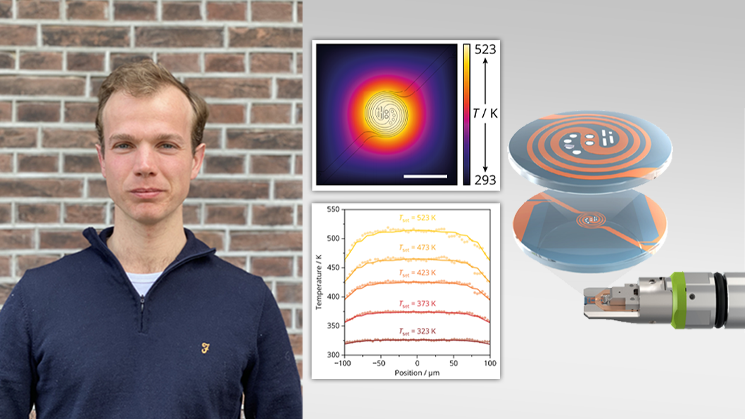
Our Wildfire Nanochip was specifically designed to enable users a homogeneous heat distribution across the microheater where a sample is positioned. It is particularly due to the unique geometry of the metal spiral, where the windows are placed right at the center, that users are able to enjoy such a remarkable temperature homogeneity. In fact, our Wildfire Nanochip has a temperature uniformity of 98% across the window area and 99.5% across the two central windows. The figure on the right below is a perfect illustration of the chip’s exceptional temperature homogeneity, showing the temperature profile across the membrane and the microheater for a center temperature of 523 K simulated with a finite element model.

The high temperature homogeneity of our Wildfire Nanochips is also owed to the fact that the metal heating spiral is embedded in a silicon nitride membrane. Silicon nitride has many advantages including being chemically inert, mechanically robust and can withstand harsh chemical and temperature environments. 

Tijn article - figure 2 wildfire nanochip homogeneous distribution

On the left: The Wildfire Nanochip, where the metal spiral is represented in orange and the silicon nitride membrane in blue. On the right: Finite element model simulation showing the remarkable temperature homogeneity of the Wildfire Nanochip

Reliable temperature mapping

In this work, the luminescent particles that were used are NaYF₄ nanoparticles doped with Er³⁺ and Yb³⁺. These particles exhibit a strong upconversion when excited with an infrared laser. In other words, they emit photons with a shorter wavelength than the excitation photons. As shown in the figure below, we found that the spectrum of the emitted (green) photons is quite sensitive to temperature.

Tijn article - Figure 1 Intensity vs Wavelength

Green upconversion luminescence of the nanoparticles upon excitation at various temperatures ranging from 303 K (dark red) to 573 K (yellow)

By scanning the laser across a layer of deposited nanoparticles in the confocal microscope, we were able to capture an array of emission spectra. We then converted this emission spectra into a temperature map using the luminescence intensity ratio of the 2 peaks at each pixel. After a number of correction steps, the technique showed a remarkable precision of 1-4 K with a spatial resolution of ∼1 micrometer. It is noteworthy to mention that most other techniques are unable to achieve such a high accuracy like this.

Tijn article - Figure 3 DESKTOP reliable temperature mapping

In a) we scanned the laser across the microheater with the deposited luminescent nanoparticles to generate a map of intensity ratios. b) shows the spectrum at each pixel converted into a temperature to provide a temperature map of the microheater.

Simulation and model accuracy

Using the fully corrected temperature maps, we were able to analyze in depth the temperature homogeneity of the microheater. The figure below shows the horizontal traces through the center of these maps. The simulated temperature profiles (lines) show an excellent match with the experimental traces (dots).This confirms both the reliability of the finite element model as a design tool and the strength of our temperature mapping technique as a characterization tool, achieving a high accuracy and a spatial resolution of ∼1 μm.

Tijn article - temperature mapping in graph

A graph showing the mapping of elevated temperatures. The lines represent the simulated temperature profiles and the experimental traces represent the dots.

We determine the standard deviation of the temperature in the center to quantify the accuracy of this thermometry method and find values of 1 K at 323 K increasing to only 4 K at 513 K. Conclusively, this makes nanothermometry using confocal luminescence spectroscopy a promising method to map temperature profiles not only for microheaters but also in other fields such as biology and catalysis where temperature variations are important but hard to monitor with conventional methods.
Tijn portrait image
“Thanks to the exceptionally good spatial and temperature resolution of this method, we were able to obtain an accurate temperature map of our microheater spiral. This confirmed the excellent temperature homogeneity which was predicted by our finite element models.”
Tijn van Omme
Microsystems Engineer |  DENSsolutions

Original article:

Discover our Wildfire solution:

Discover more publications made possible by Wildfire:

Markus article feature image

The first in situ observation of layered metastable heterostructure formation

Using our Wildfire system, scientists are able to thoroughly investigate the formation of heterostructures from starting materials with vastly different properties

Do you want to receive great articles like this in your mailbox? Subscribe to our newsletter.

The first in situ observation of layered metastable heterostructure formation

The first in situ observation of layered metastable heterostructure formation

Using our Wildfire system, scientists are able to thoroughly investigate the formation of heterostructures from starting materials with vastly different properties

Original article by Markus Terker, Lars Nicolai, Samuel Gaucher, Jens Herfort and Achim Trampert

Markus Terker top image in article graph

A plot showing the STEM images taken of the heterostructure demonstrating a tendency for disordered layers to order over time with annealing

Heterostructures, semiconductor structures composed of solid-state materials with different chemical properties, have found use in a variety of specialized applications where their unique characteristics are critical. The engineering of heterostructures is an important means in creating novel device concepts. In fact, it has already revolutionized the development of solar cells, transistors and even lasers. However, layering materials with vastly differing properties poses complex challenges.

Using the DENSsolutions Wildfire system, Markus Terker and his colleagues from the Paul-Drude-Institut in Berlin, Germany observe for the first time the atomic formation of a layered, metastable iron germanium crystal via two-step phase transformation. This research opens doors towards the design and formation of novel hybrid materials that combine vastly different properties, such as ferromagnets and semiconductors, and has appealing implications for optical-electronic industries.

Heterostructural interfaces and stability

Heterostructural interfaces are fundamental and versatile tools when designing electronics with varying properties, such as magnetic, optical, and transport capabilities. Since these interfaces can be used to stabilize otherwise metastable structures, understanding their structures and formation is essential to harnessing the full potential of these materials. Shedding new light on the growth of these interfaces from disordered to ordered states opens up the potential for new applications of this technology.

In this research, Terker and his colleagues observed the in situ annealing of two materials and the resulting FeGe₂ alloy interface between them. This gradual process, catalogued in the figure below, shows the crystallized FeGe₂ at the interface slowly ordering itself into layers of material.

Markus Terker figure 1 showing snap shots of annealing

In situ snapshots of the alloy interface ordering itself into periodic layers over the span of 60 minutes

From disorder to order

The starting sample consisted of a layer of Fe₃Si interfaced with amorphous germanium, a semiconductor. Heating the sample to 300 °C initiated the crystallization process and a thin layer of FeGe₂ crystal formed at the interface. This layer then grew as the sample was sustained at this temperature for the duration of an hour.

Whilst the sample was heated, in situ images were taken of the progression of the FeGe₂ crystal as it grew along the surface of the Fe₃Si base. After 15 minutes of annealing, the majority of the amorphous germanium film completely crystalized and reduced in size and disorder. However, this stage was still not completely ordered. By the 30-minute mark, the amorphous film completely crystalized and gradually ordered itself layer by layer until the entire film was in an ordered phase. 

STEM images of the (b) disordered and (c) vacancy-ordered structure of FeGe₂ observed. Atomic models of the (a) disordered and (d) ordered phase of FeGe₂ observed. The colored dots indicate the atomic stacking order.

Metastable structure

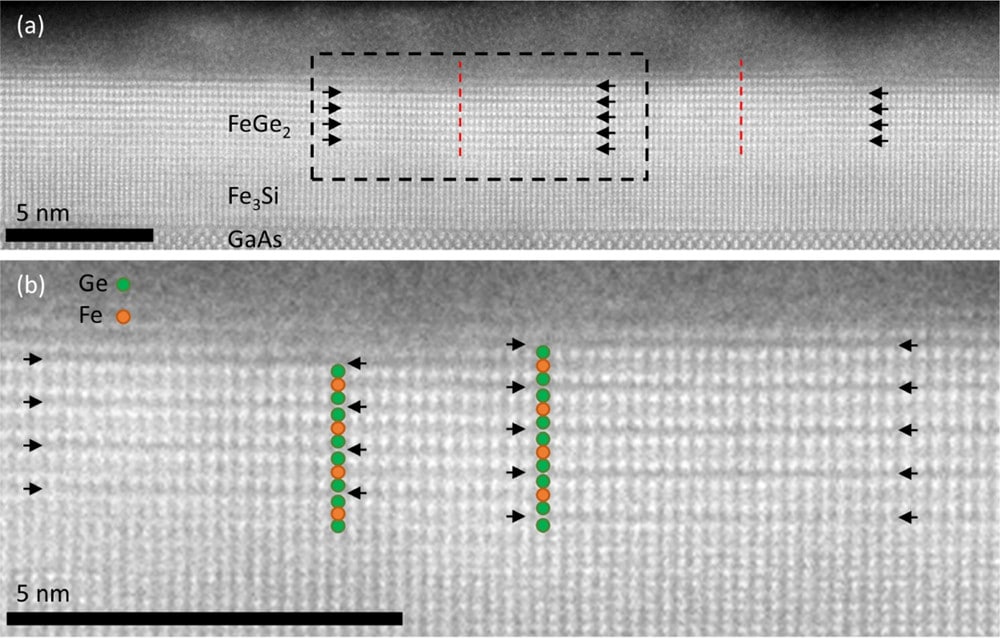
Although it was expected that pure germanium would form during this solid-phase epitaxy, the researchers observed something else entirely. A strong diffusion of iron into the germanium film was detected at relatively low crystallization temperatures. Moreover, instead of pure germanium with a diamond structure, an epitaxial film with iron content was obtained. High-angle annular dark-field (HAADF) scanning transmission electron microscopy (STEM) confirmed that the resulting crystal had a different metastable crystal structure to what was expected. The figure below shows the heterostructure produced after the annealing process. 

The heterostructure produced after the annealing process

STEM images taken of (a) the heterostructure produced after the annealing process, and (b) a magnified image of the dotted black box showing the vacant layers

Novelty in findings

Phase transformations are one of the most fascinating phenomena in nature. Observing such transformations in real time and with the resolution of individual atoms could revolutionize our understanding of their chemical and physical processes. This research demonstrates that a novel crystal phase of FeGe₂ can be interfaced from two materials with vastly different physical properties: Fe₃Si, a ferromagnet, interfaced with amorphous germanium, a semiconductor. Terker and his colleagues were able to demonstrate that a hybrid sample preparation approach can yield thin samples suitable for high resolution HAADF STEM while at the same time retaining the sample composition and structure. This approach could be applied to many different heterostructures and lead to a much broader applicability of the in situ TEM method in the study of phase transformations.

Markus personal image improved

“For the atomic scale investigation of small nanostructures at high temperatures, the reduction of sample drift is of paramount importance. The new generation of DENSsolutions Wildfire Nanochips offer the ideal solution for this due to their small and reproducible bulging. Their robustness also enables an easy and safe transfer of the specimen lamella of any form or sample geometry.”

Markus Terker
PhD Student |  Paul-Drude-Institut in Berlin, Germany 

Original article:


Discover our Wildfire solution:

Discover more publications made possible by Wildfire:

Torsten feature image

Visualizing the structural evolution of thermally-decaying platinum nanowires


Using our Wildfire system, scientists gain an exceptional in-depth understanding of the morphological changes of platinum nanowires at certain temperatures

Do you want to receive great articles like this in your mailbox? Subscribe to our newsletter.

Impulse 1.1: Experience true experimental freedom with Python

Impulse 1.1: Experience true experimental freedom with Python

With the latest version of Impulse, you can now control our systems using Python scripts and fully customize your experiments

Impulse 1.1 python

We are excited to announce the release of our latest Impulse 1.1 software. By creating an API for Impulse, this new update will enable you to exercise creative control over your experiments and inspire you to break the boundaries of your research. We interview our Product Architect (UX) Merijn Pen who led this development, so that you can learn all about Impulse 1.1 and how it can elevate your research.

What can users achieve with this latest version of Impulse?

1) Infinite control

With Impulse 1.1, users will now have the opportunity to experience unlimited flexibility in the control of our systems via Python scripts. In Impulse, we already have an advanced yet easy-to-use profile builder that enables you to design your own experiments. All the basic functionalities that you would require, like creating temperature ramps or pulses, are made possible with the profile builder. However, if you would like to perform more customized experiments involving for example, a particular temperature curve, more flexibility is required. This is exactly where scripting comes in. It will enable you to control multiple stimuli within our systems in any way you please.

You can also create your own feedback loops, where you can interdependently control multiple stimuli in your experiment. Specifically, you can create scripts that look at one parameter and based on some calculation or analysis that you perform on that measurement, it will subsequently control another parameter.

2) Systems integration

With Python, you can write scripts that not only control stimuli within our in situ systems, but also integrate other hardware in your experiment setup that also have an API. For example, you can trigger the data capturing of your camera from the same scripts that control your stimuli and direct the entire experiment. Moreover, in regards to data integration, scripting also allows for the real time tagging of your imaging data with all the parameters of our in situ systems. Ultimately, the main benefit of this hardware integration capability is that it makes the control of the orchestra of equipment in your in situ experiments a lot easier. You can synchronize the control of all the different equipment from one place and in that way make sure that each instrument performs its task at the right moment. 

3) Processing and analysis

Python offers thousands of open-source modules that include all kinds of functionalities that allow for real-time processing and analysis of your experimental data. Therefore, with scripting you can draw conclusions from your experiments much faster.

How can users get access to Python scripts?

Overtime, we will be building an opensource database on Github where there will be numerous scripts that perform all kinds of experimental controls, integrations with other equipment, and data processing and analysis. You can use these scripts as is or customize them according to your needs. Our Github page not only offers example scripts that you can easily download, but it also includes tutorials that will help beginner programmers get started with Python programming. In fact, it should help anyone, from basic beginners to more advanced users. Of course, aside from our own database, you can find numerous scripts online as there is plenty of opensource information available online. 

What led you to develop this new version of Impulse?

The vision of impulse is to make in situ experiments a lot easier and more efficient to perform. When developing and improving our software, I always put myself in the mindset of our customer and think what they would like to see. For some customers, they want to perform experiments that have never been done before. The development of Impulse 1.1 will enable this experimental flexibility and freedom. We want to give users the opportunity but also the inspiration to break the boundaries of research.

For those users who desire more basic functionalities and an easy-to-use environment, our current Impulse user interface delivers just that. With our new Python interface, we now offer unlimited flexibility to any user who would like to perform experiments that our current user interface does not allow. Of course, we will still be expanding the capabilities of the user interface of Impulse and the software itself. Ultimately, we are very proud to have found a way to develop a software that maintains ease-of-use while still offering users limitless flexibility.

Which future developments lie ahead?

Besides the Python control of the system, this API also opens the doors for new integrations into all kinds of software platforms that will be showing up in the near future. We will always strive to find innovative ways to give our customers a fully integrated user experience.

Read more:

Try Impulse yourself:

Do you want to receive great articles like this in your mailbox? Subscribe to our newsletter.

Visualizing the structural evolution of thermally-decaying platinum nanowires

Visualizing the structural evolution of thermally-decaying platinum nanowires

Using our Wildfire system, scientists gain an exceptional in-depth understanding of the morphological changes of platinum nanowires at certain temperatures

Original article by Torsten Walbert, Falk Muench, Yangyiwei Yang, Ulrike Kunz, Bai-Xiang Xu, Wolfgang Ensinger, and Leopoldo Molina-Luna

Torsten feature image

The morphological transformation of a platinum nanowire as temperature increases and the two domain types observed

Metal nanowires represent a main class of one-dimensional nanomaterials and have been proven essential for a wide range of applications. Previous works on electrodeposited nanowires focused on ex situ SEM characterization, which is limited in terms of resolution and unable to monitor internal nanostructure changes. Using the DENSsolutions Wildfire system, Torsten Walbert and his colleagues from the Materials Analysis group and Prof. Leopoldo Molina-Luna from the Advanced Electron Microscopy (AEM) Division at the Institute for Materials Science, TU Darmstadt were able to investigate via in situ TEM the influence of temperature on polycrystalline platinum nanowires. Observing this process under remarkably high resolution enabled them to capture for the first time the internal transformations during both early and intermediate stages of the platinum nanowire decay. 

The structural evolution of nanowire decay 

Although nanowires are crucial for a wide range of applications, they are frequently prone to degradation. It is important that we understand these underlying failure mechanisms to better ensure reliable performance under operating conditions. Previous studies observing the thermal decay of nanowires have typically focused on ex situ investigations inside an SEM. Only a handful of studies look at the in situ characterization of nanowire decay using TEM, but even those focus specifically on gold nanowires. In this study, Torsten and his team observe the temperature influence on the degradation of platinum nanowires. Platinum is used due to its high mechanical, chemical and thermal stability as well as catalytic activity.

Below you can see an overview of the morphological transformation of a platinum nanowire after a thermal treatment between 250°C and 1100°C. It is observed that the main external transformation starts after 800°C, illustrated by the corresponding diameter evolution.

Structural evolution of pt nanowires

The morphological transformation of a platinum nanowire after thermal treatment and corresponding diameter evolution

Changes in internal nanostructure

Although external shape transformations occur after 800°C, changes in the internal nanostructure happen a lot earlier at markedly lower temperatures. As shown in the figure below, after heating to 250°C, no pronounced changes in the internal structure are observed compared to the initial state. After increasing the temperature to 450°C, the nanowire outline is still unaltered, but voids of low contrast (indicated by red circles) already start appearing. At 800°C, these voids begin to propagate and the shape slightly changes.

Further increasing the temperature to 850°C causes a grain boundary to extend, which is indicated by the dashed green line in the figure below. Finally, at 875°C, the grain boundary straightens while the voids increase and accumulate. Ultimately, these results confirm that internal nanowire restructuring considerably precedes the permanent changes of the outer nanowire shape. In fact, the observed faceted voids and grain boundaries are crucial factors guiding their transformation and final splitting, which is discussed in the next section.

TEM image showing the formation of voids (red circles) and straightening of grain boundary (green dashed line) at low and high temperatures

TEM video showing a void disappearing from a single-crystalline wire segment

Two surprising domain types

Some surprising results are observed after when the temperature goes beyond 875°C. Interestingly, the nanowires segregated into two domain types, one being single-crystalline and essentially void-free, while the other preserves void-pinned grain boundaries. This is the first time in academia that researchers observe this type of segregation, as it was neither described in previous experimental studies nor predicted by simulations.

You can see in the simulation and TEM video below that the wire separates into two domains, a single-crystalline domain and void-containing domain. Whereas the single-crystalline areas exhibit fast platinum transport, the void-containing areas show an unexpected morphological stability, retaining their nanostructure even at temperatures above 1000°C. In fact, the subsequent splitting of the nanowires is only observed in single-crystalline areas and thus leads to the formation of fragments with varying lengths and diameters. 

A simulation of the platinum nanowire disintegration, showing the curvature-driven mass transfer dominating the nanowire transformation

TEM video showing the disintegration of a platinum nanowire into two fragments

Novelty in findings

Performing in situ TEM in a controlled temperature environment represents a powerful approach for investigating the structural transformations of metal nanowires. Obtaining detailed insights into the internal nanostructure of nanowires and their evolution over time would otherwise be impossible without in situ TEM. Torsten and his team were able to relate the onset of shape changes to distinct nanostructural features acting as starting points in the disintegration process. This study is not only of great interest for basic research, but also helps in predicting the thermal robustness and reliability of nanowires in devices and can serve as a synthetic tool, enabling the control over the disintegration sequence via defect engineering. If we can understand the mechanism behind the process of decomposition, we can better predict and control the thermal stability of nanowires, adapting their shape and properties according to specific applications and conditions. 

Walbert, Torsten portrait -400 px

“The DENSsolutions Wildfire chip enabled an exact and fast temperature regulation with a homogeneous heat distribution, allowing us to investigate the decomposition process of Pt nanowires in situ. Without it, it would not have been possible to follow the transformations of the nanowires directly and to link them to the internal changes in the nanostructure.”


Torsten Walbert
PhD Student | Technische Universität Darmstadt

Original article:


Discover our Wildfire solution:

Discover more publications made possible by Wildfire:

Dental crown created by selective laser melting (SLM)

Improving the mechanical properties of 3D printed metal parts


Using our Wildfire system, researchers explore the microstructural changes occurring in AlSi10Mg during 3D printing and post processing

Do you want to receive great articles like this in your mailbox? Subscribe to our newsletter.

Meet our Chief Technology Officer, Dr. Hugo Pérez

Meet our Chief Technology Officer, Dr. Hugo Pérez

Hugo feature image

At DENSsolutions, we persistently challenge ourselves to develop the most innovative and outstanding solutions that you need to advance your research. This continuous yet passionate pursuit has been led for years by our Chief Technology Officer, Dr. Hugo Pérez, a longstanding pillar within this company. He has played a critical role in positioning DENSsolutions as a global leader in the field of in-situ TEM, and bringing home the Microscopy Today 2020 award. In this latest addition to DENSsolutions Meet the Team series, we interview Chief Technology Officer, Dr. Hugo Pérez, so you can learn all about his diverse educational experiences and wild backstory.

Where it all started

“My name is Hugo Pérez and I’m 35-year-old proud Mexican born in the beautiful city of Chihuahua. Although I was raised in Mexico and it holds a special place in my heart, I have lived in 7 countries around the world including the USA, Canada, France, Italy, Germany, Sweden and the Netherlands.

“I’ve always said that my passion is MEMS and nanotechnology, my obsession is biology, but my heart lies within business management.” – Dr. Hugo Pérez 

When deciding what to study early on in my life, I was doubting whether to go for medicine or engineering. After much deliberation, I decided to go for the latter as I realized that I could later on in my career apply the developed technical skills for medical devices and healthcare purposes. I obtained my BSc in Mechatronics Engineering at the Tecnológico de Monterrey in Mexico. It was during my bachelor’s studies, and especially during my time in Canada and Germany, that I was introduced to the world of nanotechnology and realized that there was nothing more I wanted to do. I was amazed by the wide scope of possibilities in which this disruptive technology could be used. So, I started discussing with my supervisors, expressing my intention of specializing in micro/nano-mechatronics, with the aim of one day having the knowledge to develop electromechanical systems at the molecular scale for biomedical purposes. Funnily enough, I was partly inspired by the movie Fantastic Voyage, where a submarine and its crew were shrunken to microscopic size and injected into the bloodstream of a scientist in order to save his life.

Stream-LPEM-system-Microscopy-Today-2020-Innovation-award-400x250

Stream LPEM system wins the Microscopy Today 2020 Innovation award


A conversation with our CTO Dr. Hugo Pérez who has been leading the development of the award-winning system.

The first of many MSc degrees

“Coincidentally, both my supervisors in Canada and Germany, who didn’t know each other, gave me the exact same advice: to pursue a MSc in Molecular Bioengineering at TU-Dresden, in Germany. But before doing so, I had my first professional experience working within the industry, where I spent a bit over 1.5 years working as an Automation Engineer at GCC, a large cement company in Mexico. This job gave me a lot of exposure to chemistry and material science, and allowed me to discover much more about the power of using nanomaterials like carbon nanotubes. As you can imagine, this experience only grew my desire further to specialize in nanotechnology.

“From that point onwards, and for the next many years, I would be spending most of my time inside the cleanroom, learning all kinds of processes and tips & tricks to manufacture nanodevices.”

So, after this rewarding experience, I took my supervisors’ advice to heart, and jumped back to Germany to start my first (of three) Master’s degree. Studying molecular bioengineering gave me the opportunity to learn about molecular biology and all kinds of exciting applications in genetics and proteomics. However, as interesting as it was, I was still missing the engineering side that would allow me to design and manufacture nanodevices. This is precisely why I moved to Sweden to pursue a second MSc degree in Nanotechnology at the Chalmers University of Technology. It was thanks to this second MSc degree that I properly got immersed in the world of NEMS/MEMS and micro/nano-fabrication. From that point onwards, and for the next many years, I would be spending most of my time inside the cleanroom, learning all kinds of processes and tips & tricks to manufacture nanodevices.”

Mission impossible

“After finishing my second MSc, and given the fact that this was all very intense, I was prepared to go back to the industry with the aim of slowly starting to move towards a highly ranked management position in a high-tech company. However, destiny had something else prepared for me. I ended up getting a PhD position at TU-Delft in the Netherlands. Although pursuing a PhD was not part of the plan, I couldn’t deny this opportunity given the fact that the project was exactly what I was looking for. Not only that, but my promotor would be Dr. Urs Staufer, a remarkable scientist who led NASA’s Phoenix Mars Mission and developed the first nanosensor for planetary science able to measure the presence of water molecules on Mars. I took this opportunity as a great chance to learn from one of the best.

“At a certain point I was working in parallel on two different PhD projects while simultaneously pursuing an MBA.”

To make the story more complicated, another opportunity came up to pursue a third Master’s degree in Business Administration at the University of Cumbria. Of course, I didn’t hesitate to jump on this considering my goal has always been to become a successful businessman. However, destiny still had another surprise for me: the appearance of another PhD project on graphene manipulation. Therefore, at a certain point I was working in parallel on two different PhD projects while simultaneously pursuing an MBA. This complete academic experience, which was extremely demanding, forced me to become a very structured and time-efficient person. This is partly the reason why I’ve won the best scientific paper on a number of occasions at prestigious international conferences.

Now, at DENSsolutions, I’m trying to exploit all these experiences to the most, not just to lead the company on the right technological path, but also to bring the business to a higher level. I enjoy acting as a coach to my colleagues and ensuring there’s always something they can learn from me. From a commercial perspective, what I enjoy the most is pitching our technology to convince people of our solutions, as well as trying to close new deals. It excites me that researchers all over the world in a wide variety of applications rely on our advanced technologies to conduct their research. Keeping the right balance between business and science is what has allowed me to strengthen my international network, and what has given me the possibility to be in contact with global industrial leaders and some of the greatest scientific minds in the community.”

Thank you for reading this article! If you would like to ask Hugo any questions, whether it’s about his education, experience or knowledge, please don’t hesitate to contact him via the form below

[hubspot type=form portal=469089 id=91635a63-f352-4bb7-a1d2-e761a9b8d13a]

Discover Hugo’s publications

Do you want to receive great articles like this in your mailbox? Subscribe to our newsletter.

Installing South Korea’s second Stream system at Seoul National University

Installing South Korea’s second Stream system at Seoul National University

DENSsolutions Installing South Korea's second Stream system at Seoul National University

The team at SNU (From left to right) Prof Jungwon Park, Back Kyu Choi, Minyoung Lee and Junyoung Heo.

With the second ever installation of a Stream LPEM Solution in South Korea, we get an insider’s look at the microscopy laboratory at the Seoul National University. We interviewed Prof Jungwon Park from the National Center for Inter-University Research Facilities to find out how our solutions will benefit their research when investigating synthetic mechanisms of inorganic nanocrystals.

Can you tell us a bit about the microscopy facility at Seoul National University SNU?

Seoul National University has a shared research facility called NCIRF (National Center for Inter-University Research Facilities) that has specialities in various fields of analysis, such as organic, inorganic, surface analysis, and x-ray techniques. NCIRF also has a special team in electron microscopy, which provides SEM, TEM, and other pretreatment equipment including FIB and Nanomill.

This shared facility was established around 30 years ago. Recently, two spherical aberration-corrected TEM and STEM, JEM-ARM200F, were installed, providing atomic-resolution electron microscopy images. Also, in our own center, the Institute for Basic Science Center for Nanoparticle Research, we have our own JEOL JEM-2100F TEM in our building which is utilized routinely for a lot of in situ EM studies.

What type of applications are your users interested in with regards to the Stream system installed?

Our users are interested in various nanocrystal dynamics. Regarding the Stream system, we are expecting to investigate the synthetic mechanism of colloidal inorganic nanocrystals by changing the liquid cell temperature and injected precursor solution. Also, we are planning to investigate transformation phenomena of colloidal nanocrystals in various liquid environments. Moreover, we are expecting to observe polymers or proteins in liquid, and their stimuli-responsive reactions using the Stream system.

What particular features of the DENSsolutions Stream solution attracted you to the system?

When it comes to liquid cell TEM experiments, it is crucial to ensure that a controlled amount of liquid is injected to the desired position, while minimizing the decrease in spatial resolution of TEM stemming from the window bulging effect. In this sense, the Stream system by DENSsolutions was quite attractive to us.
With ensured liquid flow from Nano-cell design, controlled injection of liquid, as well as mitigated window- bulging originating from the pressure-based liquid pump, and also along with the liquid heating control system, the Stream solution seemed to help us to design various in situ liquid cell systems which were unachievable with other in situ holders.

In your experience so far, how have you found the Stream system?

At first, the Stream system was quite complicated to us since a lot of elaborate systems were installed. But soon we realized that it was much simpler than it seemed. The method to assemble the Stream holder was easy compared to other liquid cell TEM holders, and the way to control the injection solution was straightforward. And since a lot of O rings are used to encapsulate the Nano-cell, the holder seems to be very stable without leakage problems while operating the TEM. Also, the heating control software was upgraded from the Wildfire version, making it much easier to use the program.

DENSsolutions Prof. Jungwon Park

Jungwon Park, Ph.D
Associate Professor | Seoul National University

Jungwon Park received his B.S. degree from the Department of Chemistry, POSTECH, South Korea, in 2003, and his Ph.D. degree from the Department of Chemistry, University of California, Berkeley, in 2012. After a post-doc with the School of Engineering and Applied Sciences, Harvard University, he started a faculty position with the School of Chemical and Biological Engineering, Seoul National University, in 2016, and he currently serves as an associate professor jointly affiliated with the Center for Nanoparticle Research, Institute for Basic Science (IBS). His research areas include the in-situ study of nanomaterials, liquid-phase TEM, phase transitions, interface chemistry, and low-dimensional materials.

Learn more about Stream:

Discover Jungwon Park’s publications:

Discover publications made possible by Stream:

Do you want to receive great articles like this in your mailbox? Subscribe to our newsletter.