In situ TEM cooling meets high-precision heating: Exploring BaTiO₃ phase transitions with Lightning Arctic

In situ TEM cooling meets high-precision heating: Exploring BaTiO₃ phase transitions with Lightning Arctic

Using the DENSsolutions Lightning Arctic system, researchers uncover the temperature-driven phase transitions and domain wall dynamics in single-crystal BaTiO₃ with atomic precision across cryogenic and elevated conditions.

Original article by Jiang et al.
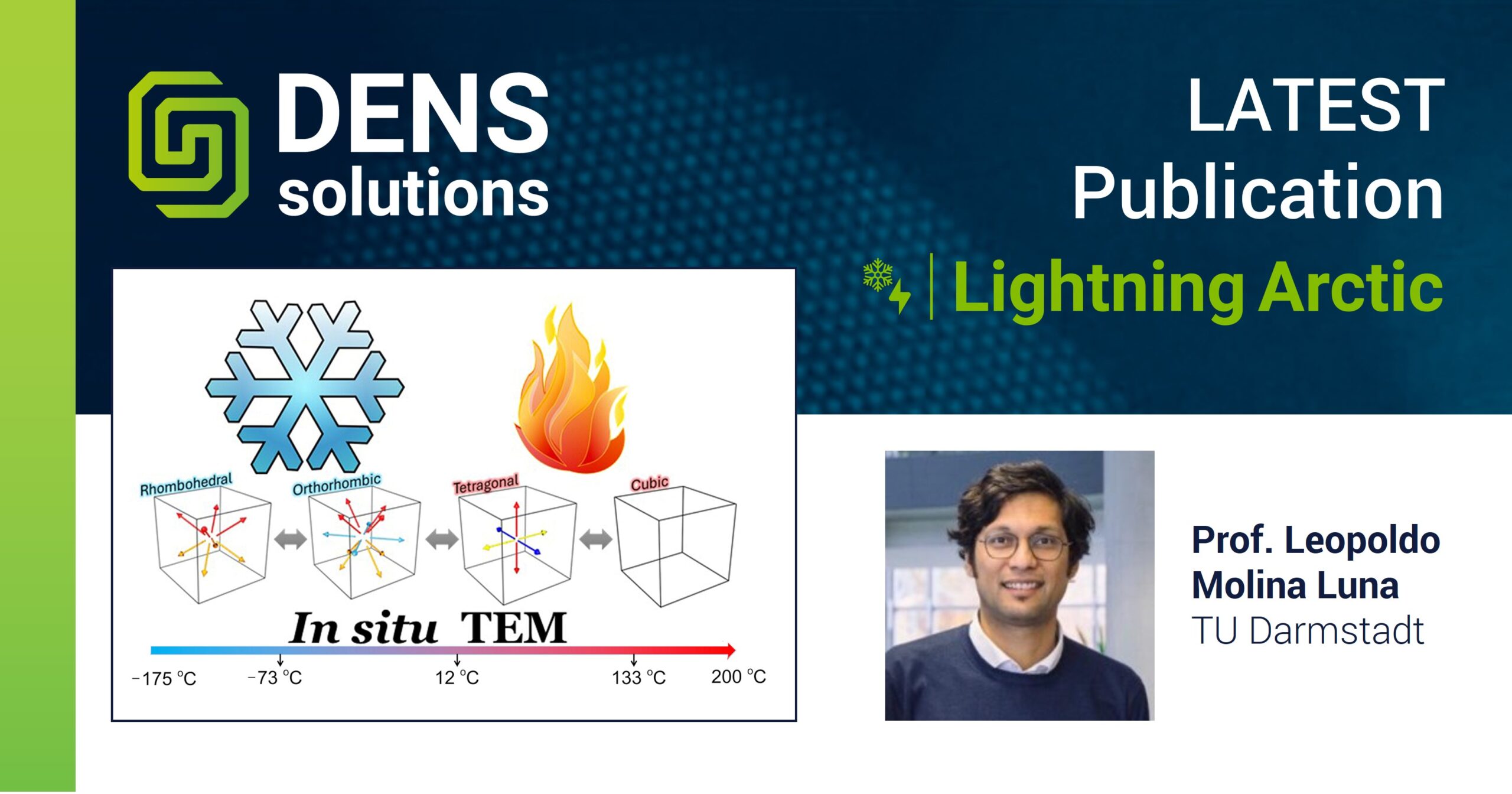
Understanding the intricate phase transitions and domain dynamics of ferroelectric materials like barium titanate (BaTiO₃) is essential for improving their functional properties in applications such as capacitors, sensors and actuators. However, achieving atomic-resolution insights across a wide temperature range—spanning cryogenic to elevated conditions—remains a significant challenge. In a recent study published in Microstructures, Prof. Leopoldo Molina-Luna’s group at TU Darmstadt utilized our Lightning Arctic system to investigate the phase transitions and domain evolution of single-crystal BaTiO₃. By utilizing the system’s cryogenic cooling and heating capabilities, the team achieved unparalleled stability and resolution, enabling direct observations of phase behavior and domain wall dynamics from -175 °C all the way to 200 °C.

Lightning Arctic: Ultra-high stability

The DENSsolutions Lightning Arctic solution was used in this study for the application of in situ TEM cooling and heating. The cooling capability of Lightning Arctic is enabled via a cooling rod inside the holder, which transfers the ‘cold’ towards the holder’s tip where the MEMS-based Nano-Chip holding the sample is located. Once this cooling rod is connected to a metal cooling braid that is immersed in a liquid nitrogen dewar, the sample can be cooled inside the TEM to liquid nitrogen temperatures.

Impressively, the researchers were able to achieve atomic-resolution imaging at cryo-temperatures with notably low sample drift. This is due to the ultra-high stability of the holder. They captured a sequential of ten frames of HAADF STEM images on a single-crystal BTO TEM sample. The first frame, provided below in Figure 1a, evinces the exceptional stability of the holder, enabling atomic-resolution imaging at -175 °C.
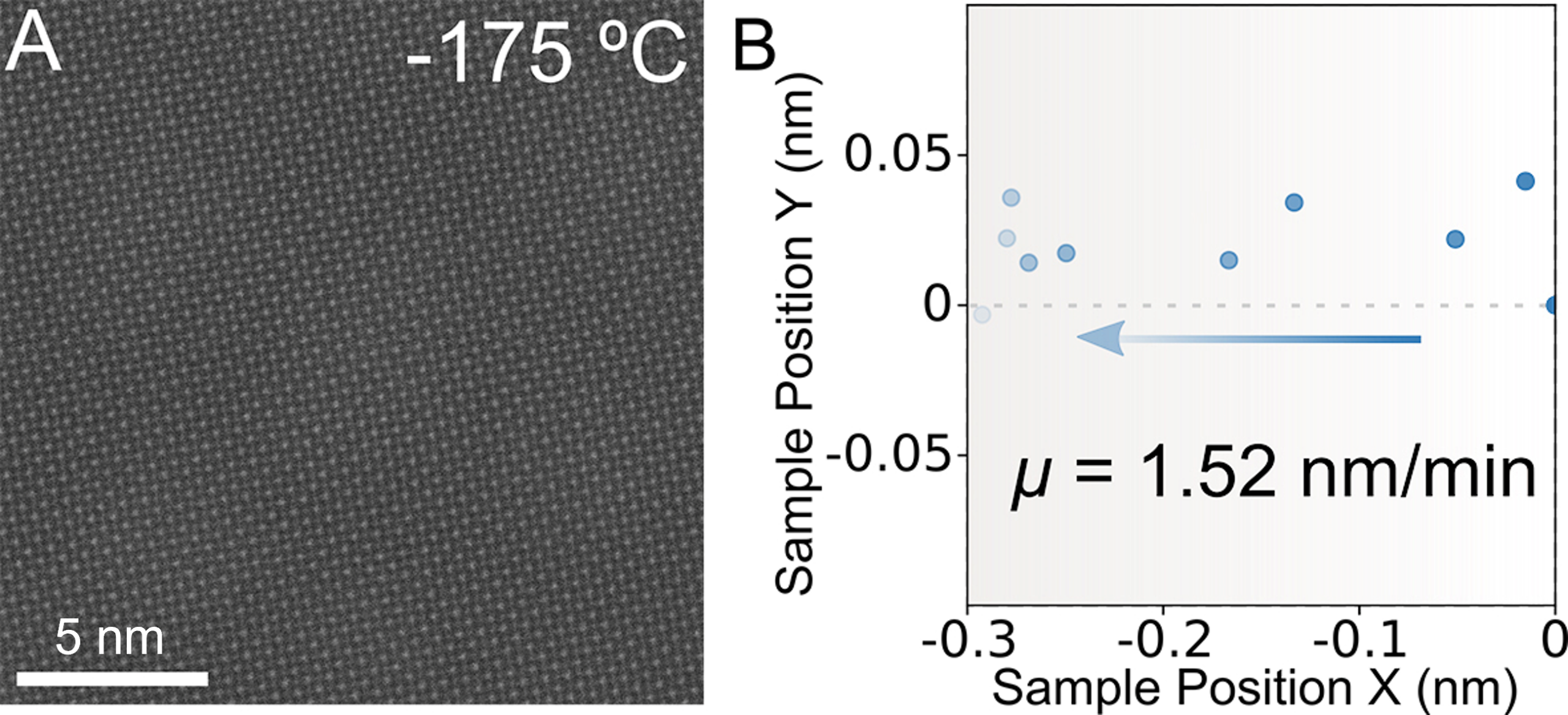
Figure 1: Drift analysis in the cryo-STEM experiment at -175 °C.

Domain evolution during heating

Ferroelectric materials exhibit phase transitions that significantly influence their domain structures, which play a crucial role in determining material performance. By applying a controlled heating profile, the researchers were able to monitor how BaTiO₃ evolves through its various phases in real time. The video below highlights the dynamic changes in domain wall (DW) configurations as the material transitions from rhombohedral (R) to orthorhombic (O), tetragonal (T) and finally cubic (C) phases. At lower temperatures, zigzag patterns formed by 60° and 120° DWs appeared in the orthorhombic phase, while 90° a-c type ferroelastic domains became prominent in the tetragonal phase. These observations showcase how temperature influences domain behavior, offering valuable insights into the structural evolution of BaTiO₃ during heating.

Movie 1: Domain evolution during the complete in situ TEM heating process.

Domain evolution during cooling

Domain wall dynamics are central to understanding ferroelectric materials, as the movement and reorganization of these walls directly influence the material’s functional performance. Monitoring these processes in real time requires both exceptional resolution and imaging stability. The video below showcases the real-time evolution of domain walls across different temperature phases, enabled by the ultra-stable capabilities of the Lightning Arctic system. The researchers captured the movement and interaction of 71° and 180° DWs in the rhombohedral phase at cryogenic temperatures. These observations provide unprecedented clarity on the spontaneous strain and polarization mechanisms that govern domain stability, offering new insights into the nanoscale processes driving ferroelectric behavior.

Movie 2: Domain evolution during the complete in situ TEM cooling process.

Advancing the frontier of ferroelectric science

Conclusively, this study highlights the power of the DENSsolutions Lightning Arctic system in enabling atomic-resolution observations of phase transitions and domain wall dynamics in single-crystal BaTiO₃ across a wide temperature range. By capturing real-time structural evolution during both heating and cooling processes, Prof. Leopoldo Molina Luna and his group were able to reveal critical insights into the behavior of ferroelectric domains under temperature-driven stimuli. These findings lay the foundation for further studies of functional materials under multi-stimuli conditions, driving advancements in their development for next-generation applications.

“DENSsolutions’ Lightning Arctic enables in situ TEM of phase transitions with atomic precision.”

Prof. Leopoldo Molina-Luna   |   TU Darmstadt

Original article:


Discover our Lightning Arctic solution:
Thomas article feature image

Lightning system helps uncover the interaction mechanism in reactive metal-ceramic system, Al-SiC

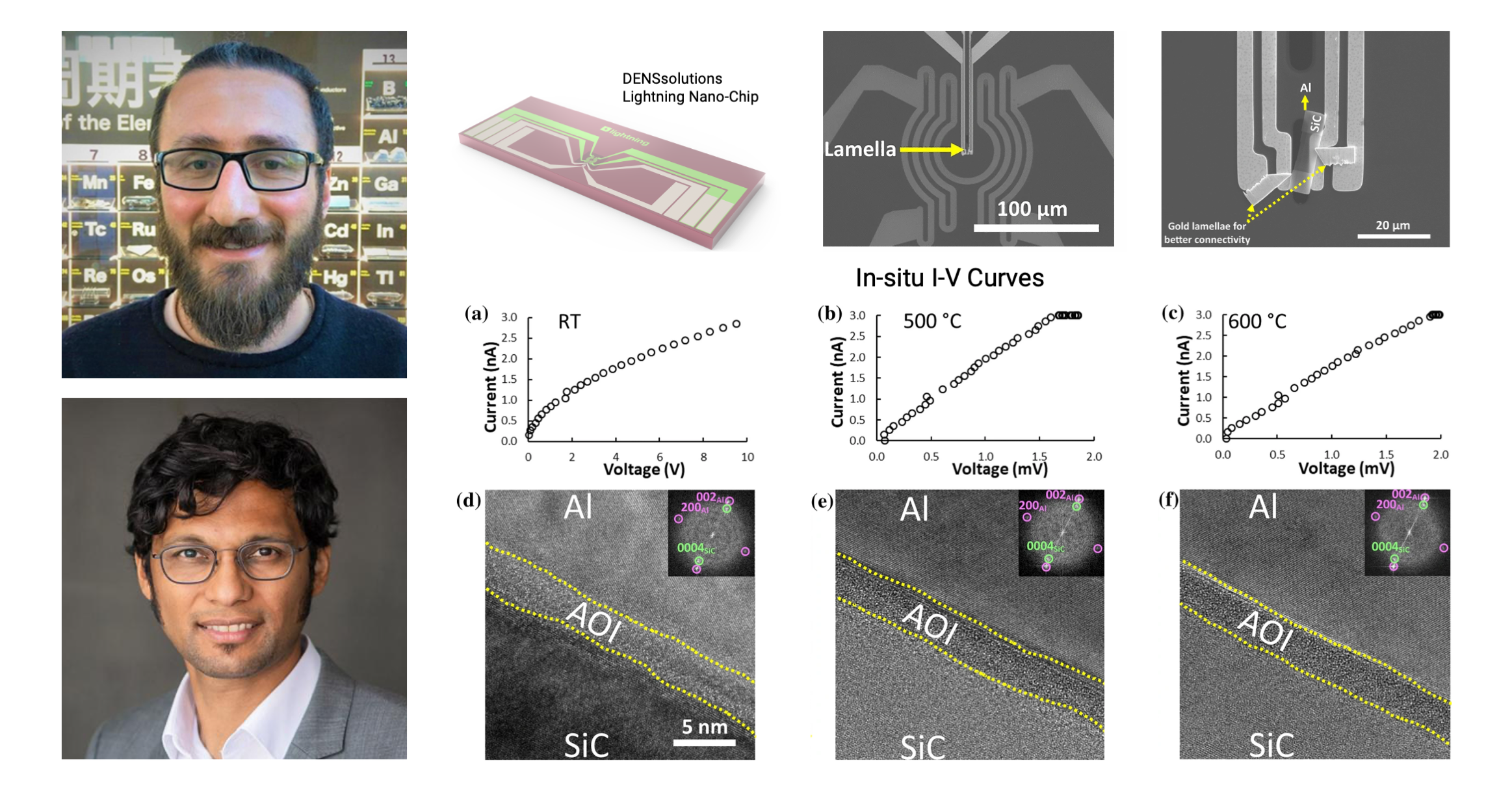
The DENSsolutions Lightning system was utilized to reveal the evolution mechanism of the Al–AOL–SiC system under heating and biasing conditions and under an ultrahigh resolution of 4 Å.
Subscribe to our newsletter to stay up-to-date with the latest in situ microscopy news.

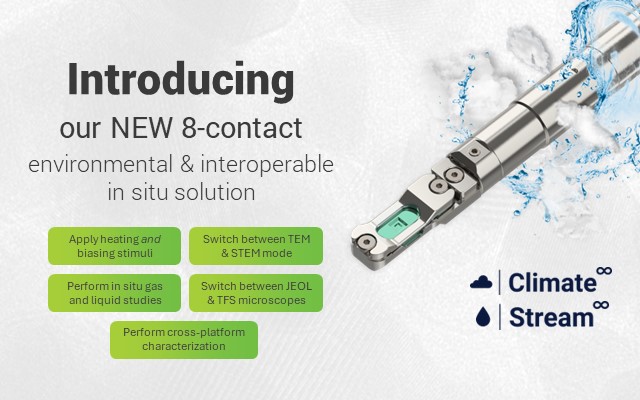
Introducing Infinity: DENSsolutions’ pioneering 8-contact environmental in situ solution

Introducing Infinity: DENSsolutions’ pioneering 8-contact environmental in situ solution

An interview with DENSsolutions’ Senior Mechanical Engineer about our latest innovation, Infinity – featuring an environmental holder with combined heating and biasing capabilities in both gas and liquid environments.

In this article, we delve into DENSsolutions’ cutting-edge Infinity solution through an exclusive interview with lead developer and Senior Mechanical Engineer, Christian Deen-van Rossum. Here, Christian takes us through the key features of this innovation, highlighting its benefits, diverse applications, and offering an inside look into the development journey of this advanced solution.

1) What are the main benefits of the Infinity solution for users?

“Climate Infinity and Stream Infinity bring forth numerous advantages for your in situ experiments:

1) Apply simultaneous heating and biasing stimuli: The new Climate/Stream Infinity holder features eight electrical contacts that enable simultaneous application of electrical and thermal stimuli in a gas or liquid environment. The contacts can be used for various electrically driven MEMS-based sensors and actuators, essentially transforming the Infinity system into a vast research playground. Importantly, for liquid studies, this opens the door to performing electrochemistry as a function of temperature.

2) Securely transfer your sample from one microscope to the other: The assembled tip of the Infinity holder containing a Nano-Reactor/Cell works as a cartridge, enabling complementary studies of the same sample using different TEM vendors, namely JEOL or Thermo Fisher Scientific (TFS). These microscopes can either be located in the same TEM lab, user facility or even in different universities/institutes. Remarkably, this removable tip also facilitates multi-modal characterization for SEM and beamline setups. Furthermore, the chips being used are universal, meaning that you can directly correlate experimental results obtained from JEOL and TFS microscopes, with improved Nano-Chip logistics.

3) Easily switch between STEM and TEM mode: By flipping the tip 180 degrees, you can directly change the sample position to be either on the top or bottom without a need to disassemble the tip. This grants you the freedom to flawlessly switch between STEM or TEM mode, respectively, depending on your experimental needs, while maintaining the best resolution performance. Importantly, you can switch between both imaging modes within a matter of seconds.

4) Perform gas and liquid studies with the same holder: The new environmental Infinity holder is your all-in-one solution for both gas and liquid experiments. Simply choose the appropriate function for the chips and connect the necessary gas or liquid supply system. Our extensive range of chip types includes gas-heating (GH), liquid-heating (LH), gas-heating-biasing (GHB), and liquid-heating-biasing (LHB), offering unparalleled versatility for your experimental needs. New MEMS chip designs will further expand the application space of the Infinity system.

5) Ease of use: We understand that a great product should be easy to use without a steep learning curve. Therefore, our design process focused on making sure the holder can be effortlessly utilized from the start. By prioritizing user-friendly design and continuously testing with real users, we ensured our product is not only powerful and effective but also simple and enjoyable to use. Because of this, the Infinity holder significantly reduces the time-to-experiment, allowing you to spend your time leveraging its capabilities to drive innovation and productivity. One highlight of the Infinity holder is the removal of all assembly tools and the introduction of self-aligning windows. When you place our chips in the tip of the holder, the membranes automatically align to provide a consistently clear field of view. Designed for a perfect fit, the Infinity holder ensures precise alignment without manual adjustments. This simplifies installation, reduces the risk of leaks, and allows you to focus more on your research and less on setup.

2) What inspired the development of Infinity, and what challenges did you encounter during the process?

“We wanted to bring a better, future-proof and more user-friendly holder to the market that truly meets the needs of our customers. For that reason we developed a holder from a customer-centric approach, driven by extensive customer input and thorough market research, rather than simply pushing the latest technology. We engaged with our customers to understand their challenges and desires and gathered invaluable feedback that helped shape every aspect of our product. By doing this we made sure that we were addressing real pain points and delivering solutions that would help improve the customer experience and reduce time to experiment. This customer-focused approach means that our product is not just a collection of the latest technological advancements, but a thoughtfully designed solution that reflects the actual needs and desires of our users.” 

3) What are the main application fields that will benefit from Climate Infinity and Stream Infinity?

“The Infinity system can be used for broad applications ranging from materials science to energy and life science. In materials science, the Infinity system enables the study of nucleation, growth, assembly and corrosion under well-defined chemical environments (gas, vapor and liquid) and external stimuli (heating, biasing or both). The information obtained not only provides insights into the dynamic processes of material formation but also offers guidelines for the controllable synthesis of materials with improved performance. In energy studies, the Infinity system can mimic the real working conditions of various functional devices (such as batteries, supercapacitors, fuel cells, memristors, resistive random access memory, etc.). This allows the direct monitoring of the evolution and degradation of key materials, including rechargeable battery electrodes, thermo-, electro- and thermoelectro-catalysts and phase-change materials, at the nano- or even atomic scale. For life science, it is possible to image whole cells and resolve fine structures of biomaterials and proteins in their native state, and study various dynamics of biological samples in an environment close to a real organism. Moreover, the Infinity system provides a unique platform for correlative studies across different detection sources, such as electron, X-ray, neutron and visible light.”

4) Has Infinity already been installed?

“Yes, the system has been installed at numerous sites already, including EMAT (Antwerpen, Belgium), FAU Erlangen-Nurnberg (Erlangen, Germany) and UC Irvine (Irvine, USA).”

Dr. Mingjian Wu from FAU Erlangen-Nürnberg

From left to right: Dr. Alexander Zintler from EMAT and Christian Deen van Rossum from DENSsolutions

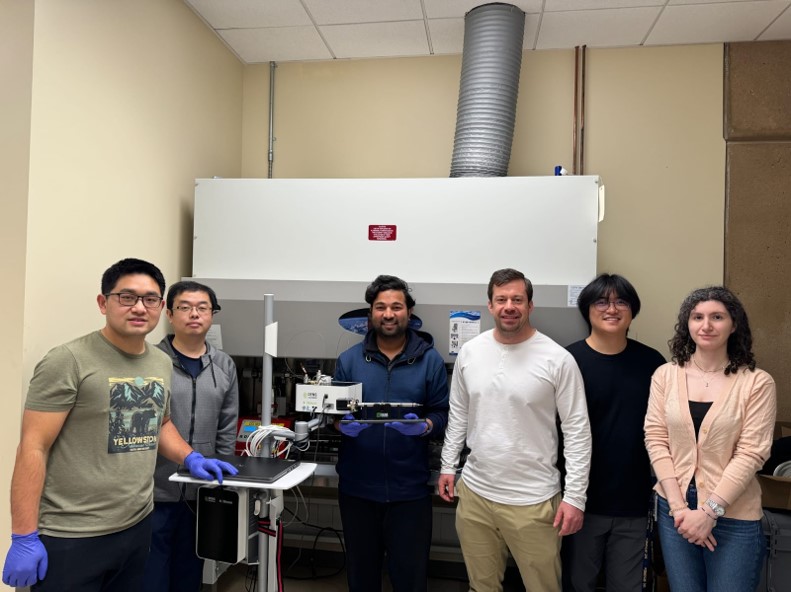
From left to right: Dr. Hongkui Zheng and Dr. Hongyu Sun from DENssolutions, as well as Pushp Raj Prasad, Prof. Joe Patterson, Zhaoxu Li and Elmira Baghdadi from UC Irvine

Dr. Mingjian Wu from FAU Erlangen-Nürnberg

From left to right: Dr. Alexander Zintler from EMAT and Christian Deen van Rossum from DENSsolutions

From left to right: Dr. Hongkui Zheng and Dr. Hongyu Sun from DENssolutions, as well as Pushp Raj Prasad, Prof. Joe Patterson, Zhaoxu Li and Elmira Baghdadi from UC Irvine

Read more about Climate Infinity:


Read more about Stream Infinity:

Subscribe to our newsletter to stay up-to-date with the latest in situ microscopy news.

In situ LPEM: Illuminating the electrochemical nanoscale dynamics of active materials

In situ LPEM: Illuminating the electrochemical nanoscale dynamics of active materials

Using the DENSsolutions Stream system, researchers take a magnified look at the nanoscale processes governing electrochemical activity in active molecular materials.

Original article by Gibson et al.

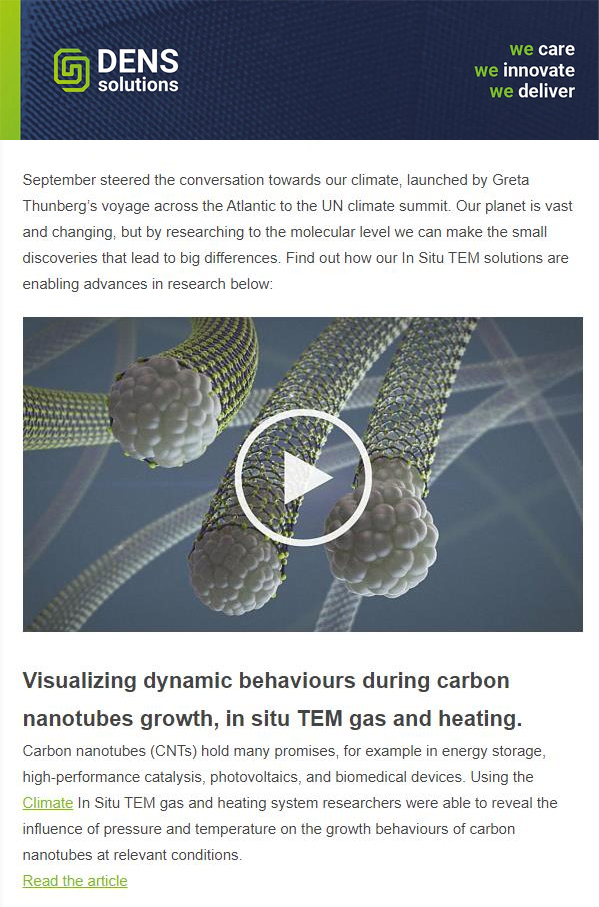
Active materials’ ability to interact with their environment in dynamic ways makes them invaluable across numerous fields, enhancing the functionality, efficiency and sustainability of various products and technologies that we use daily. This includes bio-sensors, flexible electronics, water purification and solar cells. Indeed, a thorough comprehension of the behavior of active materials under electrochemical conditions is crucial for their development. While substantial efforts have been made to understand the self-assembly mechanisms of biologically active materials, there is currently a large knowledge gap on how synthetic active materials behave. Traditional microscopy techniques often fall short in capturing the real-time dynamics of materials immersed in liquid environments. This is where liquid phase electron microscopy (LPEM) comes into play, offering a powerful solution to bridge this gap.

In a recent study published in the renowned journal of ACS Nano, a team of researchers from the University of California (UC) Irvine and the University of Massachusetts Boston employed the DENSsolutions Stream system to investigate the dynamics of electrochemically driven active materials. Impressively, they were able to capture single fiber dynamics at subsecond temporal resolution, as well as larger transitory fiber foci structures with nanoscale resolution. This research, involving our dear user at UC Irvine, Prof. Dr. Joe Patterson, is a major step forward in using electrochemical liquid EM to understand the dissipative self-assembly processes that generate active materials – a research space that remains largely unexplored. Notably, our Stream system played a vital role in enabling the visualization of these intricate electrochemical processes, providing key insights into the relationship between chemical kinetics and material dynamics.

Hierarchical evolution of fiber dynamics

The nanoscale self-assembly processes observed in this study involve the electrochemical oxidation of a free cysteine thiol precursor (CSH) molecule to its disulfide gelator form (CSSC) using the ferricyanide/ferrocyanide redox couple as a electrochemical catalyst. For the experiments, Wyeth Gibson and his fellow collaborators utilized the Stream Nano-Cell’s working electrode as the anode, which provided the driving force for the oxidation of ferrocyanide to ferricyanide and the follow-up oxidation of CSH to CSSC. 

After capturing the dynamics of individual fibers under electrochemical stimulation near the electrode, the researchers were then able to capture the micrometer-scale hierarchical evolution of fiber clusters. As shown in the movie below, the fiber foci experience a maximum growth at 87 s and disassembly at 167 s. Evidently, the overall growth and shrinking of the fiber foci seem to loosely correspond with application and removal of electrochemical stimulus.

Movie 1: LPEM movie depicting the fiber foci growth and disassembly 

Capturing fiber foci modification

The next step for the researchers was to study the active material’s dynamics in response to further electrochemical stimulus. They applied a current to the structures and activated the electron beam, which was maintained at a constant throughout the experiment.  As shown in Movie 2 below, for the first 100 seconds, the fiber foci remained stable. At 100 s, a self-assembly growth front moved from left to right, causing the structures to grow and increase in contrast. At 200 s, a second growth front emerged as the first front reached the electrode boundary, spreading outward from the electrode in all directions. Between 400 and 600 seconds, the structures began to break down, shrink and decrease in contrast across the viewing window.

Movie 2: LPEM movie depicting the electrochemically driven fiber foci modification

Movie 3: LPEM movie depicting the fiber foci modification

Next, a regional segmentation analysis was performed in order to quantify the observed wave-like propagation of these self-assembly fronts. This is depicted in Movie 3, whereby the middle panel shows the segmented particles corresponding to the LPEM movie shown in the left panel. The graph in the video depicts the normalized change in segmented particle area over time for each region, with the segmented regions represented by blue (closest to the electrode), purple, red, and yellow (farthest from the electrode).

It is evident that the distance from the electrode affects the maximum structural density in a sequential manner. Notably, Dr. Gibson and his collaborators effectively demonstrate that the active material can be dynamically manipulated to form multiple growth fronts influenced by electrodes at different spatial locations.

Next, a regional segmentation analysis was performed in order to quantify the observed wave-like propagation of these self-assembly fronts. This is depicted in Movie 3, whereby the middle panel shows the segmented particles corresponding to the LPEM movie shown in the left panel. The graph in the video depicts the normalized change in segmented particle area over time for each region, with the segmented regions represented by blue (closest to the electrode), purple, red, and yellow (farthest from the electrode). It is evident that the distance from the electrode affects the maximum structural density in a sequential manner. Notably, Dr. Gibson and his collaborators effectively demonstrate that the active material can be dynamically manipulated to form multiple growth fronts influenced by electrodes at different spatial locations.

Movie 3: LPEM movie depicting the fiber foci modification

Integrating observations with simulations

To gain a clearer understanding and measure the structural transformation within the liquid cell, the researchers utilized structural dissimilarity (DSSIM) analysis on the electrochemical LPEM video. DSSIM analysis is a video processing technique that spatially and temporally quantifies structural changes occurring in a video. Importantly, by combining the LPEM data with kinetic simulations, they discovered that the formation of an active material can foster a local environment that boosts the pace of the self-assembly process, exhibiting an autocatalytic behavior.

Movie 4: DSSIM visualization and quantification of fiber foci dynamics

A pioneering electrochemistry study

Conclusively Prof. Dr. Joe Patterson and his fellow researchers performed a cutting-edge study, employing a combination of techniques including LPEM, electrochemical analysis, quantitative video analysis and kinetic simulations to explore a widely untapped research space – the self-assembly mechanisms in electrochemically fueled active materials. This innovative research highlights the crucial role of liquid electron microscopy in studying active materials, offering vital insights into the interplay between chemical kinetics and material behavior. We are certainly proud of the key role that our Stream system has played in bringing this research to fruition, and we look forward to the pioneering academic contributions that the Patterson Lab will continue to deliver.

“These were the most challenging liquid electron microscopy experiments I have ever performed, and the DENSsolutions Stream system was essential for getting them to work.”

Prof. Dr. Joe Patterson   Professor  |  University of California Irvine

Original article:


Discover our Stream solution:

Subscribe to our newsletter to stay up-to-date with the latest in situ microscopy news.

Breaking boundaries: Electrochemical impedance spectroscopy meets environmental TEM

Breaking boundaries: Electrochemical impedance spectroscopy meets environmental TEM

Employing the DENSsolutions Lightning system, researchers were able to apply a novel integrated EIS-ETEM approach to a common ceramic electrolyte, subjecting it to an array of stimuli, such as reactive gases, elevated temperatures and applied electrical potentials.

Original article by Ma et al.

Preparing and conducting high-temperature solid-state electrochemical TEM – particularly relevant to solid oxide fuel and electrolysis cells (SOFC and SOEC) – poses a number of challenges. These challenges include ensuring mechanical stability during chip mounting, preventing sample fracture or loss of electrical contact and minimizing unavoidable leak currents through the chip components. Despite its many challenges, the integration of electrical impedance spectroscopy and environmental TEM uniquely facilitates the direct correlation between electrochemical activity and the nanoscale structure and composition of materials. In a recent paper published in Small Methods – involving our dear user at the Technical University of Denmark (DTU), Dr. Søren Bredmose Simonsen – the DENSsolutions Lightning system was utilized to study micro gadolinia-doped ceria (CGO). The behavior of CGO, a ceramic electrolyte with various electrochemical properties, was investigated under a diverse range of stimuli, including reactive gasses (O₂ and H₂/H₂O), elevated temperatures (room temperature — 800 °C) and applied electrical potentials. Importantly, this research marks a significant advancement in materials science, pioneering the integration of EIS with in situ ETEM. 

CGO sample structure

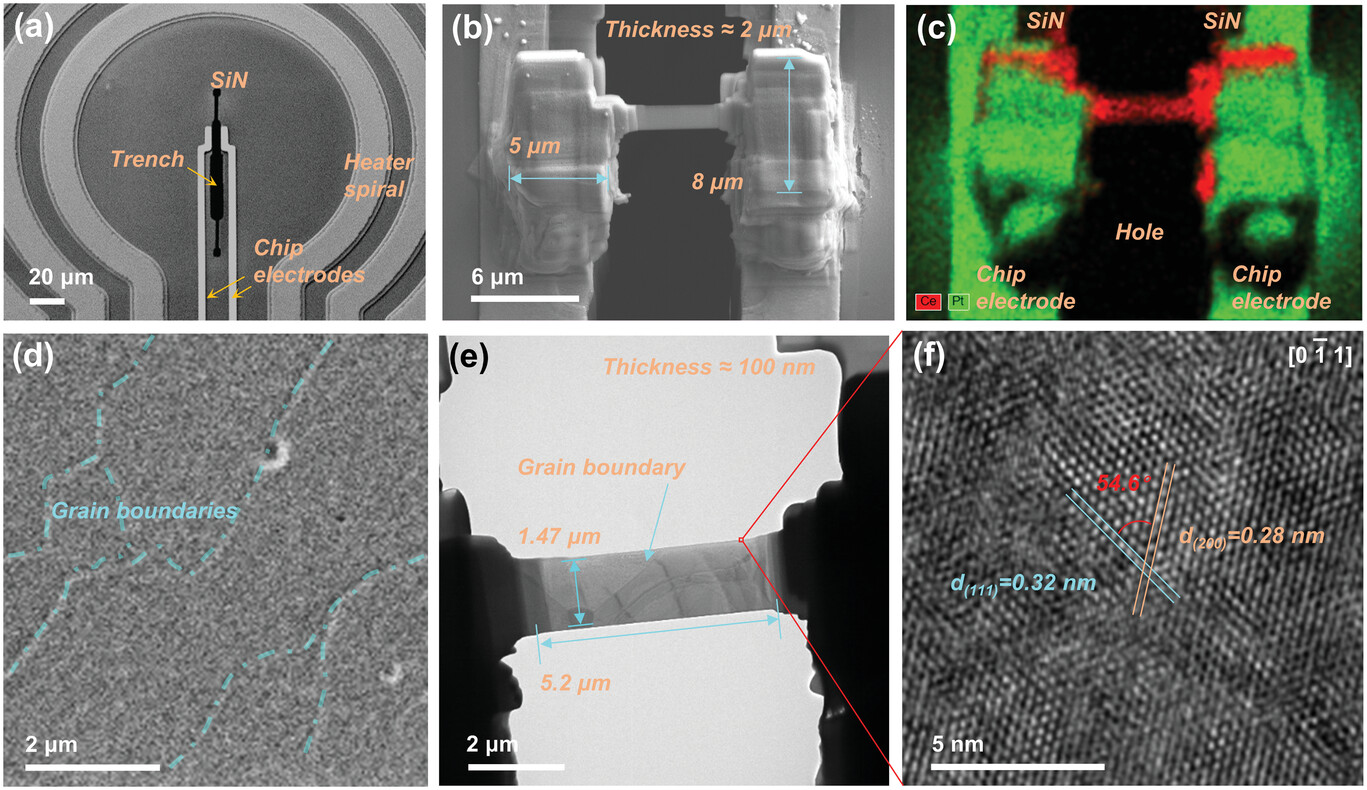
Dr. Simonsen and his fellow collaborators meticulously designed the CGO sample for operando EIS-TEM investigations. A snapshot of the mounting process on the DENSsolutions Lightning Nano-Chip is shown in Figure 1b below. With a thin central part flanked by thick side parts, this sample configuration facilitates the separation of the contribution of bulk charge transport and the surface reaction processes. Notably, Dr. Simonsen emphasized the unique benefits of the Lightning Nano-Chip, highlighting its advantageous geometry. He explained, “The geometry of the DENSsolutions Lightning Nano-Chip is uniquely beneficial for our studies as it features a relatively long distance between the heater and the sample region. This allows us to mount and post-thin samples without the risk of creating pathways for leak current between the heater and sample or biasing electrodes.”

Figure 1: CGO sample mounted on a DENSsolutions Lightning Nano-Chip, visualized by SEM, TEM and HRTEM imaging.

EIS electrical circuit model

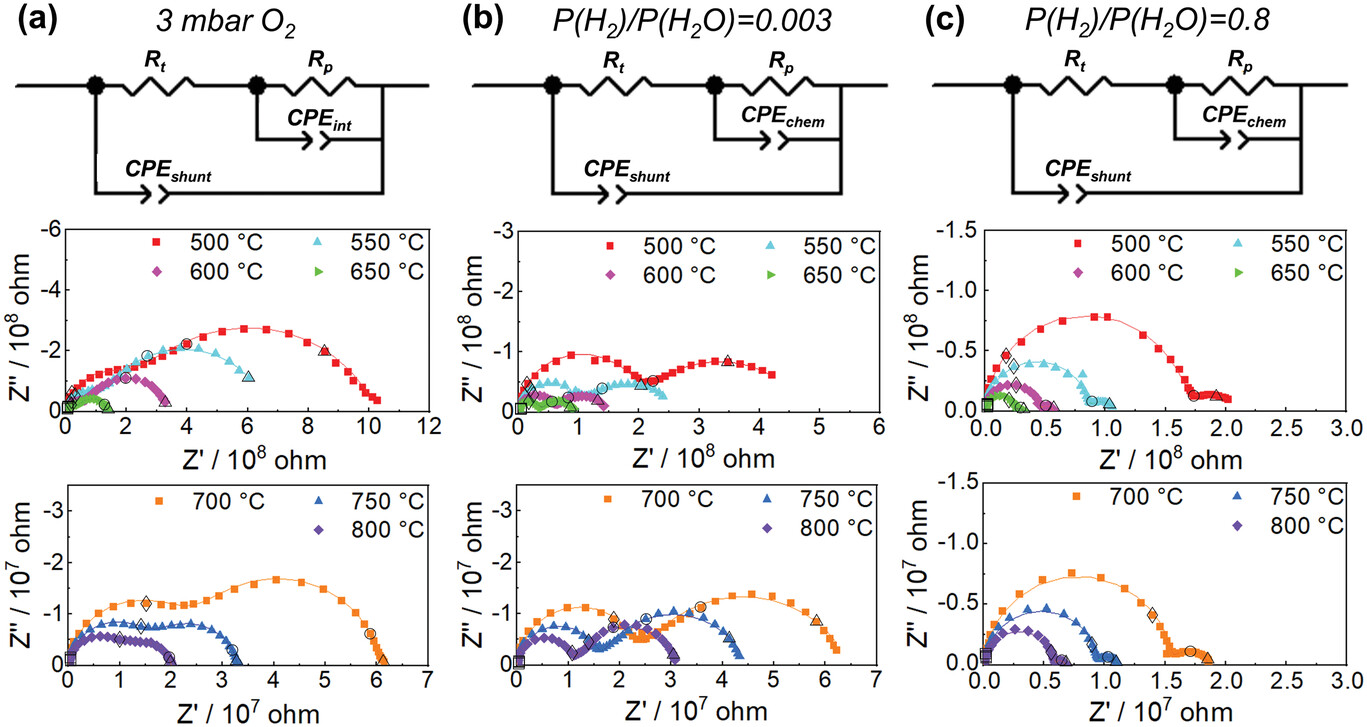
The researchers then explored the EIS spectra under three different gas environments at temperatures from 500 °C to 800 °C (see Figure 2 below). The Nyquist plots from EIS data reveal two distinct arcs, each representing different electrochemical processes. Through electrical circuit modeling, the contributions of resistances and capacitances are shown. Notably, the surface exchange reaction resistance exhibits a clear temperature dependence, reflecting thermally activated processes for both the transport and surface reaction.

Figure 2: EIS spectra (symbols) and fittings (lines) recorded in a) 3 mbar O₂ and in a H₂/H₂O with partial pressure ratio of b) 0.003 and c) 0.8; 10 kHz (square); 100 Hz (diamond), 1 Hz (circle), 0.1 Hz (triangle) are noted on the spectra, with hollow symbols.

Schematic illustration of CGO sample

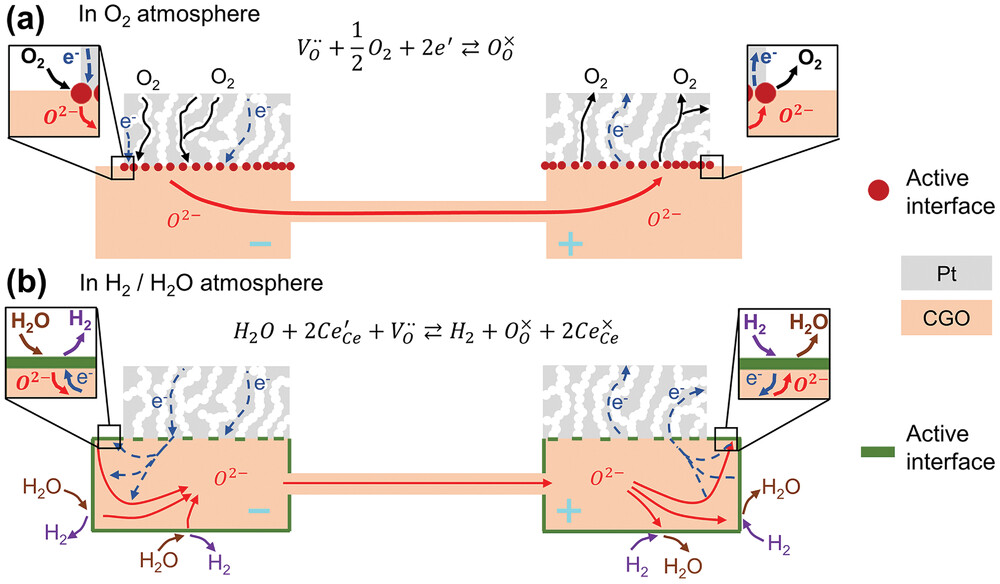
In Figure 3 below, a schematic diagram of the differences for the CGO TEM sample in O₂ and H₂/H₂O is presented. Notably, in both O₂ and H₂/H₂O atmospheres, the conductivity and surface exchange reaction of CGO demonstrate notable dependencies on the gas environment. In the two scenarios, there are distinct chemical reaction formulas. In O₂, CGO predominantly conducts ions, confining the active surface near the Pt current collector. However, in the H₂/H₂O environment, electrons flow through CGO’s side parts, activating the entire surface.

Figure 3: Illustration of active surface area for Pt-CGO as a) pure ionic conductor and as b) mixed electronic/ionic conductor. Arrows indicate the direction of ions (red) and electrons (navy).

Electrochemical EIS meets TEM

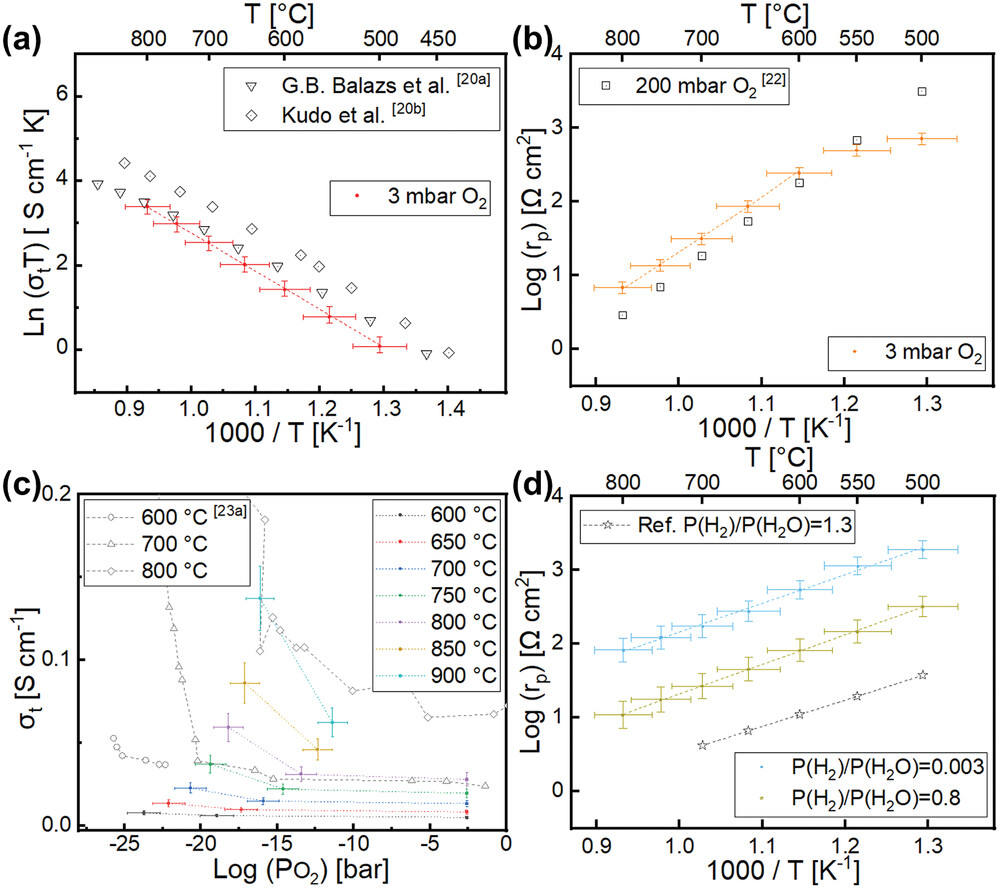
The researchers then analyzed the transport and surface exchange resistance from the EIS measurements in each type of gas environment separately. Figure 4 below delves into the temperature and oxygen partial pressure (pO₂) dependence of CGO conductivity and surface exchange resistivity in different gas atmospheres. Notably, the conductivity in O₂ exhibits a characteristic temperature-dependent behavior, aligning closely with reference data for bulk polycrystalline CGO. Conversely, in H₂/H₂O environments, the conductivity shows a marked increase with decreasing oxygen partial pressure, indicative of a shift towards mixed electronic and ionic conduction. Moreover, the surface exchange resistance demonstrates a consistent decrease with increasing H₂/H₂O ratio, underscoring the influence of electronic charge carriers on electrochemical processes. 

Figure 4: Electrochemical EIS-TEM measurements of CGO in different atmospheres via Arrhenius plots.

A novel integration

Dr. Simonsen and his fellow collaborators performed a comprehensive in situ TEM heating and biasing study using the DENSsolutions Lightning system, elucidating the nuanced interplay between gas environment, temperature and material properties of micro gadolinia-doped ceria, a common ceramic electrolyte. This innovative research taps into new academic frontiers by combining electrochemical impedance spectroscopy with in situ environmental transmission electron microscopy investigations. Importantly, the developed EIS-TEM platform in this study is an important tool in promoting the understanding of nanoscale processes for green energy technologies, such as solid oxide electrolysis/fuel cells, batteries, thermoelectric devices and many more. 

“The geometry of the DENSsolutions Lightning Nano-Chip is uniquely beneficial for our studies as it features a relatively long distance between the heater and the sample region. This allows us to mount and post-thin samples without the risk of creating pathways for leak current between the heater and sample or biasing electrodes. Moreover, if not for the Lightning system’s low internal capacitance and high resistance, it would not have been possible to conduct electrochemical measurements for our materials.”

Dr. Søren Bredmose Simonsen   Senior Research  |  Technical University Denmark

Original article:


Discover our Lightning solution:

Discover more publications made possible by Lightning:

Thomas article feature image

Lightning system helps uncover the interaction mechanism in reactive metal-ceramic system, Al-SiC

The DENSsolutions Lightning system was utilized to reveal the evolution mechanism of the Al–AOL–SiC system under heating and biasing conditions and under an ultrahigh resolution of 4 Å.

Subscribe to our newsletter to stay up-to-date with the latest in situ microscopy news.

Radboudumc expands its bio-research capabilities with newly installed DENSsolutions Stream system

Radboudumc expands its bio-research capabilities with newly installed DENSsolutions Stream system

We are excited to announce that DENSsolutions has installed a Stream system at the renowned Radboud University Medical Center (Radboudumc) in Nijmegen, the Netherlands. In this article, we interview Luco Rutten, PhD Candidate at Radboudumc, to learn more about the institute’s electron microscopy center, the team’s research direction and the pivotal role our Stream system will play in advancing their bio-research initiatives.

What is the Radboudumc Electron Microscopy Center known for?

“The Radboudumc Electron Microscopy (EM) Center, established in 2019 under the leadership of Dr. Anat Akiva and Prof. Dr. Nico Sommerdijk, operates as part of the RTC Microscopy within Radboud University Medical Center in Nijmegen, The Netherlands. Specializing in cutting-edge imaging and analysis techniques, including cryo-correlative light electron microscopy (cryo-CLEM), the EM Center serves users from both academia and industry. Notably, the center is equipped with a recently installed 200 kV Thermo Fisher Scientific TALOS F200C-G2 transmission electron microscope, featuring a Falcon 4i Direct Electron Detector, segmented STEM detector and EDS detector.”

What type of applications are the EM Center’s users interested in using Stream for?

“Since the Electron Microscopy Center is part of the University Medical Center, we are especially interested in using Stream to study biological and biomimetic processes under relevant conditions. For instance, the aggregation of protein-calcium complex and the biomineralization of organic scaffolds such as collagen mimicking health and disease. By adding the dynamic information from liquid phase EM to our cryo-CLEM workflow, we can unravel the mechanisms at the nanoscale of life.”

What particular features of Stream stood out to you?

“With our aim to study biological processes, the ability of the Stream system to seamlessly approach physiological conditions is of great importance. Since life occurs at 37 °C, precise control over the temperature is critical. Moreover, with Stream we are able to control liquid flow, enabling us to work with concentrations very close to physiological conditions. Additionally, we often deal with hybrid systems composed of both organic and inorganic materials, which can limit the contrast. By controlling the bulging of the windows through adjusting the front and back pressure, we’re able to reduce the liquid thickness as much as possible.

Could you tell us a bit more about the funding granted to acquire the systems?

“Prof. Dr. Nico Sommerdijk, the lead PI of the project titled ‘In Situ Imaging of Biological Materials with Nanoscale Resolution using Liquid Phase Electron Microscopy’, was awarded the NWO-groot grant of 1.5 million euros by the Dutch Scientific Organization to acquire state-of-the-art equipment for liquid phase electron microscopy to study biological processes. Part of this grant was used to acquire the Stream system. The aim of the program is to establish a globally unique facility dedicated to liquid phase electron microscopy on biological materials. The integration of the latest developments in software, hardware and sample preparation techniques will broaden the range of biological materials that can be investigated.”

In your experience so far, how have you found working with Stream?

“Operating the Stream system becomes quite routine after working with it a couple of times. The recent workshop organized by DENSsolutions for Stream users (see image below) provided a valuable opportunity to learn from experts like Dr. Hongyu Sun, DENSsolutions Senior App Scientist, and exchange experiences in working with the holder with other participants.

From left to right: Dr. Hongyu Sun (DENSsolutions), Luco Rutten (Radboudumc), Yannick Rutsch (FZ Jülich) and Rebecka Rilemark (Chalmers University of Technology)

Luco Rutten
PhD Candidate |  Electron Microscopy Center, Radboudumc

Luco Rutten received his Master’s degree in Chemistry and Chemical Engineering from the Eindhoven University of Technology. He is in his last year of his PhD at \Radboudumc under the supervision of Dr. Elena Macías-Sánchez and Prof. Dr. Nico Sommerdijk. As part of the Biomineralized Tissues group and the Electron Microscopy Center, he is using advanced electron microscopy to study bone mineralization mechanisms.

Discover the team’s publications:


Learn more about Stream:

Subscribe to our newsletter to stay up-to-date with the latest in situ microscopy news.

Introducing Lightning Arctic: Our latest In Situ TEM Cooling, Biasing & Heating solution

Introducing Lightning Arctic: Our latest In Situ TEM Cooling, Biasing & Heating solution

An interview with DENSsolutions Senior Product Manager Dr. Gin Pivak about our latest addition to the Lightning product family: Lightning Arctic.

DENSsolutions introduces its latest product: Lightning Arctic – an innovative in situ solution that can perform cooling, biasing and heating all in one system. In this article, we interview our Senior Product Manager Dr. Gin Pivak to learn all about Lightning Arctic, including its unique capabilities and wide application space.

1) What are the main application fields that will benefit from Lightning Arctic?

“There are numerous applications where Lightning Arctic can play an important role. The ability to cool a sample and apply electrical stimuli enables researchers to study low-temperature physics, reaching temperatures as low as 100 Kelvin. It can be utilized to investigate magnetic materials and nanostructures, superconductors, topological insulators, ferroelectrics and more. Additionally, the application of Lightning Arctic can be expanded to include beam-sensitive materials such as Li-ion batteries, organic superconductors and perovskite-based solar cells, where the cooling capability can prolong the material’s lifespan under the electron beam. Furthermore, the ability to perform electro and/or thermal experiments at high temperatures allows the Lightning Arctic system to be used in the fields of nanomaterials sintering and growth, metals and alloys, low-dimensional materials, resistive switching, phase-change materials, solid oxide fuel cells, piezoelectrics, solid-state batteries and so on.”

2) Has the system already been installed?

“Yes, the system has been installed at the Faculty of Engineering, Department of Materials at Imperial College London (ICL) in the UK. The main user of the Lightning Arctic system at ICL is Dr. Shelly Conroy, who is exploiting various ferroelectric and quantum materials at low temperatures and at atomic resolution.”

3) What are the main benefits of Lightning Arctic for users?

“Lightning Arctic brings forth numerous advantages for your in situ experiments:

1) Perform in situ cooling and heating experiments: A cooling rod inside the Lightning Arctic holder can transfer the ‘cold’ towards the tip of the holder where the MEMS-based Nano-Chip holding the sample is located. Once this cooling rod is connected to a detachable metallic cooling braid which is immersed in an external dewar filled with liquid nitrogen, the sample can be cooled inside the TEM down to liquid nitrogen temperatures. Aside from cooling, the Lightning Arctic holder also enables in situ heating experiments, where the temperature can reach 800 °C and even 1300 °C depending on the chip used.

2) Experience atomic imaging stability: The Lightning Arctic holder was uniquely designed to host a number of additional temperature controllers that work to stabilize the sample drift during cooling. One controller ensures the temperature equilibrium with the TEM while the other stabilizes the cold influx towards the sample. The usage of the external dewar that helps to minimize the liquid nitrogen bubbling ensures that atomic imaging with low sample drift can be achieved.

3) Continuous temperature control: Our state-of-the-art Heating and Biasing Nano-Chips enable the local manipulation of the temperature of the sample while not disturbing the cooling process of the holder. This means that you can achieve the fast setting of any user-defined temperature and the minimization of the image and focus shift when changing the temperature setpoint, all while ensuring atomic-scale imaging quality.

4) Achieve your required sample orientation: The double tilt Lightning Arctic holder allows tilting the sample in both alpha and beta directions of 10 – 25 degrees to find the required zone axis of the sample.

5) Perform in situ biasing experiments while cooling/heating: The Heating and Biasing Nano-Chips compatible with the Lightning Arctic holder contain biasing electrodes that can be used to apply and measure electrical signals either during cooling or during heating. Of course, the preparation of FIB lamellas on the Nano-Chips for electrical experiments is very crucial. There are already proven methods and tools developed for the Lightning system (like the DENSsolutions FIB stub) that can be used to prepare top-quality, short-circuit-free FIB lamellas on the Heating and Biasing chips for the Lightning Arctic system.

6) Wide compatibility of the sample carriers: Lightning Arctic has a similar Nano-Chip compatibility to the Lighting system, and works with Wildfire heating Nano-Chips and Lightning heating and biasing Nano-Chips. Moreover, the Lightning Arctic holder is also compatible with 3mm and lift-out TEM grids that can be used to study beam-sensitive materials at cryo-conditions without the need of using the Nano-Chips. This greatly expands the range of samples that the new in situ solution can work with.”


Read more about Lightning Arctic:


Download the Lightning Arctic brochure:

Subscribe to our newsletter to stay up-to-date with the latest in situ microscopy news.