Queen’s University Belfast joins the group of Climate In Situ users

Queen’s University Belfast joins the group of Climate In Situ users

Dr. Miryam Arredondo-Arechavala (centre) in front of the (packed) Climate system, together with her PhD student Tamsin O’Reilly (left) and her Postdoc Dr. Kristina Holsgrove (right).

At the beginning of October, DENSsolutions installed a Climate G system at the Queen’s University Belfast, Northern Ireland, UK. 

“We are very excited to have the Climate system in-house. It all began about 3 years ago when I started describing these new amazing holders to my colleagues in the Chemistry department. It took some time but couldn’t be happier! We are really looking forward to trying the different experiments that we have been designing for so long… Now it’s time to get to work and hopefully won’t break too many chips on the way!”
Dr. Miryam Arredondo-Arechavala

Applications

The system will be mainly used by Dr. Miryam Arredondo-Arechavala and her group to study ferroelectrics and other functional materials. Alongside this, it will help accelerate research on ionic liquids performed by the QUILL Research Centre (Queen’s University Belfast’s Ionic Liquid Laboratories) and other catalyst projects at Queen’s University Belfast.

The DENSsolutions Climate holder inserted in the Talos TEM for the first time.

The group running the first test experiment using the Climate software.

Installation and first experiment

The system was installed in less than two days by our Climate product manager Ronald Marx. After this, Marx provided hands-on training for the new group of users. The team was able to start their first In Situ Gas & Heating experiment using their own sample of Zeolite particles which was dropcasted on to the Climate Nano-Reactor. Seeing the first results created a lot of enthusiasm among the group of principal investigators and their colleagues from the chemistry department.

Learn more about our Climate system:

Discover publications in which our Climate system was used:

Do you want to receive interesting articles like this in your mailbox? Subscribe to our newsletter.

Our partnership with the EPSRC/Jeol Centre for Liquid Phase Electron Microscopy at UCL, London

Our partnership with the EPSRC/Jeol Centre for Liquid Phase Electron Microscopy at UCL, London

DENSsolutions LPEM systems enable advances in Life Science

Dr. Lorena Ruiz-Perez (left) and Prof. Guiseppe Battaglia (right)

On the 12th of November, DENSsolutions in cooperation with UCL and Quantum Design UK will be holding a Stream workshop at the EPRSC/Jeol Centre for Liquid Phase Electron Microscopy (LPEM) facility at UCL, London. At the LPEM facility, opened in 2017, Dr. Lorena Ruiz-Perez uses the DENSsolutions Liquid In Situ solutions to characterise soft organic nanomaterials via TEM imaging. In this article, we take a look at the LPEM research that Ruiz-Perez is doing within the Molecular Bionics lab.

Molecular Bionics

The goal of the group is to mimic specific biological functions and/or introduce operations that do not exist in nature by engineering bionic units made of polymers. This goal is achieved by a multidisciplinary team of chemists, physicists, mathematicians, engineers and biologists.

The LTEM team at the Molecular Bionics group is formed by Prof. Guiseppe Battaglia, director of the facility, Dr. Lorena Ruiz-Perez, manager of the facility. Cesare de Pace and Gabriele Marchello are PhD students involved in the experimental development of LTEM and LTEM image analysis respectively.

Inside the group, Dr. Lorena Ruiz-Perez has been using the DENSsolutions Ocean system to work mainly on two different projects.

Polymer assemblies

For the first project, she has been using the system to investigate soft matter polymer assemblies. As we have shown in one of our earlier articles, these assemblies have the potential to be used for targeted drug delivery inside the human body. These kinds of assemblies have been well studied using Cryogenic electron microscopy (cryo-EM). One of the main advantages of employing LPEM is that it allows us to gain new insights into the dynamic behaviour of these assemblies within a liquid that were not possible using images of the vitrified, i.e. frozen sample. In liquid, you can observe for instance the fluctuation of the polymer assembly membranes and hence investigate significant mechanical properties of the soft materials.

Proteins dynamic behaviour

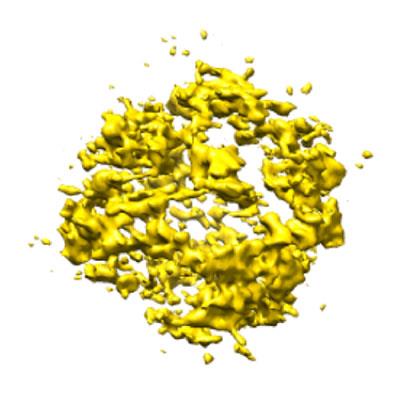
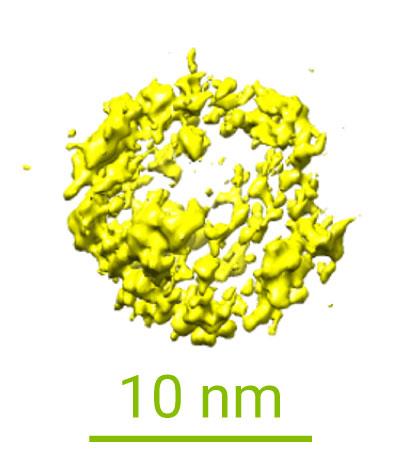
Their second project involves investigating the dynamic behaviour of proteins in liquid. These proteins move by the so-called ‘Brownian motion’. The group wants to understand the structure of the proteins inside their native environment. While the protein is moving in water, they can capture many different profiles in order to reconstruct a 3D image of the protein structure. There is a minimum frame amount needed for the reconstruction, so the time component becomes fundamental in these in-situ studies. The investigation aims to create a library of proteins, like the RCSB PDB, with information on dynamic processes which can complement the information already supplied by the well established cryo-EM technique. Their first results, studying ferritin proteins, were presented at Manchester 2019*.

Schematic representation showing the temporal evolution of the density map reconstruction process of ferritin. A five second long video was segmented into five one second long sub-videos The brownian particle analysis algorithm extracted about 1000 particle profiles from each sub-video, generating five different density maps. The quality and resolution of the refined density maps resulted in being inversely proportional to the sample exposure time to the electron beam.

Proteins play a pivotal role in our physiological conditions and associated diseases. A deeper understanding of the kinetics governing the mechanistic behaviour of proteins in liquid media can lead to big improvements in drug design and ultimately in general healthcare.

*This manuscript is currently being updated with long molecular dynamics simulations of ferritin in solution.

The new Stream system

Now the group is advancing to the DENSsolutions Stream system, allowing them to do new kinds of experiments. The big advantage of the Stream system is that it can control the bulging of the viewing windows and therefore the liquid thickness. Controlling the bulging is essential for creating reproducible results. In previous LPEM in situ systems, the window bulging could differ between experiments, thus preventing experiment reproducibility.

Now with the Stream system, the bulging can be adjusted precisely for each new experiment, guaranteeing the same level of bulging and, therefore, consistent results. Controlling the liquid thickness is also important to achieve high contrast in organic and biological materials. The liquid thickness can be reduced up to the equilibrium where you have the highest possible resolution combined with a thick enough layer to have a realistic sample environment. 

Learn more about our Stream system:

Discover publications in which our Ocean system was used:

Do you want to receive interesting articles like this in your mailbox? Subscribe to our newsletter.

Giant Enhancement in the Supercapacitance of NiFe–Graphene Nanocomposites Induced by a Magnetic Field

Giant Enhancement in the Supercapacitance of NiFe–Graphene Nanocomposites Induced by a Magnetic Field

Underlying nanoparticle behaviour revealed by In Situ TEM heating

Original article by Jorge Romero, Helena Prima-Garcia, Maria Varela, Sara G. Miralles, Víctor Oestreicher,
Gonzalo Abellán and Eugenio Coronado.

The development of supercapacitors holds great promise for future energy storage devices with a high cyclability and durability which can be used in our homes, cars and mobile phones to support the transition to sustainable energy. Even though a lot of effort has been devoted to improving the energy and power densities by optimizing the internal configuration of the capacitor, there is still room for further improvement. Now, researchers have found a way to dramatically improve the capacitance of an FeNi3–graphene hybrid capacitor with about 1100% (from 155 to 1850 F g−1), showing high stability with capacitance retention greater than 90% after 10 000 cycles. They achieved this impressive enhancement by cycling the electrode material in the presence of an applied magnetic field of 4000 G.

Fig. 1. Magnetic graphene–FeNi3 nanocomposite particle under applied magnetic field, pristine sample.

Fig. 2. Magnetic graphene–FeNi3 nanocomposite particle under applied magnetic field, after a 30 min annealing at 400 °C and fast quench back to RT. Arrow pointing out the nanometallic clusters.

In Situ TEM heating

To explain the behaviour of the nanoparticles under the external magnetic-field, Prof. Maria Varela from Universidad Complutense de Madrid, Spain and her colleagues performed in situ heating experiments using a DENSsolutions Lightning D9+ heating and biasing double tilt system. The magnetic field of the microscope objective lens combined with the heating stimuli, provided by the DENSsolutions’ system, were able to observe a significant magnetic field and temperature induced metal segregation of Fe/Ni surfaces forming nanometallic clusters of Ni (<5 nm).

Using these results, the authors were able to explain the dramatic increase of the specific capacitance of the device during the cycling. Furthermore, they opened the door to a systematic improvement of the capacitance values of hybrid supercapacitors, moving the research in this area towards the development of magnetically addressable energy-storage devices.

Learn more about our Lightning system:

Discover more publications made possible by our Lightning system:

Read the original article:

Do you want to receive great articles like this in your mailbox? Subscribe to our newsletter.

Visualizing the dynamic behaviours during carbon nanotube growth in extensive detail

Visualizing the dynamic behaviours during carbon nanotube growth in extensive detail

In situ TEM allows for the direct observation of catalytic processes at relevant pressure and temperature conditions

Original article by Xing Huang, Ramzi Farra, Robert Schlögl and Marc-Georg Willinger

Artist impression showing growth of carbon nanotubes via an iron-catalyzed process. © 2019 DENSsolutions All Rights Reserved

Carbon nanotubes (CNTs) hold many promises, for example in energy storage, high-performance catalysis, photovoltaics, and biomedical devices. Although industrial-scale production of CNTs has been realised, the controllability over the diameter, length, and chirality of CNTs is still unsatisfactory. This is largely due to the lack of atomic information on growth dynamics of CNTs and molecular-level understanding of growth mechanisms. Recently, Huang et al. from FHI Berlin and ETH Zürich have performed an In Situ TEM study on CNT growth and disclosed the growth and termination dynamics of CNTs in atomic detail under relevant conditions. 

The stability of the DENSsolutions Nano-Reactor and the possibility to introduce stimuli, like gas and heating, allowed for the live observation at the atomic-scale:

In Situ TEM video made using the DENSsolutions Climate system, showing Fe-catalyzed multiwalled carbon nanotube growth. Temperature: 800 °C, pressure: 178.65 mbar, diluted H2 + C2H4.

Using In Situ TEM gas and heating, the researchers were able to reveal the influence of pressure and temperature on the growth of CNTs. Previous studies were contradictory about the active state of the catalyst. Now with real-time observations of CNT growth at relevant conditions, researchers were able to reveal not only the active phase of the catalyst but also the rich structural dynamics of the catalyst during the course of CNT growth.

In this study, the Nano-Reactor, the core of the DENSsolutions Climate In Situ TEM system, was used as a carrier for the Fe2O3 sample (precursor material for CNT growth), which was then heated in a diluted hydrogen gas flow as a pre-treatment. The In Situ experiment was started at 150 °C and was followed by a step wise increase up to 800 °C in a gas mixture of H2, C2H4 and He.

To accelerate catalyst research, the DENSsolutions Climate system can be delivered with a dedicated Gas Supply system that enables instant switching between gases and precise control over the gas mixture ratio.

Between 450 °C and 650 °C, the reduction of Fe2O3 to Fe3O4 was accompanied by a collapse of larger particles into smaller ones.

Did you know?

Our Impulse control software comes with a drag & drop profile builder that allows you to design & automate your experiment. It features a wide choice of parameters which enable you to create profiles that suit any sample and application.

WATCH THE VIDEO >

“Thanks to the development of the MEMS-based gas flow Nano-Reactor, we are allowed to perform In Situ experiments inside the chamber of the TEM at relevant conditions. Using the Climate system from DENSsolutions, we have recently carried out a detailed In Situ study on the growth behaviors of CNTs at realistic conditions. On the basis of the real-time observations, we are able to reveal the active structure of the working catalyst and its dynamic re-shaping during the course of CNT growth. Extended observations further reveal three different scenarios for the growth termination of CNTs at the atomic-scale. The presented work provides important insights into understanding the growth and termination mechanisms of CNTs and may serve as an experimental basis for rational design and controlled synthesis of CNTs.”

First and corresponding author – Dr. Xing Huang, ETH Zürich

Learn more about our Climate system and Nano-Reactor:

Discover more publications made possible by our Climate system:

Read the original article:

Do you want to receive great articles like this in your mailbox? Subscribe to our newsletter.

Interview with Prof. Rafal Dunin-Borkowski, Director of Ernst Ruska-Centre for Microscopy and Spectroscopy with Electrons in Jülich

Interview with Prof. Rafal Dunin-Borkowski, Director of Ernst Ruska-Centre for Microscopy and Spectroscopy with Electrons in Jülich

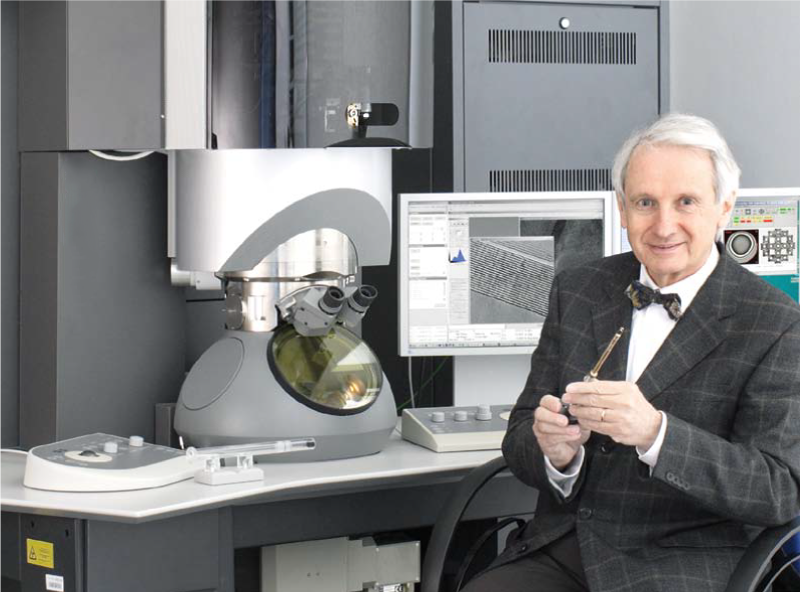
Fig. 1. Prof. Rafal Dunin-Borkowski. Photo credit: Forschungszentrum Jülich

We interviewed Rafal Dunin-Borkowski, Director of Ernst Ruska-Centre (ER-C) for Microscopy and Spectroscopy with Electrons in Forschungszentrum Jülich. We talked about his road to ER-C, his research into more energy-efficient electronic devices, the growing importance of software and data analysis and the need for automation to improve the measurement of weak signals. 

“I currently have the greatest personal interest in developing techniques for characterizing the functional properties of working electronic and spintronic devices on the smallest scale and in real time in the presence of stimuli such as applied field, voltage, temperature, light, gases and liquids.”

Where does your passion for Electron Microscopy come from?

My passion for electron microscopy was accidental. It came from being taught by Michael Stobbs as an undergraduate and during my Ph.D. He communicated his enthusiasm for developing and applying characterization techniques as a combination of fundamental physics, materials science and other scientific disciplines. Almost every problem involves exploring a new material or phenomenon at close to the atomic scale that no one has studied before.

Can you tell us about your road to the Ernst Ruska-Centre in Jülich?

It was a long road! First of all, I was in Cambridge University, where I completed my undergraduate degree in physics, my Ph.D. and first postdoctoral appointment with Michael Stobbs. I then went to Arizona State University, where I was sponsored by IBM Almaden and worked with David Smith and Molly McCartney on magnetic recording technology. In Arizona, I also worked with John Cowley, Peter Buseck and Michael Scheinfein. I then went to the Department of Materials in Oxford University for 2 years, where I was responsible for using a new field emission microscope with internal and external users. I then obtained a Royal Society University Research Fellowship, returned to Cambridge University and stayed there for almost 7 years, working primarily on off-axis electron holography and related techniques. After Cambridge, I was employed in the Technical University of Denmark to set up a new department, which was called the Center for Electron Nanoscopy. I stayed there for 5 years.

Fig. 2. Prof. Knut Urban. Photo credit: Forschungszentrum Jülich

In 2011, I took over the Institute for Microstructure Research in Forschungszentrum Jülich in Germany when the previous director, Knut Urban, retired. This institute has a long history in electron microscopy technique development and applications, as well as in the operation of the Ernst Ruska-Centre as a user facility. Together with colleagues in Heidelberg and Darmstadt, Knut Urban contributed to the development of spherical aberration correction for transmission electron microscopy in the 1990s. Forschungszentrum Jülich has been operating the Ernst Ruska-Centre as an international user facility since 2004, together with RWTH Aachen University. 50 % of the access time to the instruments is made available to external users, who work with our experienced scientific and technical staff.

As a director, are you still involved in hands-on research?

In the institute that I direct in Jülich, we currently have about 100 active scientists and students, many of whom are paid from 3rd party funding. This means that we respond to external funding decisions, which determine the scientific directions that we work on. It also means that I spend a lot of time raising funding or managing research projects. I therefore have little time to do hands-on research myself. However, I try to stand behind people when they use the electron microscopes and help them with writing software and data analysis. In addition, if any research paper has my name on it I try to make sure that I comment on it line by line. In this way, I try to take as active a role in scientific research as I can.

Which were defining moments that accelerated your career?

Scientifically, there were certain people I worked with who were very helpful in my development
as a scientist. In particular, working with Michael Stobbs, David Smith, John Cowley and others gave
me key experiences and insight. Now, I try to facilitate an environment for people to do the kind of
work that I would like to be doing myself. I look forward to not being a director and going back to
doing hands-on research in the future, because I regard this as my strength.

Fig. 3. Members of the ER-C team (from the left): Dr. Karsten Tillmann, Dr. Juri Barthel, Marita Schmidt and Dr. Andreas Thust.
Photo credit: Forschungszentrum Jülich

What makes the ER-C a unique institute?

The Ernst Ruska-Centre is unique in many ways. It is managed both from the Jülich Research Center and from RWTH Aachen University. This means that there is frequent interaction between people who work in both places, as well as with external users of the facility. We encourage external users to come for as long as possible, so that they are genuine collaborators with our research staff, who each have their own research topic to work on. We also try to encourage our staff to work on technique and instrumentation development to tackle new problems that are brought to us.
The Ernst Ruska-Centre is now moving from research only in the physical sciences to also include soft materials and life science. This change in the breadth of our research allows us to apply techniques, instrumentation and software that have been developed to tackle problems in the physical sciences to soft and biological materials, and vice versa. We are also establishing closer links with other characterization techniques, especially neutron science and synchrotron X-rays, as well as with data scientists.

Fig. 4. Forschungszentrum Jülich – Staff. Photocredit: Forschungszentrum Jülich

What is the role of the ER-C on a global scale?

On a global scale, at first sight the Ernst Ruska-Centre resembles how user facilities work elsewhere, for example in the US National Laboratories. In practice, the working principle is different, in particular with regard to the fact that all of our staff work on as long-term a collaborative basis as possible with incoming scientists and students, in order to optimize experiments and data analysis together with them, rather than concentrating on serving many users.

Do you collaborate with industry to develop new techniques?

In the ER-C, we try to go beyond the techniques and capabilities that are available elsewhere, for example by undertaking ambitious development projects with manufacturers, where we commit our staff time in return for access to technology that is not yet available commercially. Software and instrumentation that is developed in the ER-C is then often licensed back to the manufacturers for the benefit of their future customers and the community as a whole.

In which research topics are you personally interested?

We currently have more than 10 working groups in the ER-C, many of which focus strongly on technique development, as well as on specific materials problems. I have an interest in almost every activity in the institute.

Fig. 5. Artist impression of Spintronics.

However, I currently have the greatest personal interest in developing techniques for characterizing the functional properties of working electronic and spintronic devices on the smallest scale and in real time in the presence of stimuli such as applied field, voltage, temperature, light, gases and liquids. Many of these capabilities have only recently become available. The experiments are carried out at the highest spatial resolution using phase contrast and spectroscopic techniques in both TEM and STEM imaging modes. They also require the development of new approaches for handling the increased amount and rate of data coming from the microscopes.

To what extent do societal challenges determine your choice in your research topics?

Societal priorities have a decisive factor on which scientific topics are funded. In turn, they drive our research. In the Helmholtz Association, we work on the basis of program oriented funding. Every 5 years, our scientific priorities are redefined, in part by societal needs. At the same time, by its very nature much of our research is exploratory and operates over longer timescales, especially with regard to technique and instrumentation development.

Will in situ techniques play a role in the research of ER-C and why are these in situ techniques becoming relevant?

A variety of different problems come under the heading of in situ electron microscopy. Some of our experiments involve “in situ” chemical reactions in gas or liquid environments, while others involve passing electrical currents through or applying magnetic fields to nanoscale materials, or studying the effect of temperature, light or mechanical stress.

One of the scientific priorities of the Hemlholtz Association, which funds much our research, is to understand and develop more energy-efficient devices for future computing applications. In our institute, we use electron microscopy to map the local crystallography, microstructure and functional properties of novel nanoscale devices in real time. We would like to make these measurements on ever faster timescales and are currently developing new hardware and software that we hope will give us access to the sub-nanosecond regime.

What do you expect from DENSsolutions in the future?

We have a partnership agreement and many specimen holders from DENSsolutions, which we are very pleased with. We would like to have an even closer partnership in the future and have many ideas for more ambitious technical developments, as well as for the automation of complicated workflows. In particular, the current practice of performing experiments manually limits our ability to measure very weak signals, which would require repeating the same sequence of steps many thousands of times. For this reason, we need the kind of automation of experiments that is now available in the life sciences. We understand that there is a greater variety of samples and experiments in the physical sciences and that such workflows would then have to be more flexible.

Is your goal with automation to get a higher throughput for your experiments?

This is not the priority. I would primarily like to use automation to improve the measurement of weak signals and to obtaining better statistics in certain measurements, rather than simply to achieve high throughput. We therefore also need more stable specimen stages and a cleaner environment in the microscope column so that the sample does not change over time. There is one other aspect of automation that does not exist at the moment, which is the ability to store samples, for example in inert environments in individual cartridges, until they are no longer needed, perhaps over many years, so that the same region of the same sample can be reassessed quickly, easily and reproducibly as many times as required.

Want to read more?

Did you like this interview? Subscribe to our newsletter to receive more in situ related news like this.

Or follow us on social media:

Membranes made from Nano-droplets have potential in Medical Research

Membranes made from Nano-droplets have potential in Medical Research

Membranes formed in-lab from nano-droplets could have future use in medicines

For the first time, researchers from the Laboratory of Materials and Interface Chemistry, Eindhoven University of Technology (TUE), with a significant contribution of assistant professor Joe Patterson, have made a comprehensive video of liquid membrane formation using a transmission electron microscope (TEM). They used soap-like nanodroplets submerged in water to create the membrane. Their results are published in Nature, Chemistry and have been highlighted in the Nature, Chemistry News & Views article ‘The molecular Lego movie’.

LPEM Movie of the in-situ self-assembly experiment. Stabilized and cropped. Ianiro, A. et al. Nat. Chem. (2019)

This experiment has continuously recorded the whole process of how the membrane is formed under a microscope. Before this, scientists had to freeze the final membrane and get a snapshot of one or several moments of the membrane forming. This advance is achieved due to a well controlled liquid environment and can be now set in the microscope thanks to the DENSsolutions Ocean system.

Screenshots from the video of the membrane forming on the silicon chip. These were taken using a transmission electron microscope. You can watch the full video here. Ianiro, A. et al. Nat. Chem. (2019)
Membranes are of great interest in research as their selective barriers have potential uses in many fields: drug delivery, water treatment and chemical processes all rely on membrane technology. They are of particular interest in pharmaceutical research as they are the ideal shape to transport a drug through the body and release it only when the membrane finds a specific type of cell, for example, a cancer cell.

The Experiment

The researchers from the Materials and Interface Chemistry group led by Prof. Nico Sommerdijk formed a membrane from soap-like molecules called amphiphilic molecules, which simply means that they interact with both fats and water. Amphiphilic molecules are good building blocks for membranes as they can be lined up with the water-interacting side facing one way and the lipid-interacting parts facing the other way to form larger structures.

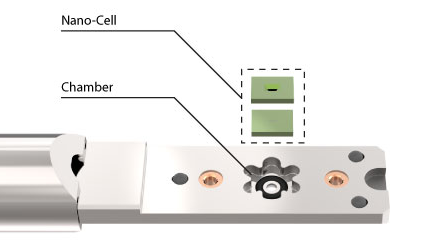
The DENSsolutions Ocean In Situ TEM liquid system was essential in this research. The core of the system consists of a dual chip Nano-Cell that sandwiches two chips together to form a microfluidic compartment.

First, the chambers within the tip surrounding the Nano-Cell were flooded with an amphiphilic solvent in order for it to fill the compartment. Then, the solvent was expelled with air, leaving the compartment saturated. Finally, the tip was flooded with water which gradually diffused into the compartment. It was during this stage that the water particles encouraged the solvent particles to organise themselves into a membrane structure.

Step 1. Polymer solvent

Step 2. Air

Step 3. Water

The membrane itself formed in stages. First, the solvent molecules arranged themselves into nanodroplets with a hydrophobic core and a protective hydrophilic shell. The DENSsolutions Nano-Cell created a hotspot of these nanodroplets and they gradually arranged themselves into a hollow membrane.
Diagram of the amphiphilic membrane forming in water. Arash Nikoubashman and Friederike Schmid.

Future Research

Watching how the nanoparticles form and arrange themselves with an electron microscope is a huge step in learning how to manipulate these membranes. The techniques covered in this research will be of interest to scientists working in food science, synthesis chemistry and separation science.

Hanglong Wu, who made a significant contribution to this paper during his PhD period, commented in an interview with DENSsolutions, that the technique “has been extensively used in studying the dynamics and structures of hard materials (for example, metallic nanoparticles) in the aqueous solution in the last decade, but it has been barely employed into soft matter field, mainly due to the inherent high beam sensitivity and low contrast.

“In this Nat. Chem. paper, we actually demonstrate we can probe the soft matter formation with such high contrast. People for sure will start to use the technique in the soft matter field.” – Hanglong Wu

The next stage will be fine-tuning how to manipulate the size and shape of the membrane. This research from Eindhoven is an important step in an exciting field.

If you are interested in the equipment we provided for this research, then contact us to see how we can streamline your experiments.

Membranes formed in-lab from nano-droplets could have future use in medicines

For the first time, researchers from the Laboratory of Materials and Interface Chemistry, Eindhoven University of Technology (TUE), with a significant contribution of assistant professor Joe Patterson, have made a comprehensive video of liquid membrane formation using a transmission electron microscope (TEM). They used soap-like nanodroplets submerged in water to create the membrane. Their results are published in Nature, Chemistry and have been highlighted in the Nature, Chemistry News & Views article ‘The molecular Lego movie’.

LPEM Movie of the in-situ self-assembly experiment. Stabilized and cropped. Ianiro, A. et al. Nat. Chem. (2019)

This experiment has continuously recorded the whole process of how the membrane is formed under a microscope. Before this, scientists had to freeze the final membrane and get a snapshot of one or several moments of the membrane forming. This advance is achieved due to a well controlled liquid environment and can be now set in the microscope thanks to the DENSsolutions Ocean system.

Screenshots from the video of the membrane forming on the silicon chip. These were taken using a transmission electron microscope. You can watch the full video here. Ianiro, A. et al. Nat. Chem. (2019)
Membranes are of great interest in research as their selective barriers have potential uses in many fields: drug delivery, water treatment and chemical processes all rely on membrane technology. They are of particular interest in pharmaceutical research as they are the ideal shape to transport a drug through the body and release it only when the membrane finds a specific type of cell, for example, a cancer cell.

The Experiment

The researchers from the Materials and Interface Chemistry group led by Prof. Nico Sommerdijk formed a membrane from soap-like molecules called amphiphilic molecules, which simply means that they interact with both fats and water. Amphiphilic molecules are good building blocks for membranes as they can be lined up with the water-interacting side facing one way and the lipid-interacting parts facing the other way to form larger structures.

The DENSsolutions Ocean In Situ TEM liquid system was essential in this research. The core of the system consists of a dual chip Nano-Cell that sandwiches two chips together to form a microfluidic compartment.

First, the chambers within the tip surrounding the Nano-Cell were flooded with an amphiphilic solvent in order for it to fill the compartment. The solvent was then expelled with air, leaving the compartment saturated. Then, the solvent was expelled with air, leaving the compartment saturated. Finally, the tip was flooded with water which gradually diffused into the compartment. It was during this stage that the water particles encouraged the solvent particles to organise themselves into a membrane structure.

Step 1. Polymer solvent

Step 2. Air

Step 3. Water

The membrane itself formed in stages. First, the solvent molecules arranged themselves into nanodroplets with a hydrophobic core and a protective hydrophilic shell. The DENSsolutions Nano-Cell created a hotspot of these nanodroplets and they gradually arranged themselves into a hollow membrane.
Diagram of the amphiphilic membrane forming in water. Arash Nikoubashman and Friederike Schmid.

Future Research

Watching how the nanoparticles form and arrange themselves with an electron microscope is a huge step in learning how to manipulate these membranes. The techniques covered in this research will be of interest to scientists working in food science, synthesis chemistry and separation science.

Hanglong Wu, who made a significant contribution to this paper during his PhD period, commented in an interview with DENSsolutions, that the technique “has been extensively used in studying the dynamics and structures of hard materials (for example, metallic nanoparticles) in the aqueous solution in the last decade, but it has been barely employed into soft matter field, mainly due to the inherent high beam sensitivity and low contrast.

“In this Nat. Chem. paper, we actually demonstrate we can probe the soft matter formation with such high contrast. People for sure will start to use the technique in the soft matter field.” – Hanglong Wu

The next stage will be fine-tuning how to manipulate the size and shape of the membrane. This research from Eindhoven is an important step in an exciting field.

If you are interested in the equipment we provided for this research, then contact us to see how we can streamline your experiments.