Improved insight into catalytic reduction of NOx for industrial processes

Improved insight into catalytic reduction of NOx for industrial processes

In Situ TEM supports the design process of a new nanorod catalyst

Original article by Zhaoxia Ma, Liping Sheng, Xinwei Wang, Wentao Yuan, Shiyuan Chen, Wei Xue, Gaorong Han, Ze Zhang, Hangsheng Yang, Yunhao Lu, and Yong Wang. Published in Advanced Materials, volume 31, issue 42.

Artist impression showing growth of carbon nanotubes via an iron-catalyzed process. © 2019 DENSsolutions All Rights Reserved

There is a big opportunity for the design and development of sustainable catalysts for low-temperature NOx removal in the steel, cement and glass industries. Researchers Dr. Yong Wang et al. from Zhejiang University made a recent breakthrough using critical information obtained by In Situ TEM to design a MnOx/CeO2 nanorod (NR) catalyst with outstanding resistance to SO2 deactivation. Former studies proposed methods which succeeded in temporarily diminishing the influence of SO2 but lost their effectiveness over time. In this study, a dynamic equilibrium was achieved between sulfates formation and decomposition over the CeO2 nanorod surface, resulting in an unchanged NOx reaction rate for 1000 hours.

In Situ TEM study

Up till now, researchers have not been able to see exactly what happens to the CeO2 catalyst particle when exposed to SO2 because SO2 is so corrosive that it would damage the environmental transmission electron microscope (ETEM). Now, thanks to the DENSsolutions Climate in situ TEM Gas and Heating system, scientists can for the first time observe and record this degradation process at the atomic scale. Dr. Wang’s team found out that non-active amorphous cerium sulfates were formed from the reaction between SO2 and CeO2. The cerium sulfates formed a deposit which gradually coated the crystalline surface of the nanorods that was catalytically active.

Video 1. In situ TEM observation of the formation and evolution of cerium sulfate over Ce02 nanorods during treatment in 1000 ppm NO, 1000 ppm SO2, and 10 vol% 02 balanced with Ar at 523K. The two white arrows point to amorphous bumps at the end of Ce02 nanorods.

Video 2. In situ TEM observation of dynamic evolution of cerium sulfates during treatment in 1000 ppm NO, 1000 ppm NH3, and 10 vol% 02 balanced with Ar at 523K. The white dashed circles indicate the amorphous cerium sulfate bumps, which decomposed after the introduction of NH3.

In the first part of the In Situ TEM experiment, the researchers introduced diluted SO2 to study the deactivation behaviour of CeO2. Many obvious bumps were formed on the surface of the CeO2 nanorods (NR); this dynamic formation process can be seen in video 1. After this step, the researchers used their Climate Gas Supply System to switch off the SO2 gas flow to the TEM and switched on the diluted NH3 gas flow. The researchers could then observe the amorphous cerium sulfate bumps to become smaller and finally almost disappear at 523 K. The decomposition of the cerium sulfate bumps can be seen in video 2. This change back to polycrystalline CeO2 can be seen in detail in video 3.

Video 3. In situ TEM observation of dynamic evolution of a single cerium sulfate bump during treatment in 1000 ppm NO, 1000 ppm NH3, and 10 vol% 02 balanced with Ar at 523K. The white arrow points to amorphous cerium sulfates, which retransformed into crystalline Ce02 after the introduction of NH3.

Image 1. DENSsolutions Gas Supply System

The Gas Supply System (image 1) of the Climate G+ gas & heating system can continuously mix (dilute) gas flows from up to 3 sources. The mixing ratios for these 3 gas flows, typically 1 reducing, 1 oxidizing and 1 inert (carrier) gas, can be changed real-time between 0% and 100% according to the requirements of the in situ TEM experiment. This makes it the ideal tool for new discoveries in gas-solid interactions.

“Thanks to the state-of-the-art gas cell system from DENSsolutions, we can simply move the industrial reactions into the TEM and observe what really happens for the catalysts during reactions with atomic resolution at atmospheric pressure. This is the first time we attempted to introduce industrial gases like NH3 and SO2 to the gas cell system. To our surprise, this system was pretty robust and worked perfectly when studying the catalytic reactions involved in SO2 poisoning.”

Dr. Yong Wang – Zhejiang University

Learn more about our Climate system and Nano-Reactor:

Discover more publications made possible by our Climate system:

Read the original article:

Do you want to receive great articles like this in your mailbox? Subscribe to our newsletter.

Queen’s University Belfast joins the group of Climate In Situ users

Queen’s University Belfast joins the group of Climate In Situ users

Dr. Miryam Arredondo-Arechavala (centre) in front of the (packed) Climate system, together with her PhD student Tamsin O’Reilly (left) and her Postdoc Dr. Kristina Holsgrove (right).

At the beginning of October, DENSsolutions installed a Climate G system at the Queen’s University Belfast, Northern Ireland, UK. 

“We are very excited to have the Climate system in-house. It all began about 3 years ago when I started describing these new amazing holders to my colleagues in the Chemistry department. It took some time but couldn’t be happier! We are really looking forward to trying the different experiments that we have been designing for so long… Now it’s time to get to work and hopefully won’t break too many chips on the way!”
Dr. Miryam Arredondo-Arechavala

Applications

The system will be mainly used by Dr. Miryam Arredondo-Arechavala and her group to study ferroelectrics and other functional materials. Alongside this, it will help accelerate research on ionic liquids performed by the QUILL Research Centre (Queen’s University Belfast’s Ionic Liquid Laboratories) and other catalyst projects at Queen’s University Belfast.

The DENSsolutions Climate holder inserted in the Talos TEM for the first time.

The group running the first test experiment using the Climate software.

Installation and first experiment

The system was installed in less than two days by our Climate product manager Ronald Marx. After this, Marx provided hands-on training for the new group of users. The team was able to start their first In Situ Gas & Heating experiment using their own sample of Zeolite particles which was dropcasted on to the Climate Nano-Reactor. Seeing the first results created a lot of enthusiasm among the group of principal investigators and their colleagues from the chemistry department.

Learn more about our Climate system:

Discover publications in which our Climate system was used:

Do you want to receive interesting articles like this in your mailbox? Subscribe to our newsletter.

Giant Enhancement in the Supercapacitance of NiFe–Graphene Nanocomposites Induced by a Magnetic Field

Giant Enhancement in the Supercapacitance of NiFe–Graphene Nanocomposites Induced by a Magnetic Field

Underlying nanoparticle behaviour revealed by In Situ TEM heating

Original article by Jorge Romero, Helena Prima-Garcia, Maria Varela, Sara G. Miralles, Víctor Oestreicher,
Gonzalo Abellán and Eugenio Coronado.

The development of supercapacitors holds great promise for future energy storage devices with a high cyclability and durability which can be used in our homes, cars and mobile phones to support the transition to sustainable energy. Even though a lot of effort has been devoted to improving the energy and power densities by optimizing the internal configuration of the capacitor, there is still room for further improvement. Now, researchers have found a way to dramatically improve the capacitance of an FeNi3–graphene hybrid capacitor with about 1100% (from 155 to 1850 F g−1), showing high stability with capacitance retention greater than 90% after 10 000 cycles. They achieved this impressive enhancement by cycling the electrode material in the presence of an applied magnetic field of 4000 G.

Fig. 1. Magnetic graphene–FeNi3 nanocomposite particle under applied magnetic field, pristine sample.

Fig. 2. Magnetic graphene–FeNi3 nanocomposite particle under applied magnetic field, after a 30 min annealing at 400 °C and fast quench back to RT. Arrow pointing out the nanometallic clusters.

In Situ TEM heating

To explain the behaviour of the nanoparticles under the external magnetic-field, Prof. Maria Varela from Universidad Complutense de Madrid, Spain and her colleagues performed in situ heating experiments using a DENSsolutions Lightning D9+ heating and biasing double tilt system. The magnetic field of the microscope objective lens combined with the heating stimuli, provided by the DENSsolutions’ system, were able to observe a significant magnetic field and temperature induced metal segregation of Fe/Ni surfaces forming nanometallic clusters of Ni (<5 nm).

Using these results, the authors were able to explain the dramatic increase of the specific capacitance of the device during the cycling. Furthermore, they opened the door to a systematic improvement of the capacitance values of hybrid supercapacitors, moving the research in this area towards the development of magnetically addressable energy-storage devices.

Learn more about our Lightning system:

Discover more publications made possible by our Lightning system:

Read the original article:

Do you want to receive great articles like this in your mailbox? Subscribe to our newsletter.

Interview with Prof. Rafal Dunin-Borkowski, Director of Ernst Ruska-Centre for Microscopy and Spectroscopy with Electrons in Jülich

Interview with Prof. Rafal Dunin-Borkowski, Director of Ernst Ruska-Centre for Microscopy and Spectroscopy with Electrons in Jülich

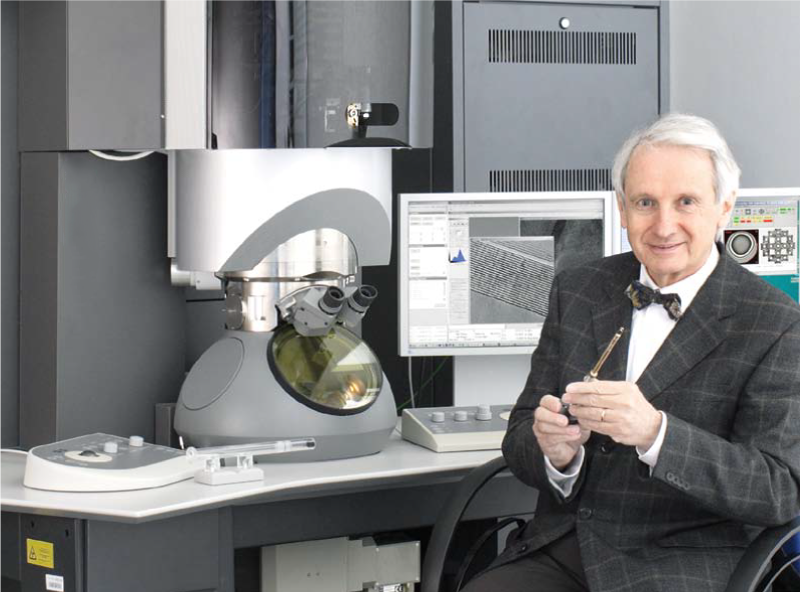
Fig. 1. Prof. Rafal Dunin-Borkowski. Photo credit: Forschungszentrum Jülich

We interviewed Rafal Dunin-Borkowski, Director of Ernst Ruska-Centre (ER-C) for Microscopy and Spectroscopy with Electrons in Forschungszentrum Jülich. We talked about his road to ER-C, his research into more energy-efficient electronic devices, the growing importance of software and data analysis and the need for automation to improve the measurement of weak signals. 

“I currently have the greatest personal interest in developing techniques for characterizing the functional properties of working electronic and spintronic devices on the smallest scale and in real time in the presence of stimuli such as applied field, voltage, temperature, light, gases and liquids.”

Where does your passion for Electron Microscopy come from?

My passion for electron microscopy was accidental. It came from being taught by Michael Stobbs as an undergraduate and during my Ph.D. He communicated his enthusiasm for developing and applying characterization techniques as a combination of fundamental physics, materials science and other scientific disciplines. Almost every problem involves exploring a new material or phenomenon at close to the atomic scale that no one has studied before.

Can you tell us about your road to the Ernst Ruska-Centre in Jülich?

It was a long road! First of all, I was in Cambridge University, where I completed my undergraduate degree in physics, my Ph.D. and first postdoctoral appointment with Michael Stobbs. I then went to Arizona State University, where I was sponsored by IBM Almaden and worked with David Smith and Molly McCartney on magnetic recording technology. In Arizona, I also worked with John Cowley, Peter Buseck and Michael Scheinfein. I then went to the Department of Materials in Oxford University for 2 years, where I was responsible for using a new field emission microscope with internal and external users. I then obtained a Royal Society University Research Fellowship, returned to Cambridge University and stayed there for almost 7 years, working primarily on off-axis electron holography and related techniques. After Cambridge, I was employed in the Technical University of Denmark to set up a new department, which was called the Center for Electron Nanoscopy. I stayed there for 5 years.

Fig. 2. Prof. Knut Urban. Photo credit: Forschungszentrum Jülich

In 2011, I took over the Institute for Microstructure Research in Forschungszentrum Jülich in Germany when the previous director, Knut Urban, retired. This institute has a long history in electron microscopy technique development and applications, as well as in the operation of the Ernst Ruska-Centre as a user facility. Together with colleagues in Heidelberg and Darmstadt, Knut Urban contributed to the development of spherical aberration correction for transmission electron microscopy in the 1990s. Forschungszentrum Jülich has been operating the Ernst Ruska-Centre as an international user facility since 2004, together with RWTH Aachen University. 50 % of the access time to the instruments is made available to external users, who work with our experienced scientific and technical staff.

As a director, are you still involved in hands-on research?

In the institute that I direct in Jülich, we currently have about 100 active scientists and students, many of whom are paid from 3rd party funding. This means that we respond to external funding decisions, which determine the scientific directions that we work on. It also means that I spend a lot of time raising funding or managing research projects. I therefore have little time to do hands-on research myself. However, I try to stand behind people when they use the electron microscopes and help them with writing software and data analysis. In addition, if any research paper has my name on it I try to make sure that I comment on it line by line. In this way, I try to take as active a role in scientific research as I can.

Which were defining moments that accelerated your career?

Scientifically, there were certain people I worked with who were very helpful in my development
as a scientist. In particular, working with Michael Stobbs, David Smith, John Cowley and others gave
me key experiences and insight. Now, I try to facilitate an environment for people to do the kind of
work that I would like to be doing myself. I look forward to not being a director and going back to
doing hands-on research in the future, because I regard this as my strength.

Fig. 3. Members of the ER-C team (from the left): Dr. Karsten Tillmann, Dr. Juri Barthel, Marita Schmidt and Dr. Andreas Thust.
Photo credit: Forschungszentrum Jülich

What makes the ER-C a unique institute?

The Ernst Ruska-Centre is unique in many ways. It is managed both from the Jülich Research Center and from RWTH Aachen University. This means that there is frequent interaction between people who work in both places, as well as with external users of the facility. We encourage external users to come for as long as possible, so that they are genuine collaborators with our research staff, who each have their own research topic to work on. We also try to encourage our staff to work on technique and instrumentation development to tackle new problems that are brought to us.
The Ernst Ruska-Centre is now moving from research only in the physical sciences to also include soft materials and life science. This change in the breadth of our research allows us to apply techniques, instrumentation and software that have been developed to tackle problems in the physical sciences to soft and biological materials, and vice versa. We are also establishing closer links with other characterization techniques, especially neutron science and synchrotron X-rays, as well as with data scientists.

Fig. 4. Forschungszentrum Jülich – Staff. Photocredit: Forschungszentrum Jülich

What is the role of the ER-C on a global scale?

On a global scale, at first sight the Ernst Ruska-Centre resembles how user facilities work elsewhere, for example in the US National Laboratories. In practice, the working principle is different, in particular with regard to the fact that all of our staff work on as long-term a collaborative basis as possible with incoming scientists and students, in order to optimize experiments and data analysis together with them, rather than concentrating on serving many users.

Do you collaborate with industry to develop new techniques?

In the ER-C, we try to go beyond the techniques and capabilities that are available elsewhere, for example by undertaking ambitious development projects with manufacturers, where we commit our staff time in return for access to technology that is not yet available commercially. Software and instrumentation that is developed in the ER-C is then often licensed back to the manufacturers for the benefit of their future customers and the community as a whole.

In which research topics are you personally interested?

We currently have more than 10 working groups in the ER-C, many of which focus strongly on technique development, as well as on specific materials problems. I have an interest in almost every activity in the institute.

Fig. 5. Artist impression of Spintronics.

However, I currently have the greatest personal interest in developing techniques for characterizing the functional properties of working electronic and spintronic devices on the smallest scale and in real time in the presence of stimuli such as applied field, voltage, temperature, light, gases and liquids. Many of these capabilities have only recently become available. The experiments are carried out at the highest spatial resolution using phase contrast and spectroscopic techniques in both TEM and STEM imaging modes. They also require the development of new approaches for handling the increased amount and rate of data coming from the microscopes.

To what extent do societal challenges determine your choice in your research topics?

Societal priorities have a decisive factor on which scientific topics are funded. In turn, they drive our research. In the Helmholtz Association, we work on the basis of program oriented funding. Every 5 years, our scientific priorities are redefined, in part by societal needs. At the same time, by its very nature much of our research is exploratory and operates over longer timescales, especially with regard to technique and instrumentation development.

Will in situ techniques play a role in the research of ER-C and why are these in situ techniques becoming relevant?

A variety of different problems come under the heading of in situ electron microscopy. Some of our experiments involve “in situ” chemical reactions in gas or liquid environments, while others involve passing electrical currents through or applying magnetic fields to nanoscale materials, or studying the effect of temperature, light or mechanical stress.

One of the scientific priorities of the Hemlholtz Association, which funds much our research, is to understand and develop more energy-efficient devices for future computing applications. In our institute, we use electron microscopy to map the local crystallography, microstructure and functional properties of novel nanoscale devices in real time. We would like to make these measurements on ever faster timescales and are currently developing new hardware and software that we hope will give us access to the sub-nanosecond regime.

What do you expect from DENSsolutions in the future?

We have a partnership agreement and many specimen holders from DENSsolutions, which we are very pleased with. We would like to have an even closer partnership in the future and have many ideas for more ambitious technical developments, as well as for the automation of complicated workflows. In particular, the current practice of performing experiments manually limits our ability to measure very weak signals, which would require repeating the same sequence of steps many thousands of times. For this reason, we need the kind of automation of experiments that is now available in the life sciences. We understand that there is a greater variety of samples and experiments in the physical sciences and that such workflows would then have to be more flexible.

Is your goal with automation to get a higher throughput for your experiments?

This is not the priority. I would primarily like to use automation to improve the measurement of weak signals and to obtaining better statistics in certain measurements, rather than simply to achieve high throughput. We therefore also need more stable specimen stages and a cleaner environment in the microscope column so that the sample does not change over time. There is one other aspect of automation that does not exist at the moment, which is the ability to store samples, for example in inert environments in individual cartridges, until they are no longer needed, perhaps over many years, so that the same region of the same sample can be reassessed quickly, easily and reproducibly as many times as required.

Want to read more?

Did you like this interview? Subscribe to our newsletter to receive more in situ related news like this.

Or follow us on social media: